
Warehouse Management System Singapore
Warehouse Management System Singapore: Accurate Stock, Faster Picking, Cleaner Deliveries
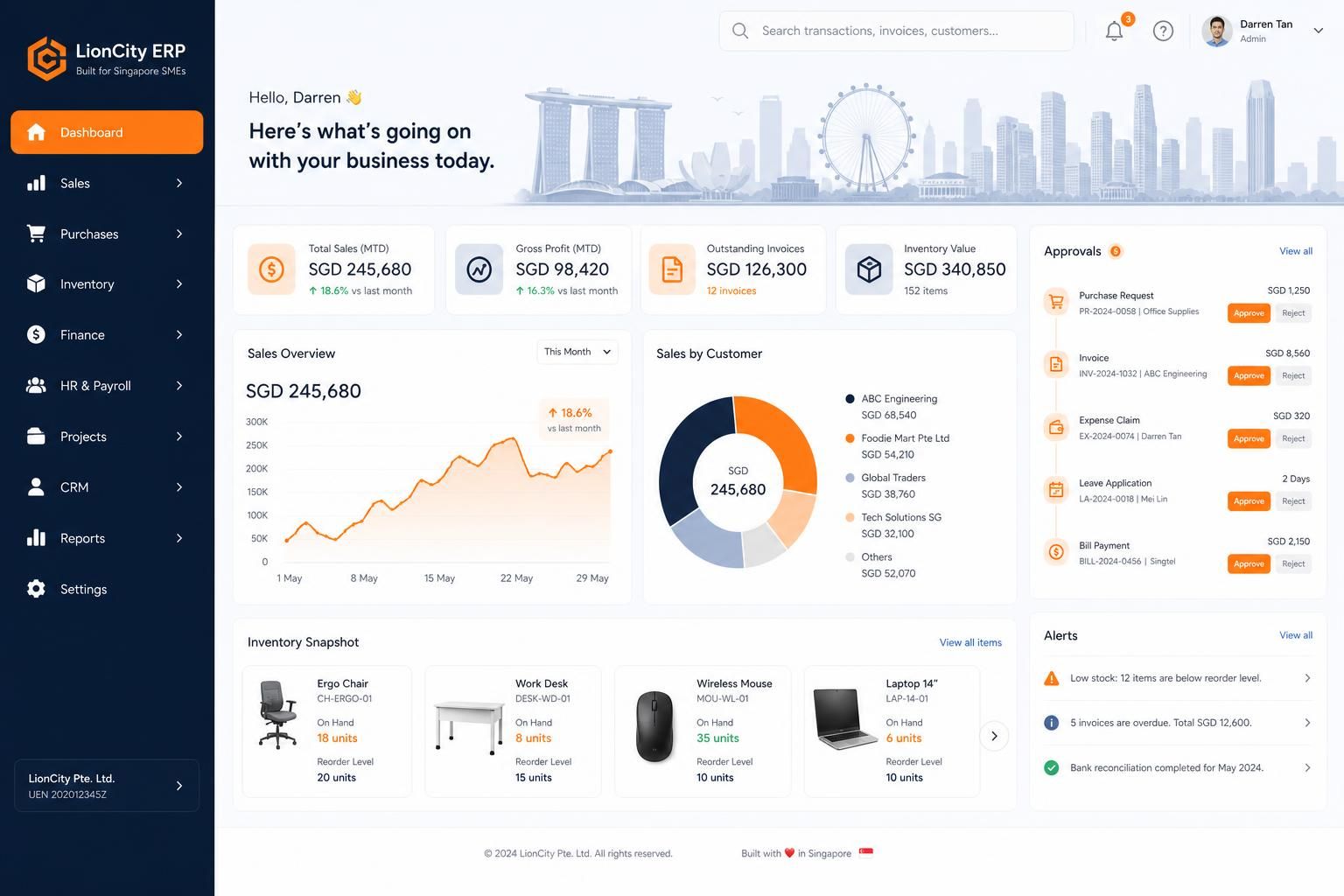
Digital 9 Labs builds the custom warehouse management system Singapore SMEs can actually run: bin and zone locations, barcode receiving and putaway, guided picking and packing, cycle counts, and a clean handoff to delivery orders and invoicing.
Custom enterprise resource planning (ERP) software, built for Singapore SMEs. From $3.5k onwards.
Where Singapore SMEs feel stuck
Most off-the-shelf ERP software is built for someone else's workflow. We design around yours.
Stock counts never match the system
The record says 40 units, the shelf has 32, and nobody knows when the numbers drifted apart or why.
Only one person knows where things are
Picking depends on a storekeeper's memory. When they are on leave, orders slow down and mistakes go up.
Receiving is unchecked
Goods come in against a purchase order, but nobody verifies quantities line by line, so shortfalls surface weeks later.
Picking errors reach customers
Wrong item, wrong quantity, or wrong batch gets packed, and you only find out when the customer complains.
Stocktakes shut the operation down
A full count means a weekend of the whole team counting everything, and the numbers drift again within a month.
Delivery orders are retyped by hand
What was picked and what appears on the DO are typed separately, so paperwork and reality disagree.
What we build into your ERP
Pick the modules that match how your team actually works. Everything connects to a single source of truth.
Bin and Zone Locations
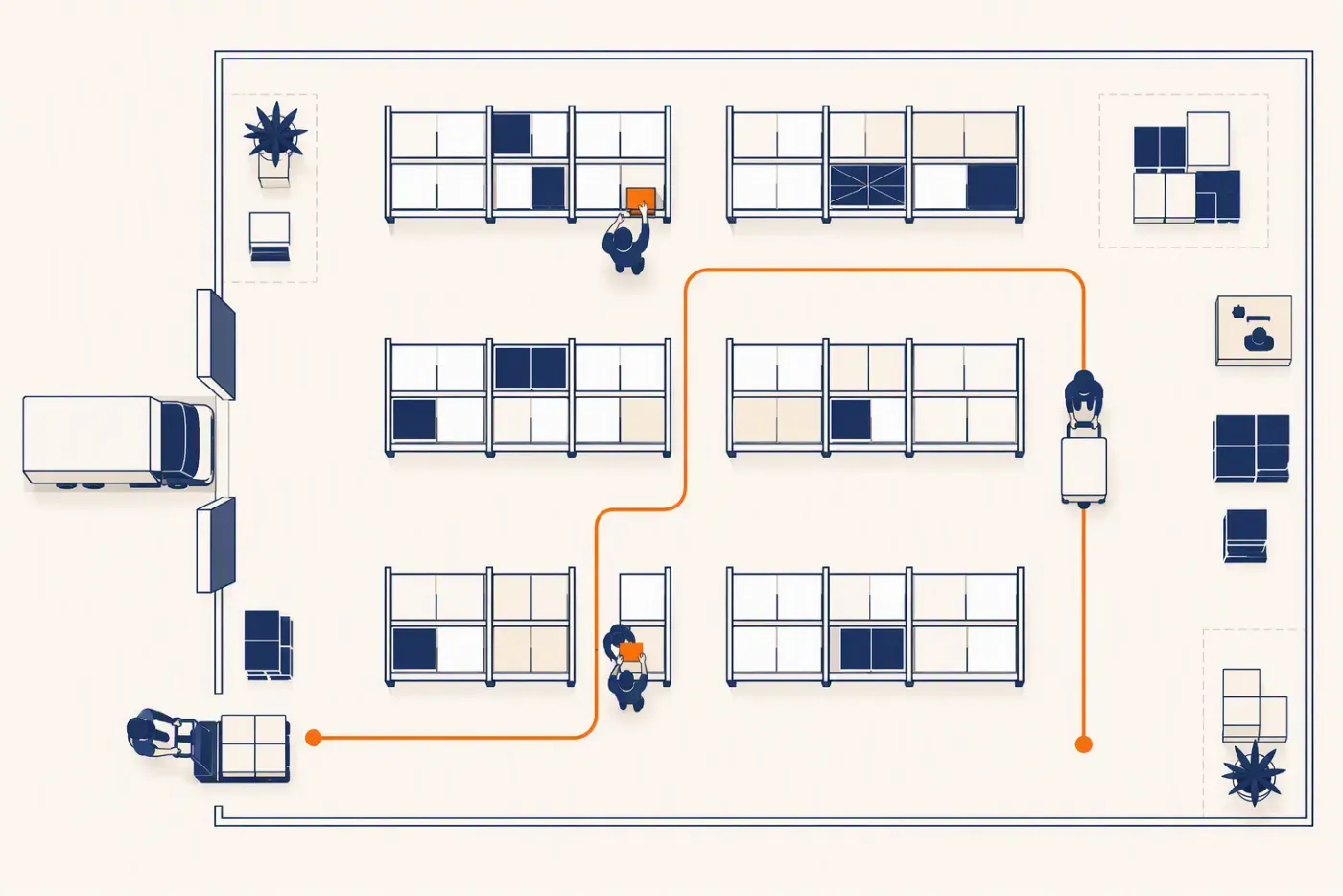
Map your warehouse into zones, racks, and bins so every item has a location the whole team can find.
Inbound Receiving
Receive against purchase orders line by line, flag shortfalls and damages, and update stock the moment goods arrive.
Putaway Rules
Direct incoming stock to the right bin by product type, velocity, or storage requirement instead of wherever there is space.
Picking and Packing
Pick lists sorted by location and walking route, with pack confirmation before anything leaves the door.
Barcode Scanning
Scan items and bin labels on a phone or handheld scanner to confirm receiving, putaway, picks, and counts.
Cycle Counting
Count a few bins at a time on a rolling schedule so accuracy stays high without shutting the warehouse down.
Batch, Expiry and Serial Tracking
Track batches, expiry dates, or serial numbers where your products need it, with first-expiry-first-out picking.
Delivery Order Handoff
Confirmed picks become delivery orders automatically, so the DO always matches what was physically packed.
Stock Accuracy Dashboard
See count variances, slow-moving stock, and low-stock alerts by location instead of digging through spreadsheets.
How we deliver
Walk the warehouse
We map your actual floor: zones, racks, receiving flow, picking routes, and where stock errors currently creep in.
Build the core flows
We build locations, receiving, putaway, picking, packing, and counting around how your team already works.
Connect orders and delivery
Sales orders flow in, confirmed picks flow out as delivery orders, and stock records stay in sync with invoicing.
WMS vs Inventory Software: Which Do You Actually Need?
Inventory software
- Tracks stock quantities, values, and movements as records.
- Answers how much you have and what it is worth.
- Enough for small operations with one storeroom and a team that knows where everything is.
- Does not guide the physical work of receiving, putaway, or picking.
Warehouse management system
- Runs the warehouse floor: locations, receiving, putaway, picking, packing, and counts.
- Answers where stock is, who moved it, and what to pick next.
- Worth it when volume, SKU count, or team size make memory-based operations unreliable.
- Feeds accurate movements back into your inventory and ERP records.
Stock Level Calculators
Set buffers and reorder points from measured lead times instead of from a guess.
This is the max-minus-average method: the buffer covers the worst case of high demand arriving at the same time as a slow delivery. It needs no statistics, which is why it survives contact with real SME data.
The reorder point is the level at which you order, not the amount you order. Order quantity is a separate decision — see the economic order quantity calculator.
Every figure stays in your browser: nothing is submitted. See all free tools
When Does a Singapore SME Actually Need a WMS?
You probably only need inventory software if
You run one small storeroom, a handful of SKUs, and one or two people who handle all stock. A clean inventory module inside your ERP is cheaper and simpler.
- One location and simple picking
- Under a few hundred order lines a week
- No bin-level tracking required
Picking depends on one person's memory
If orders stall when a specific storekeeper is away, locations and pick lists remove that single point of failure.
- Nobody else can find fast-moving stock
- Training a new picker takes weeks
- Their leave is an operational risk
Stock variance is costing real money
When write-offs, emergency purchases, or lost sales from phantom stock become routine, location-level control usually pays for itself.
- Counts and system disagree every cycle
- Write-offs absorbed as a cost of doing business
- Nobody can say where it went
Order volume has outgrown the floor
More daily orders, more SKUs, or a second storage location multiply picking errors unless the system guides the work.
- Pickers cross paths and duplicate walks
- Orders picked in arrival order, not by route
- Peak days require overtime to clear
Customers demand traceability
Batch, expiry, or serial tracking for F&B, healthcare-adjacent, or regulated goods is hard to fake on spreadsheets.
- Batch or serial required on the delivery note
- Recall means knowing who received what
- Audit asks for movement history
Paperwork disagrees with the floor
If delivery orders, invoices, and physical picks are maintained separately, a WMS makes one confirmed pick drive all three.
- Delivery notes signed but not entered
- Receipts recorded days later
- The system is trusted less than the shelf
Industries We Build Warehouse Flows For

Trading and distribution
Multi-supplier receiving, bin locations, batch tracking, and delivery-order handoff for import-and-distribute businesses.
- Landed cost including freight and duty
- Multi-location transfers recorded
- Customer-specific price tiers applied
Specialty retail
Back-of-store and warehouse stock kept in sync with what the shopfront and POS believe is available.
- Stock truth across outlets, not per till
- Variants and sizes as real SKUs
- Reorder before the bestseller runs out
F&B and catering
Expiry-tracked ingredients, first-expiry-first-out picking, and par-level alerts for central kitchens.
- Ingredient batches tracked to expiry
- Wastage visible per outlet
- Recipe costing from real purchase prices
Corporate gifting
Campaign stock received, kitted, packed, and delivered against client orders with quantities verified at each step.
Construction and contractors
Site material issue, returns, and yard stock so project costs reflect what actually left the store.
- Priced from a reusable BOQ library
- Won quote becomes the project budget
- Variations tracked against the original
Aesthetics and wellness
Consumables and retail products tracked by outlet and treatment usage, with expiry control for professional lines.
What Warehouse Inefficiency Costs
Illustrative arithmetic for a Singapore warehouse picking 500 order lines a day. Substitute your own volumes.

Walking distance per pick
If poor slotting adds 30 seconds to each pick, 500 lines a day is over 4 hours of walking, every day.
- 500 x 30 seconds = 4.2 hours a day
- Roughly 1,000 hours a year
- Paid, and producing nothing
The cost of that walking
At a loaded S$18 an hour, 1,000 hours is about S$18,000 a year in avoidable movement.
- 1,000 hours x S$18 = S$18,000
- Rising with order volume
- Worse on peak days
Mispicks
At a 1% mispick rate on 500 lines a day, that is 5 errors a day: returns, redeliveries and credit notes.
- 5 mispicks a day
- Redelivery cost plus admin
- Customer trust cost on top
What slotting and scanning remove
Fast movers near despatch and a scan at pick removes most of both problems without changing headcount.
- Fast movers slotted near packing
- Scan confirms the right item
- Pick routes ordered, not wandered
When you do not need a WMS
One location, simple picking and modest volume is served perfectly well by inventory software. We will say so.
- Under a few hundred lines a week
- No bin-level tracking needed
- One location, one team
The payback shape
Against a first module from about S$3,500, recovering even a third of S$18,000 a year is a payback in months.
- First module from about S$3,500
- S$18,000 walking plus mispick cost
- Run the arithmetic on your own volumes
The Warehouse Decisions That Matter Most
Four choices determine whether a warehouse system helps or becomes shelfware.
Bin-level or location-level
Bin level is precise and costs discipline to maintain. Location level is coarser and far easier to sustain.
- Bin: high SKU count, high accuracy need
- Location: simpler, easier to keep honest
- Choose what the team will actually maintain
Scan or confirm by eye
Scanning removes most mispicks but requires devices and habit. Be honest about which you will sustain.
- Scan confirms the right item
- Devices need charging and owners
- Habit takes weeks to form
Slotting strategy
Fast movers near despatch is the single highest-return change most warehouses can make, and it needs no software at all.
- Fast movers nearest packing
- Review slotting quarterly
- Measure walking before and after
Who may adjust stock
Unrestricted adjustment turns variance into an unexplained number nobody can investigate.
- Adjustments restricted by role
- Reason code on every one
- Reviewed, not rubber-stamped
Receiving discipline
Most error enters at goods receipt. No downstream system can be accurate if receiving is informal.
- Receive against the purchase order
- Short and damaged recorded at the door
- Put away to a known location
When you do not need one
One location, modest volume and simple picking is served by inventory software. We will tell you so.
- Under a few hundred lines a week
- No bin tracking required
- One team, one location
Before You Buy Anything
Three checks that cost nothing and often remove the need for software entirely.
Measure the walking
Time ten picks end to end. If most of it is walking, slotting will beat any system you could buy.
- Time ten real picks
- Separate walking from handling
- Re-slot before you re-platform
Count blind
Count a sample without the system figure in front of you. The gap is your real starting accuracy.
- Count without the expected number
- Sample fast movers first
- Record the percentage honestly
Ask where the errors enter
Walk goods receipt for one morning. If receiving is informal, fix that before anything downstream.
- Watch one receiving session
- Check the PO is actually referenced
- Fix the door before the shelves
Budgeting the Project Properly
Illustrative arithmetic so you can build a board paper rather than react to a quote. Substitute your own figures throughout.
Phase one, the proving module
Budget S$3,500 to S$12,000 for one workflow solved end to end, live in 4 to 8 weeks on a fixed quote.
- S$3,500 entry, fixed after review
- 4 to 8 weeks to live
- One workflow, fully solved
Phase two, the department
Once phase one is in daily use, a departmental build covering 3 to 4 linked workflows typically runs S$25,000 to S$60,000.
- 3 to 4 linked workflows
- S$25,000 to S$60,000 typical
- Scoped from evidence, not a wish list
Phase three, the operation
Sales, stock, finance, approvals and reporting together is a six-figure programme and should run across 12 to 18 months, not one quarter.
- 12 to 18 months, phased
- Each phase funds the next
- No single big-bang go-live
Internal time to reserve
Budget 8 to 15 hours of your own team's time per module for interviews, testing and training. This is the line most plans omit.
- 8 to 15 hours per module
- Spread across 6 to 8 weeks
- Mostly the person who does the work
Running cost after go-live
Hosting for an SME system commonly runs S$50 to S$300 a month billed at cost to your own account, plus optional care quoted by scale.
- S$600 to S$3,600 a year hosting
- Billed to you at cost
- Care optional, quoted by scale
The comparison to run
Against a 20-seat licence at S$120 a month, five years is S$144,000 before implementation. Run both numbers over 5 years before deciding.
- 20 x S$120 x 12 = S$28,800 a year
- S$144,000 over 5 years, licence only
- Compare 5-year totals, not monthly
Grant treatment
EDG can support up to 50% of qualifying costs for eligible local SMEs on a custom build, on reimbursement, and the project must not start before applying. PSG does not cover custom work.
- Up to 50% of qualifying cost
- Reimbursement, not upfront
- Apply before starting
- Confirm with Enterprise Singapore
Common Questions About Warehouse Systems
The questions that come up in almost every first conversation, answered plainly.
Do we need barcode scanners
Only if your error rate justifies them. Measure mispicks first: below roughly 0.5% the discipline changes matter more than the hardware.
- Measure the mispick rate first
- Below 0.5%, fix process not hardware
- Scanners need charging and owners
Can it run on the tablets we have
Yes. A browser-based system runs on standard Android or iOS tablets, which removes proprietary device cost entirely.
- Standard tablets, not rugged terminals
- Replace a device without a support call
- No per-device licence
What about our existing racking
Nothing changes physically. Location codes are mapped to what you already have rather than requiring a re-layout.
- Map your existing locations
- No physical re-racking needed
- Re-slot only if the data says to
How long does implementation take
A focused warehouse module is commonly 6 to 10 weeks, with the location mapping and initial count being the longest part.
- 6 to 10 weeks typical
- Location mapping is the long pole
- Initial count before go-live
Will the team actually use it
Only if it is faster than what they do now. That is the design constraint, and it is why we watch a real picking session before designing anything.
- Watch a real picking round first
- Faster than paper or it fails
- Trained on their own routes
Does it connect to our accounting
Yes. Stock movements post to your accounting system so closing stock value is not a separate reconciliation exercise.
- Movements post to accounting
- Closing stock value reconciles
- No parallel stock ledger
Implementing a Warehouse System: Week by Week
Illustrative sequencing for a first module. Dates slip, but the order rarely should.
Week 1: watch the work
We sit with the people doing the job and follow one real case end to end, recording every handoff and every place data is retyped.
- 2 to 3 hours of observation
- The doer, not the manager
- One real case, start to finish
- Handoffs written down
Week 2: agree scope and fix the quote
Scope comes from what we watched. The quote is fixed and the assumptions are written down so change is visible later.
- Scope from observation
- Fixed quote issued
- Assumptions listed explicitly
- Out-of-scope named
Weeks 3 to 5: build and show weekly
You see working screens with your own data every week rather than a demo at the end.
- Weekly working build
- Your data, not samples
- Feedback folded in weekly
- No big reveal at the end
Week 6: parallel run
The new system and the old process both run for one full cycle, and the outputs are compared rather than trusted.
- One full cycle in parallel
- Outputs compared line by line
- Rollback stays available
- Confidence earned, not assumed
Week 7: train by role
Short sessions per role on their own live records, then a follow-up after the first week of real use.
- 30 to 60 minutes per role
- Their own records
- Follow-up after week one
- Written quick reference
Week 8: go live and measure
Switch over, then measure the thing you said was costing you hours, so the second module is argued from evidence.
- Measure the original pain
- Compare to the baseline
- Decide module two on evidence
- No expansion without adoption
Warehouse Systems: Glossary of Terms
Plain-English definitions of the terms that appear in every vendor conversation, so nothing is agreed by nodding along.
ERP
Enterprise resource planning: one system holding the records that several departments share, so a customer, job or stock item exists once rather than in five files.
- One record, many departments
- Replaces reconciliation with a shared source
- Scope is a choice, not all-or-nothing
Module
A functional area such as quoting, stock or payroll. A custom build means choosing three or four rather than buying twelve.
- Buy or build only what you use
- Modules share one data model
- Added when the last one is adopted
Master data
The reference records everything else points at: customers, suppliers, products, staff, cost codes.
- Cleaned once, maintained forever
- Duplicates here corrupt every report
- Owned by a named person
Transactional data
The events: quotes, orders, receipts, invoices, payments, timesheets. Volume grows daily; master data does not.
- Grows with trading volume
- Immutable once posted
- Corrections by reversal, not edit
Source of truth
The system everyone agrees to believe when two numbers disagree. Naming it is a management decision, not a technical one.
- Named explicitly, in writing
- Other systems reconcile to it
- Ambiguity here causes most disputes
Integration
A connection letting two systems exchange records automatically instead of by export and import.
- API or scheduled file exchange
- Direction matters: push, pull or both
- Failure handling is the hard part
API
An interface letting software talk to software. If a vendor has none, every future connection is manual.
- Ask before you buy
- REST is the common standard
- Rate limits and auth are the details
Audit trail
The record of who changed what and when. The difference between an explanation and an argument.
- Every change attributed
- Retained, not overwritten
- Required for most audits
Role-based access
Permissions granted by job function rather than by trust, so leavers are offboarded in one action.
- Permission by role, not person
- Sensitive screens hidden
- Revoked centrally
Cost code
The label that puts a cost against the job, department or project it belongs to.
- Applied at purchase, not month end
- Drives job profitability
- Kept short and stable
Committed cost
Money promised but not yet invoiced, usually at purchase order. The figure spreadsheets almost never capture.
- Visible at PO, not at invoice
- Early warning on overruns
- Distinct from actual cost
Reconciliation
Checking two records agree. Most of it exists because data was entered twice.
- Symptom of duplicate entry
- Removed by integration
- Never fully eliminated
Data migration
Moving existing records into the new system, usually the longest and least glamorous task.
- Cleaning is the larger half
- Archive rather than import everything
- Agree a cutoff date
Parallel run
Operating old and new together for one cycle so outputs can be compared before switching.
- One full cycle minimum
- Compare, do not assume
- Rollback stays available
Go-live
The point the new system becomes the record. Best done one module at a time.
- Never on a Friday
- One module, not twelve
- Support present for week one
User acceptance testing
The client testing that the system does what was agreed, using real scenarios rather than a script.
- Real cases, not happy paths
- Done by the people who will use it
- Sign-off before go-live
Change request
Work outside the agreed scope. Named and priced openly so it does not become an argument.
- Written, not verbal
- Priced before it is built
- Scope baseline retained
Technical debt
Shortcuts that make the next change slower. Sometimes worth taking deliberately, never worth taking silently.
- Recorded when taken
- Repaid before it compounds
- Invisible debt is the dangerous kind
Uptime
The share of time the system is available. Ask what it is measured against and who reports it.
- Measured, not promised
- Excludes planned maintenance
- Meaningless without monitoring
Backup and restore
Copies of your data, and the tested ability to bring them back. Only the second one matters.
- Automated and frequent
- Restore actually tested
- Recovery time measured
SSO
Single sign-on: one login across systems, so access is granted and revoked in one place.
- Central control of access
- Faster offboarding
- Fewer shared passwords
Two-factor authentication
A second proof of identity beyond the password. The cheapest security improvement available.
- Enabled for all admin users
- App-based beats SMS
- Recovery codes stored safely
PDPA
Singapore's Personal Data Protection Act, governing how personal data is collected, used and kept.
- Applies to staff and customer data
- Consent and purpose matter
- Breach obligations exist
GST
Goods and services tax, applied per line with the correct category. Errors here are a filing problem.
- Category per product, not per invoice
- Tax invoice timing matters
- Credit notes must reverse cleanly
Peppol
The international network standard behind structured e-invoicing, used by InvoiceNow in Singapore.
- Documents routed, not emailed
- Validated before acceptance
- Each participant has an identifier
CPF
Central Provident Fund: statutory contributions varying by age band and residency status.
- Rates change; confirm with CPF Board
- PR rates step up over two years
- Computed by the payroll run
SDL
Skills Development Levy, payable on top of CPF and computed in the same run.
- Applies alongside CPF
- Part of the payroll computation
- Not an optional extra
EDG
Enterprise Development Grant: supports up to 50% of qualifying costs for eligible local SMEs, on reimbursement.
- Custom builds may qualify
- Apply before the project starts
- Confirm with Enterprise Singapore
PSG
Productivity Solutions Grant, which funds pre-approved packaged solutions rather than custom work.
- Packaged solutions only
- Custom builds do not qualify
- Check the approved list first
SaaS
Software as a service: rented software, priced per user per month, hosted by the vendor.
- Recurring, not one-off
- Cost scales with headcount
- Vendor owns the roadmap
On-premise
Software running on a server you own and maintain, with the costs and control that implies.
- Hardware refresh every 4 to 5 years
- You own patching and backups
- Full control of the data
Total cost of ownership
Licence plus implementation plus migration plus training plus upgrades, over five years rather than one.
- Five years, not monthly
- Include internal time
- The only fair comparison
Vendor lock-in
The cost of leaving. Measured by whether you can export your data and who owns the code.
- Ask about export before buying
- Code ownership in writing
- Proprietary formats are the trap
Scalability
Whether the system copes as volume grows, and what it costs when it does.
- Load versus headcount pricing
- Test at 3x current volume
- Ask what breaks first
Workflow
The sequence of steps and approvals a piece of work passes through, and who owns each.
- Mapped before it is built
- Handoffs are where cost hides
- Encoded once, applied always
Approval threshold
The value above which something needs a second person to agree. Enforced by the system rather than by habit.
- Set by role and by value
- Auditable
- Prevents surprise discounts
Dashboard
A live view of the numbers management asks for, computed from records rather than assembled monthly.
- Live, not monthly
- Same data the team uses
- Few numbers, chosen deliberately
Reporting period
The window a report covers. Agreeing it prevents two people producing different truths.
- Defined and consistent
- Cutoff time stated
- Comparable period on period
Prerendering
Serving fully-formed HTML so crawlers and AI assistants read the content without running JavaScript.
- Content visible without JS
- Faster first paint
- Essential for search visibility
Agentic automation
Software that acts on records rather than only reporting on them, with human approval on anything consequential.
- Acts, not just reports
- Approval gates on money and messages
- Only as good as the data
Warehouse Systems: The Numbers, Collected
Illustrative Singapore figures gathered in one place. Substitute your own throughout: these size a decision, they do not predict your quote.
Typical first module
S$3,500 to S$12,000, live in 4 to 8 weeks on a fixed quote after the workflow review.
- S$3,500 entry point
- 4 to 8 weeks to live
- Fixed after review
Typical departmental build
S$25,000 to S$60,000 covering 3 to 4 linked workflows once the first module is adopted.
- 3 to 4 workflows
- S$25,000 to S$60,000
- Scoped on evidence
Typical full programme
Six figures across 12 to 18 months, phased so each stage proves itself before the next.
- 12 to 18 months
- Phased, not big bang
- Each stage funds the next
Hosting
S$50 to S$300 a month for an SME system, billed at cost on your own account.
- S$600 to S$3,600 a year
- Billed at cost
- Scales on load, not headcount
Licence comparison
20 seats at S$120 a month is S$28,800 a year, or S$144,000 over five years before implementation.
- 20 x S$120 x 12 = S$28,800
- S$144,000 over 5 years
- Plus implementation
Implementation on a licence
Commonly 50% to 150% of first-year licence. Below 30% usually means scope is excluded.
- 50% to 150% typical
- Below 30% is a warning
- Migration often separate
Data migration
S$3,000 to S$15,000 depending on record count and how clean the data is.
- S$3,000 to S$15,000
- Cleaning is the larger half
- Archive rather than import all
Training
2 to 5 days is typical. Fewer than 2 usually makes adoption your problem.
- 2 to 5 days
- Per role, not per company
- Follow-up after week one
Your internal time
8 to 15 hours per module for interviews, testing and training. The line most plans omit.
- 8 to 15 hours per module
- Across 6 to 8 weeks
- Mostly the person doing the work
Admin hire comparison
A back-office hire in Singapore costs roughly S$3,000 to S$4,500 a month before CPF and overheads.
- S$36,000 to S$54,000 a year
- Plus CPF and overheads
- Plus recruitment and cover
Hours reclaimed
A workflow costing 20 hours a month is about 240 hours a year, or S$7,200 at a loaded S$30 an hour.
- 20 hours a month
- 240 hours a year
- About S$7,200
EDG support
Up to 50% of qualifying costs for eligible local SMEs, on reimbursement, applied for before starting.
- Up to 50%
- Reimbursement basis
- Apply before starting
- Confirm with Enterprise Singapore
Warehouse Systems: The Buyer's Checklist
Fifteen questions worth asking any vendor, including us, before money changes hands.
Ask for the five-year total
Licence times sixty months plus implementation, migration and training. One number, comparable across vendors.
- 60 months, not one
- All one-off costs included
- Written, not verbal
Ask who owns the code
This single answer determines whether you can ever leave.
- Ownership in writing
- Repository access
- Another developer could take over
Ask about data export
A system you cannot export from is a system you cannot leave.
- Full export on demand
- Readable formats
- Scheduled exports you control
Ask what happens in week one
A vendor who starts with observation is scoping from your problem, not their product.
- Who they interview
- Whether they walk a real job
- What they hand back
Ask what they will refuse to build
A vendor who says yes to everything has not understood the problem.
- Where they recommend off-the-shelf
- What they push back on
- Out of scope on principle
Ask to see it running
Screenshots are not a system. Ask for a populated live environment.
- Live, not slides
- Populated, not empty states
- Someone using it
Ask about the second module
The first is a project; the second tests whether the architecture extends.
- Shared data model
- What clients added later
- How long it took
Ask for the support commitment in hours
Response time in hours, business days defined, escalation path named.
- Hours, not adjectives
- Business days defined
- Named escalation
Ask who maintains statutory logic
CPF, GST and e-invoicing rules change. Someone must own keeping them current.
- Named owner
- In the contract
- Update mechanism stated
Ask about the parallel run
One full cycle with both systems live is what turns confidence into evidence.
- One cycle minimum
- Outputs compared
- Rollback available
Ask what training is included
Two to five days by role, with a follow-up after real use begins.
- Days stated
- Per role
- Follow-up included
Ask how change requests are priced
Scope will change. How that is handled is worth agreeing before it happens.
- Priced openly
- Baseline retained
- Written approval
Ask for a reference you choose
Not the reference they offer. One you pick from their portfolio.
- You pick, not them
- Same size and sector
- Ask what went wrong
Ask what the system will not do
Every system has limits. A vendor who names them is a vendor who understands theirs.
- Named limits
- Workarounds explained
- No magic claims
Ask about hosting and who is billed
Hosting billed at cost to your account avoids a reseller margin you cannot see.
- Billed to you at cost
- Your account, your access
- No hidden margin
Warehouse Systems: Cost by Company Size
Illustrative Singapore arithmetic at four sizes. Substitute your own headcount and seat price throughout.
Company of 5 to 10 staff
A first module lands at S$3,500 to S$8,000. Licence alternatives at 8 seats and S$120 a month are S$11,520 a year, so the build repays inside 12 months at this size.
- Build: S$3,500 to S$8,000 once
- Licence: 8 x S$120 x 12 = S$11,520 a year
- 5 years licence: S$57,600
- Break-even under 12 months
Company of 10 to 25 staff
A departmental build of S$25,000 to S$40,000 against 20 seats at S$120, which is S$28,800 a year and S$144,000 over five.
- Build: S$25,000 to S$40,000
- Licence: S$28,800 a year
- 5 years licence: S$144,000
- Break-even in 12 to 18 months
Company of 25 to 60 staff
A build of S$40,000 to S$90,000 against 45 seats at S$120, which is S$64,800 a year and S$324,000 over five.
- Build: S$40,000 to S$90,000
- Licence: S$64,800 a year
- 5 years licence: S$324,000
- The per-seat gap widens fastest here
Company above 60 staff
Six-figure programmes on both sides. The deciding factor stops being price and becomes whether your process is your advantage.
- Both routes six figures
- Process specificity decides
- Phase over 12 to 18 months
Adding 10 staff
On a licence at S$120 a seat that is S$14,400 more a year, every year. On a build it is S$0.
- Licence: +S$14,400 a year
- Build: +S$0
- Compounds over five years
Opening a second location
Licences multiply by seats again. A build extends at the cost of the work, not the headcount.
- Licence scales with people
- Build scales with scope
- Second site often needs little new code
The 5-year totals side by side
20 seats: roughly S$144,000 licence-only against S$25,000 to S$60,000 built, before implementation on the licence side.
- Licence S$144,000 over 5 years
- Build S$25,000 to S$60,000
- Plus S$20,000 to S$50,000 implementation on licence
What we would still recommend buying
Accounting. Xero and its peers are cheap, well maintained and statutory-current. We integrate rather than rebuild.
- Keep your accounting system
- Integrate, do not replace
- Book of record stays put
Hosting either way
S$50 to S$300 a month at cost. Not a differentiator, but it should be billed to your account rather than marked up.
- S$600 to S$3,600 a year
- At cost, your account
- No reseller margin
Grant impact on the comparison
EDG at up to 50% of qualifying costs changes the build side materially. It does not apply to packaged licences.
- Up to 50% of qualifying cost
- Reimbursement basis
- Custom builds may qualify
- Confirm with Enterprise Singapore
The number nobody quotes
Your own team's time: 8 to 15 hours per module either way. Include it or the comparison is not honest.
- 8 to 15 hours per module
- Applies to both routes
- Usually your best people
What changes the answer fastest
Headcount growth and how non-standard your process is. Everything else is second order.
- Growth rate first
- Process specificity second
- Everything else is noise
Warehouse Systems: More Questions We Are Asked
The second tier of questions, usually asked once the first conversation has gone well.
Do we have to replace everything at once
No, and you should not. One module, adopted, beats four half-built. Everything else keeps running.
- One workflow first
- Existing tools stay
- Integrate rather than replace
What if we outgrow it
A build extends at the cost of the work. That is the argument for owning the code rather than renting seats.
- Extended, not replaced
- Your priority order
- No tier upgrade pricing
How do you handle our data
It stays in a database you own, in a region you choose, exportable in full at any time.
- Your database, your region
- Full export on demand
- Access documented and auditable
What if the project stalls
Fixed scope, fixed quote and weekly working builds mean a stall is visible in week three, not month six.
- Weekly working build
- Visible early
- Fixed scope baseline
Can our own developer take it over
Yes. Standard stack, documented handover, and the repository is yours.
- Standard technologies
- Handover documentation
- Repository ownership
What ongoing cost should we budget
Hosting at cost plus optional care quoted by scale. No per-seat component at all.
- Hosting S$600 to S$3,600 a year
- Care optional
- No per-seat fee
How do you price changes after go-live
Openly, against the written scope baseline, with approval before anything is built.
- Priced before built
- Baseline retained
- Written approval
What happens if we stop working with you
You keep the code, the data and the hosting accounts. That is the point of ownership.
- Code and data yours
- Hosting on your accounts
- Another developer can continue
Do you work with our existing accountant
Yes, and we usually ask to. They know where the numbers have to land.
- Accountant involved early
- Statutory treatment confirmed
- Reports built to their format
How do we measure whether it worked
Against the hours you measured before we started. That is why we measure them in week one.
- Baseline measured first
- Same measure after
- Module two argued from it
Trusted by teams across Singapore
Request a warehouse workflow review
Tell us about the workflows you want to improve. We'll respond within 24 hours.
Frequently asked questions
What SME teams usually want to know before they commit to a custom ERP or workflow system.