
ERP Software Singapore
Custom ERP Software for Singapore SMEs
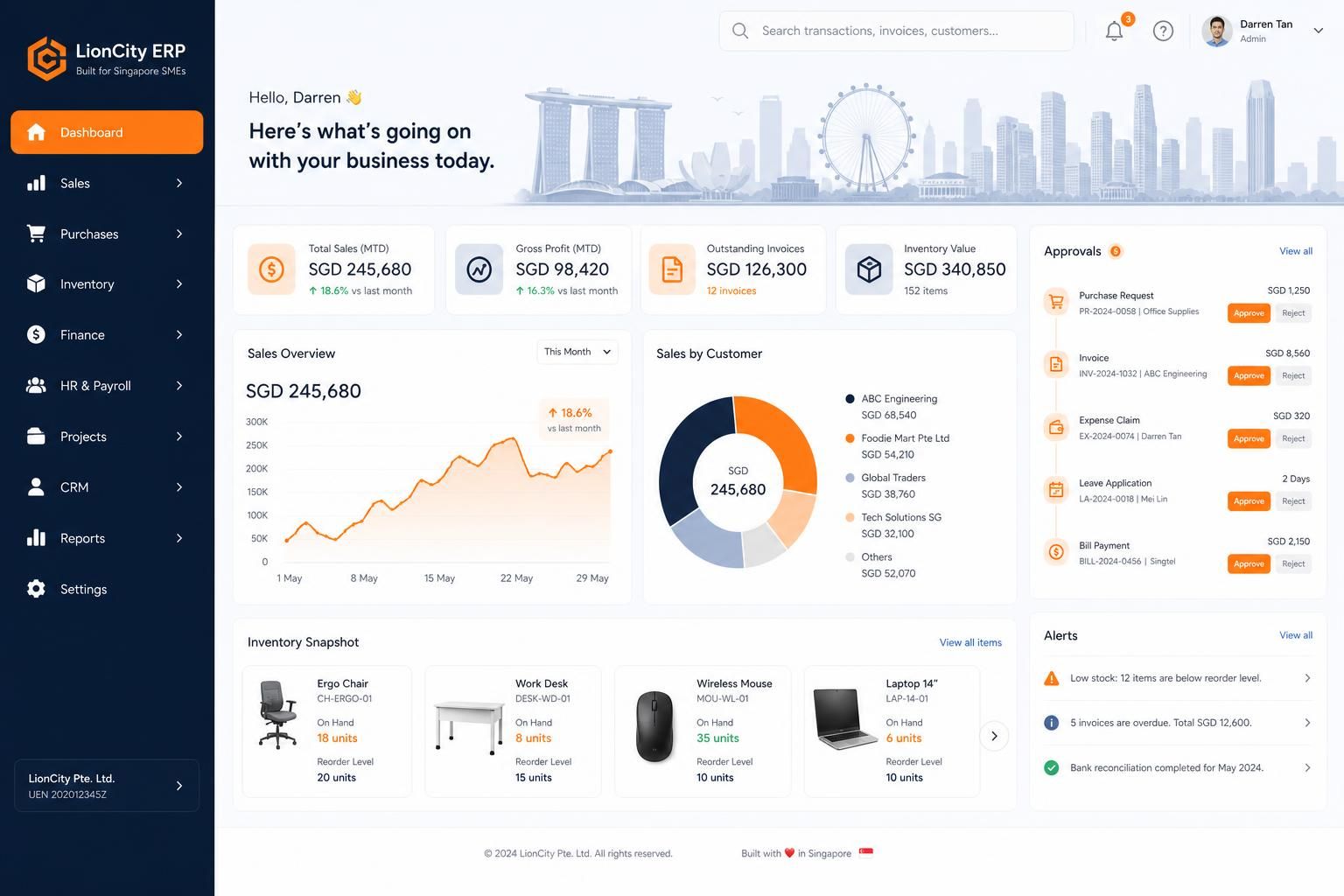
We design and build enterprise resource planning (ERP) systems tailored to how Singapore SMEs actually run — clean workflows, real ownership, and AI-ready automation without a painful replacement project.
Custom enterprise resource planning (ERP) software, built for Singapore SMEs. From $3.5k onwards.
Where Singapore SMEs feel stuck
Most off-the-shelf ERP software is built for someone else's workflow. We design around yours.
Off-the-shelf ERP doesn't fit
Generic ERP software forces your team to change how they work. You end up paying for modules you don't use and still relying on spreadsheets on the side.
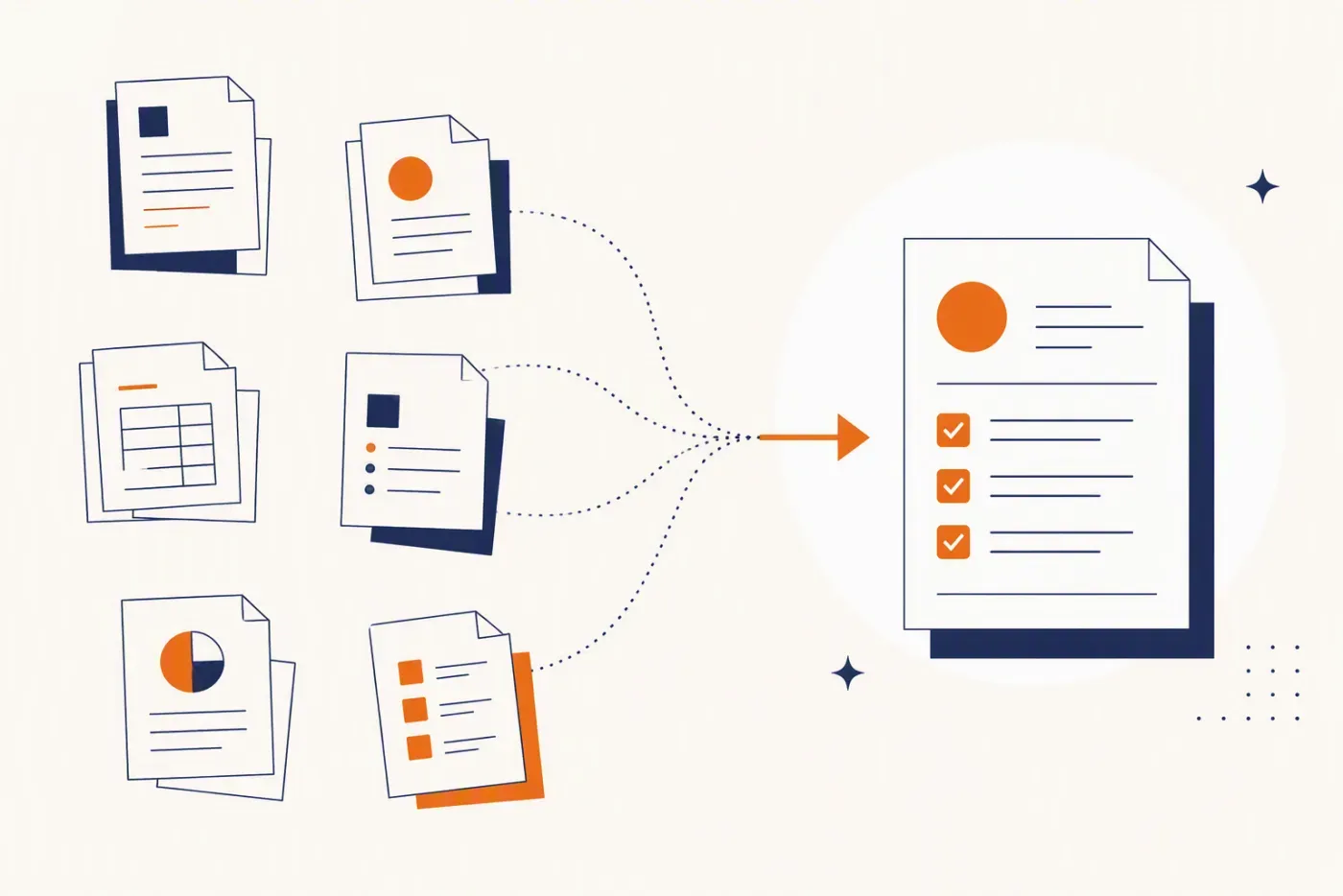
Data lives in 5 different tools
Sales in one system, inventory in another, finance in a third. No single source of truth means slow reporting and constant reconciliation.
Approvals happen in WhatsApp
Quotes, POs, and expense approvals get lost in chats. There's no audit trail and no clear visibility on what's stuck where.
AI feels out of reach
Everyone talks about AI agents and automation — but your processes aren't structured enough yet for AI to act on them safely.
Implementation horror stories
Traditional ERP rollouts take 12–18 months and cost six figures. You need something shippable in weeks, not a multi-year overhaul.
No vendor truly understands SG
GST, IRAS, MOM payroll, multi-currency for ASEAN — most generic ERP vendors get the local context wrong.
What we build into your ERP
Pick the modules that match how your team actually works. Everything connects to a single source of truth.
Sales & CRM
Pipeline, quotes, sales orders, customer ledger — wired to your inventory and finance.
Inventory & Warehousing
Stock levels, batch/serial tracking, reorder points, multi-location with barcode support.
Purchasing & Suppliers
Purchase requests, PO approvals, supplier ledger, three-way matching against invoices.
Finance & GST
Invoicing, payments, GST-ready reports, IRAS-aligned formats, multi-currency.
Approval Workflows
Role-based sign-offs for quotes, POs, expenses, and leave — with full audit trail.
Internal Dashboards
Live KPI dashboards for ops, finance, and management — built on your real data.
AI Copilots
Document extraction, smart search, summarisation, and agentic workflows once the data is clean.
Integrations
Xero, HubSpot, Shopify, Stripe, Lalamove, Ninja Van — and any REST API your team already uses.
Mobile & Field Tools
Tablet- and phone-first views for sales reps, site engineers, and warehouse staff.
How we deliver
Workflow review
We map your current operations — people, tools, handoffs — and identify the highest-ROI module to start with.
Build & ship in weeks
We build a working ERP module within 4–8 weeks, deployed on your domain, owned by your team.
Iterate & layer AI
Once your process is stable, we layer in automations, dashboards, and AI agents on top of the same data.
Off-the-Shelf ERP Versus a Custom Build
Both are legitimate routes and we will tell you honestly which one fits. The question is whether your process is standard enough to adopt someone else's, or specific enough that you would spend the licence fee bending the software to fit.
Licensed off-the-shelf ERP
- Priced per user per month, forever, usually in a foreign currency.
- The licence is the visible cost; implementation sits on top of it.
- Your process is adapted to the software's assumptions, not the reverse.
- Modules you do not use are still part of what you pay for.
- Customisation is chargeable, and it is redone at major version upgrades.
- Adding a warehouse hand or a site supervisor adds a seat cost.
- Data lives in the vendor's platform under their terms.
- Roadmap is the vendor's, so the feature you need may never arrive.
- Switching later means an export, a migration and a renegotiation.
- Support is a ticket queue shared with every other customer.
- Statutory updates are handled for you, which is a genuine advantage.
- Live in weeks if your process genuinely matches the product.
A custom ERP from Digital 9 Labs
- One-time build cost, from about S$3,500 for a focused first module.
- Fixed quote after a workflow review, so the number is known before you commit.
- The software is shaped to the process your team already runs.
- You build the two or three workflows that actually hurt, not twelve modules.
- No per-seat licence, so headcount growth does not raise the running cost.
- No forced upgrade cycle and no version you are pushed onto.
- You own the codebase and the database outright.
- The roadmap is yours: the next feature is whichever one you need.
- Any competent developer can extend it later; you are not locked to us.
- Integrates with Xero, HubSpot or whatever you already run, rather than replacing it.
- Statutory rules are built in, and you decide who maintains them.
- First working module live in roughly four to eight weeks.
Work Out Your Own Numbers
Two calculators that answer the questions this page raises: what the five-year totals actually are, and whether automating one workflow pays for itself.
Include site, warehouse and part-time staff. Per-seat licences charge for all of them.
The quoted per-seat price, before implementation.
Commonly 50% to 150% of first-year licence.
A focused first module starts from about S$3,500; a departmental system runs into the tens of thousands.
Billed at cost to your own account.
The per-seat line grows with headcount; a build does not.
EDG can support up to 50% of qualifying costs for eligible local SMEs, on reimbursement. Confirm with Enterprise Singapore.
Illustrative only. Substitute your own quoted figures. Implementation, migration and your own team time (8 to 15 hours per module) apply to both routes and are not modelled here.
Time one real cycle rather than estimating.
Salary plus CPF and overheads, divided by hours worked.
Review and approval should stay human. 100% is rarely honest.
A focused first module starts from about S$3,500.
Rework, corrections, refiling. Be conservative.
Illustrative only. If the payback is longer than about two years, the honest answer is usually not to build it yet.
Every figure stays in your browser: nothing is submitted. See all free tools
What ERP Actually Means for a Singapore SME
Enterprise resource planning sounds like something a 500-person company buys. In practice, for a Singapore SME it means one thing: the business stops being run out of separate spreadsheets, chats and inboxes that quietly disagree with each other.

One record instead of five copies
A customer, a job or a stock item exists once. Sales, operations and finance read the same record, so nobody is working from a version that was accurate last Tuesday.
- A customer's address is changed once, not in three systems
- Stock levels reflect what was actually picked this morning
- Finance and operations argue about priorities, not about numbers
The handoffs become the system
Most SME pain is not in the work, it is in the gaps between people: quote to job, job to delivery, delivery to invoice. An ERP is mostly a way of making those handoffs explicit and recorded.
- Quote accepted automatically becomes a job with the same line items
- Job completion triggers the invoice rather than a reminder to raise one
- Nothing waits in someone's inbox to be forwarded
It is not one big replacement
The failed version of this project is replacing everything at once. The version that works starts with the single workflow costing you the most time, ships it, and then extends.
- Start with the workflow costing the most hours per week
- Ship it, let people use it, then extend from evidence
- Each module funds the argument for the next one
Reporting stops being a monthly exercise
When the operational records are already structured, management reporting is a view rather than a reconstruction job someone does in the first week of every month.
- Revenue, margin and ageing computed from live records
- No month-end week spent rebuilding the same spreadsheet
- Management sees the same numbers the team is working from
It survives staff turnover
A process encoded in software outlasts the person who invented it. A process encoded in one person's spreadsheet leaves when they do.
- The process is documented by being executed
- A new hire follows the system instead of shadowing someone
- Nobody's resignation takes a critical spreadsheet with it
The AI layer needs it first
Automations and AI agents can only act on structured, trustworthy data. Clean operations are the prerequisite, which is why we sequence the workflow work before the AI work.
- Agents can only act on records that are structured and current
- Automations fail loudly on messy data and quietly on stale data
- Clean operations first, then the copilots are worth switching on
The Modules a Singapore SME Actually Needs
Most companies need three or four of these, not all thirteen. The point of a custom build is choosing the ones that matter and leaving the rest.
CRM and sales pipeline
Leads, follow-ups and close rates in one place, so the pipeline is a record rather than a memory. Usually the first module for a sales-led business.
- Replaces: a shared spreadsheet and someone's memory
- Gives you: close rates you can actually measure
Quotations and invoicing
Quote to GST invoice without retyping, with the quote becoming the job and the job becoming the invoice.
- Replaces: retyping the quote into an invoice
- Gives you: GST-correct documents from one source
Inventory management
Stock truth across locations, with movements posted as they happen rather than counted at month end.
- Replaces: a stock count that is already out of date
- Gives you: movements posted as they happen
Projects and job costing
Budget against actual per job, so a project that is losing money is visible while you can still act on it.
- Replaces: finding out at final account
- Gives you: budget vs actual while you can still act
HR, payroll and CPF
Rosters and timesheets feeding payroll runs with CPF and SDL computed, and itemised payslips generated from the same run.
- Replaces: payroll month as a spreadsheet project
- Gives you: itemised payslips from the same run
Approvals and workflows
Purchase, discount and leave approvals that route themselves and leave an audit trail, instead of being chased in chat.
- Replaces: chasing sign-off in chat
- Gives you: an audit trail nobody has to assemble
Customer portals
Clients check their own orders, documents or job status on one link, which removes a surprising volume of inbound email.
- Replaces: answering the same status email
- Gives you: clients self-serving on one link
Bookings and scheduling
Slots, resources and reminders for any business where the calendar is the product.
- Replaces: a paper diary or a shared calendar
- Gives you: reminders that cut no-shows
POS and payments
Counter sales tied to the same stock and customer records as everything else, with PayNow and GST handled.
- Replaces: a till that knows nothing about stock
- Gives you: counter sales on the same records
e-Invoicing and InvoiceNow
Peppol-ready invoicing for the IRAS e-invoicing direction, generated from the invoices you already raise.
- Replaces: a PDF attached to an email
- Gives you: structured invoices ready for Peppol
Dashboards and reporting
The numbers management actually asks for, on one screen, computed from live records.
- Replaces: the first week of every month
- Gives you: the same numbers everyone works from
AI copilots and automation
Once the data is clean, agents can chase follow-ups, draft documents and answer operational questions from the same records.
- Replaces: work that only exists because data is messy
- Gives you: agents acting on records you trust
What ERP Software Costs in Singapore
Nobody publishes this, which is why every quote feels arbitrary. Here is the honest shape of the number.

A focused first module
From about S$3,500, live in roughly four to eight weeks, on a fixed quote issued after the workflow review. This solves one real workflow end to end rather than sketching twelve.
- Fixed quote issued after the workflow review, not before
- One workflow solved end to end, not twelve sketched
- Live on your own domain, owned by your team
A departmental system
Several linked workflows with a few roles and one or two integrations runs into the tens of thousands. This is where most Singapore SMEs land.
- Several linked workflows with a few roles
- One or two integrations to what you already run
- Where most Singapore SMEs actually land
A full multi-module operation
Sales, inventory, finance, approvals and reporting together is a six-figure conversation, and it should be phased rather than attempted in one go.
What drives the number
Scope, the number of distinct roles, how many integrations are required, how much historical data has to be migrated, and how much of your process is genuinely non-standard.
- Number of distinct user roles and permission levels
- How many external systems must be integrated
- How much historical data has to be migrated and cleaned
- How much of your process is genuinely non-standard
The costs people forget
Data migration, training, the parallel-run period where both systems are live, and the internal time your own team spends being interviewed and testing.
- Data migration and the cleaning that precedes it
- Training, and the productivity dip during it
- The parallel-run period where both systems are live
- Your own team's time being interviewed and testing
Licensed alternatives
Per-user monthly pricing looks small until you multiply it by headcount and sixty months, then add implementation and customisation on top. Compare five-year totals, not monthly figures.
- Multiply the monthly seat price by headcount and sixty months
- Add implementation, customisation and upgrade effort
- Then compare five-year totals, not monthly figures
Grants, honestly
PSG funds pre-approved packaged solutions, so a custom build does not qualify for it. EDG is the relevant path for custom work and supports up to 50% of qualifying costs for eligible local SMEs on a reimbursement basis, with the project not started before applying. Confirm current criteria with Enterprise Singapore.
- PSG covers pre-approved packaged solutions only
- EDG is the path for custom work, up to 50% of qualifying cost
- Reimbursement basis, and the project must not start before applying
- Confirm current criteria with Enterprise Singapore
What we will tell you to do instead
If your process is conventional and an off-the-shelf product fits, we will say so rather than sell you a build. That advice costs nothing and it is the fastest way to know which route you are on.
Singapore-Specific Requirements a Generic ERP Misses
Software built elsewhere handles business. It does not handle how Singapore companies are required to operate.
GST treatment
Correct tax codes on quotes, invoices and credit notes at the prevailing rate, with tax invoices issued at the right point rather than at contract signing.
- Correct tax codes on quotes, invoices and credit notes
- Tax invoices issued at the right point in the cycle
- Credit notes that reverse cleanly against the original
InvoiceNow and Peppol
The national e-invoicing direction means invoices need to be transmissible in a structured format, not just as a PDF attached to an email.
CPF, SDL and SHG
Payroll contributions vary by age band and residency status, with permanent resident rates stepping up over the first two years. Computing that by hand is where payroll errors originate.
- Rates vary by age band and residency status
- PR rates step up over the first two years
- Itemised payslips generated from the same run
Work pass tracking
Employment Pass, S Pass and Work Permit expiries need to surface as alerts weeks in advance, because a lapse is an operational stop, not a paperwork issue.
- Expiry alerts weeks ahead, not on the day
- Levy handling where the pass category requires it
- Pass documents stored against the employee record
PDPA and data residency
Personal data handling obligations apply to whatever your system stores. Owning the database means you decide where it lives and who can reach it.
- You decide where the database lives
- Access is scoped by role, and it is auditable
- Personal data handling is your policy, not a vendor's default
PayNow and local payment rails
Collections in Singapore run on PayNow and GIRO far more than on card, and the system should reconcile against them.
Bilingual and regional operations
Many Singapore SMEs run staff or suppliers across Malaysia, Indonesia and China, which means multi-currency purchasing and sometimes multi-entity reporting.
Why ERP Projects Fail, and How We Avoid It
The failure modes are well known and almost none of them are technical.
Scope set by a wish list
A requirements document assembled from every department produces a system nobody wanted. We scope from one workflow that is measurably costing you time.
- Scope from a workflow with a measurable cost
- Say no to features nobody can name a user for
- Revisit the list after the first module is live
No single owner on the client side
Projects stall when nobody internally can make a decision. One person with authority to say yes is worth more than a steering committee.
Big bang go-live
Switching everything on one Monday guarantees the first bad week becomes the story. Shipping one module and letting people use it makes the next module easier to sell internally.
- One module live beats twelve modules in testing
- The first good week is what sells the second module internally
- Rollback is possible when only one process moved
The spreadsheet that never dies
If the system does not do the one thing the QS or the storeman actually needs, they will keep their sheet, and their sheet becomes the real source of truth again.
- Interview the person who maintains it before designing
- If their edge case is unsupported, they will not switch
- Adoption is measured by that spreadsheet being deleted
Training treated as an afterthought
Adoption is the project. A system that is technically complete and unused has failed regardless of how well it was built.
Nobody owns the data migration
Historical data is always messier than anyone remembers. Deciding early what actually needs to come across, and what can stay in the old system as an archive, removes most of the pain.
A Worked Five-Year Cost Example
Illustrative arithmetic for a 20-person Singapore SME, using our own published pricing on one side and a typical per-seat licence shape on the other. Your numbers will differ; the point is which lines exist, not the exact totals.
The licensed route, year 1
Assume 20 users at S$150 per user per month. That is S$3,000 a month, or S$36,000 in year 1 on licence alone, before anyone configures anything.
- 20 users x S$150 x 12 = S$36,000
- Implementation typically S$20,000 to S$50,000 on top
- Year 1 total commonly lands between S$56,000 and S$86,000
The licensed route, years 2 to 5
The licence does not stop. Four more years at the same 20 seats is another S$144,000, and that assumes headcount and price never rise.
- 4 years x S$36,000 = S$144,000
- Add customisation reworked at major upgrades
- Add a seat every time you hire
The licensed five-year total
Roughly S$200,000 to S$230,000 for a 20-person company that never grows, on these assumptions.
- S$36,000 + S$144,000 = S$180,000 licence
- Plus S$20,000 to S$50,000 implementation
- Growth to 30 seats adds about S$18,000 a year
The custom route, year 1
A focused first module from about S$3,500, then a departmental system in the tens of thousands as you extend. Assume S$45,000 across year 1 for two or three real workflows.
- First module from S$3,500, live in 4 to 8 weeks
- Fixed quote issued after the workflow review
- You extend only when the last module is being used
The custom route, years 2 to 5
No per-seat licence and no forced upgrade. The recurring cost is hosting and whatever care or enhancement you choose, quoted separately by scale.
- S$0 per-seat licence, at 20 users or 60
- Hosting and care quoted on scale, not on headcount
- Further modules are optional, not a renewal
Why the gap widens with headcount
The licensed line grows with every hire; the build does not. That is the whole structural difference, and it is why the comparison should be run over five years rather than one.
- 20 seats: licence grows S$36,000 a year
- 40 seats: licence grows S$72,000 a year
- A build carries no per-head component at all
When the licensed route still wins
If your process is genuinely standard, your headcount is small and stable, and you want statutory updates handled by a vendor, the licence can be the cheaper and faster answer. We will say so.
- Under 5 seats, the seat maths barely bites
- Conventional process you are willing to adopt
- You want someone else to own statutory change
ERP by Industry in Singapore
The modules are the same; the vocabulary and the pain are not. These are the sectors we have built for, and what the system has to get right in each.
Construction and contracting
BOQ-driven quoting, progress claims with retention, subcontractor certification and site-to-office capture.
- Claims roll forward from the last certified cycle
- Retention tracked as a ledger, not per project
- Variation orders dated and costed before the work
Dental and medical clinics
Appointments, practitioner rosters, procedure libraries and recall cycles, with patient data handled carefully.
- Chair and practitioner utilisation visible daily
- Recalls generated rather than remembered
- Procedure pricing consistent across clinics
Interior design and renovation
Quote by scope, track cost against budget per project, and manage a long supplier tail.
- Design fee and build cost separated cleanly
- Supplier lead times against the site programme
- Client sign-off recorded at each stage
Trading and distribution
Multi-location stock, tiered customer pricing and purchasing across currencies.
- Per-customer price tiers applied automatically
- Landed cost including freight and duty
- Reorder points that reflect real lead times
F&B and catering
Recipe costing, event orders, delivery scheduling and counter sales in one place.
- Food cost per dish computed from purchases
- Event orders separated from daily counter sales
- Delivery runs planned against capacity
Aesthetics, spa and wellness
Packages, session balances, therapist commissions and membership tracking.
- Prepaid packages drawn down accurately
- Therapist commission from the same sale record
- Membership renewals surfaced before lapse
Insurance agencies
Client books, policy renewals, commission reconciliation and compliance records.
- Renewal dates surfaced weeks ahead
- Commission reconciled against insurer statements
- Advisory records retained and retrievable
Specialty retail
POS tied to the same stock and customer records, with loyalty and multi-outlet reporting.
- Stock truth across outlets, not per till
- Loyalty tied to the customer, not the receipt
- Outlet performance compared on one screen
How to Choose an ERP Vendor in Singapore
The questions that separate a vendor who will finish from one who will leave you with a half-migrated system.
Ask what happens in week one
A vendor who starts with a workflow review rather than a module list is scoping from your problem, not their product.
- Who do they interview, and for how long
- Do they walk one job end to end
- What do they hand back before you pay
Ask for the fixed quote point
Anyone can give a range. Ask at what point the number becomes fixed and what would change it.
- Fixed after the review, or never fixed
- What counts as scope change
- How change requests are priced
Ask who owns the code
This determines whether you can ever leave.
- Repository ownership in writing
- Database access and export rights
- Whether another developer could take over
Ask about the second module
The first module is a project. The second is the test of whether the architecture was built to extend.
- Is the data model shared across modules
- What did previous clients add later
- How long did the second module take
Ask what they will refuse to build
A vendor who says yes to everything has not understood the problem.
- Where they recommend off-the-shelf instead
- Which requests they push back on
- What they consider out of scope on principle
Ask to see it running
Screenshots are not a system. Ask for a live demo with data in it.
- A real environment, not a slide
- Populated screens, not empty states
- Someone using it, not just showing it
Budgeting the Project Properly
Illustrative arithmetic so you can build a board paper rather than react to a quote. Substitute your own figures throughout.
Phase one, the proving module
Budget S$3,500 to S$12,000 for one workflow solved end to end, live in 4 to 8 weeks on a fixed quote.
- S$3,500 entry, fixed after review
- 4 to 8 weeks to live
- One workflow, fully solved
Phase two, the department
Once phase one is in daily use, a departmental build covering 3 to 4 linked workflows typically runs S$25,000 to S$60,000.
- 3 to 4 linked workflows
- S$25,000 to S$60,000 typical
- Scoped from evidence, not a wish list
Phase three, the operation
Sales, stock, finance, approvals and reporting together is a six-figure programme and should run across 12 to 18 months, not one quarter.
- 12 to 18 months, phased
- Each phase funds the next
- No single big-bang go-live
Internal time to reserve
Budget 8 to 15 hours of your own team's time per module for interviews, testing and training. This is the line most plans omit.
- 8 to 15 hours per module
- Spread across 6 to 8 weeks
- Mostly the person who does the work
Running cost after go-live
Hosting for an SME system commonly runs S$50 to S$300 a month billed at cost to your own account, plus optional care quoted by scale.
- S$600 to S$3,600 a year hosting
- Billed to you at cost
- Care optional, quoted by scale
The comparison to run
Against a 20-seat licence at S$120 a month, five years is S$144,000 before implementation. Run both numbers over 5 years before deciding.
- 20 x S$120 x 12 = S$28,800 a year
- S$144,000 over 5 years, licence only
- Compare 5-year totals, not monthly
Grant treatment
EDG can support up to 50% of qualifying costs for eligible local SMEs on a custom build, on reimbursement, and the project must not start before applying. PSG does not cover custom work.
- Up to 50% of qualifying cost
- Reimbursement, not upfront
- Apply before starting
- Confirm with Enterprise Singapore
Implementing an ERP: Week by Week
Illustrative sequencing for a first module. Dates slip, but the order rarely should.
Week 1: watch the work
We sit with the people doing the job and follow one real case end to end, recording every handoff and every place data is retyped.
- 2 to 3 hours of observation
- The doer, not the manager
- One real case, start to finish
- Handoffs written down
Week 2: agree scope and fix the quote
Scope comes from what we watched. The quote is fixed and the assumptions are written down so change is visible later.
- Scope from observation
- Fixed quote issued
- Assumptions listed explicitly
- Out-of-scope named
Weeks 3 to 5: build and show weekly
You see working screens with your own data every week rather than a demo at the end.
- Weekly working build
- Your data, not samples
- Feedback folded in weekly
- No big reveal at the end
Week 6: parallel run
The new system and the old process both run for one full cycle, and the outputs are compared rather than trusted.
- One full cycle in parallel
- Outputs compared line by line
- Rollback stays available
- Confidence earned, not assumed
Week 7: train by role
Short sessions per role on their own live records, then a follow-up after the first week of real use.
- 30 to 60 minutes per role
- Their own records
- Follow-up after week one
- Written quick reference
Week 8: go live and measure
Switch over, then measure the thing you said was costing you hours, so the second module is argued from evidence.
- Measure the original pain
- Compare to the baseline
- Decide module two on evidence
- No expansion without adoption
ERP Software: Glossary of Terms
Plain-English definitions of the terms that appear in every vendor conversation, so nothing is agreed by nodding along.
ERP
Enterprise resource planning: one system holding the records that several departments share, so a customer, job or stock item exists once rather than in five files.
- One record, many departments
- Replaces reconciliation with a shared source
- Scope is a choice, not all-or-nothing
Module
A functional area such as quoting, stock or payroll. A custom build means choosing three or four rather than buying twelve.
- Buy or build only what you use
- Modules share one data model
- Added when the last one is adopted
Master data
The reference records everything else points at: customers, suppliers, products, staff, cost codes.
- Cleaned once, maintained forever
- Duplicates here corrupt every report
- Owned by a named person
Transactional data
The events: quotes, orders, receipts, invoices, payments, timesheets. Volume grows daily; master data does not.
- Grows with trading volume
- Immutable once posted
- Corrections by reversal, not edit
Source of truth
The system everyone agrees to believe when two numbers disagree. Naming it is a management decision, not a technical one.
- Named explicitly, in writing
- Other systems reconcile to it
- Ambiguity here causes most disputes
Integration
A connection letting two systems exchange records automatically instead of by export and import.
- API or scheduled file exchange
- Direction matters: push, pull or both
- Failure handling is the hard part
API
An interface letting software talk to software. If a vendor has none, every future connection is manual.
- Ask before you buy
- REST is the common standard
- Rate limits and auth are the details
Audit trail
The record of who changed what and when. The difference between an explanation and an argument.
- Every change attributed
- Retained, not overwritten
- Required for most audits
Role-based access
Permissions granted by job function rather than by trust, so leavers are offboarded in one action.
- Permission by role, not person
- Sensitive screens hidden
- Revoked centrally
Cost code
The label that puts a cost against the job, department or project it belongs to.
- Applied at purchase, not month end
- Drives job profitability
- Kept short and stable
Committed cost
Money promised but not yet invoiced, usually at purchase order. The figure spreadsheets almost never capture.
- Visible at PO, not at invoice
- Early warning on overruns
- Distinct from actual cost
Reconciliation
Checking two records agree. Most of it exists because data was entered twice.
- Symptom of duplicate entry
- Removed by integration
- Never fully eliminated
Data migration
Moving existing records into the new system, usually the longest and least glamorous task.
- Cleaning is the larger half
- Archive rather than import everything
- Agree a cutoff date
Parallel run
Operating old and new together for one cycle so outputs can be compared before switching.
- One full cycle minimum
- Compare, do not assume
- Rollback stays available
Go-live
The point the new system becomes the record. Best done one module at a time.
- Never on a Friday
- One module, not twelve
- Support present for week one
User acceptance testing
The client testing that the system does what was agreed, using real scenarios rather than a script.
- Real cases, not happy paths
- Done by the people who will use it
- Sign-off before go-live
Change request
Work outside the agreed scope. Named and priced openly so it does not become an argument.
- Written, not verbal
- Priced before it is built
- Scope baseline retained
Technical debt
Shortcuts that make the next change slower. Sometimes worth taking deliberately, never worth taking silently.
- Recorded when taken
- Repaid before it compounds
- Invisible debt is the dangerous kind
Uptime
The share of time the system is available. Ask what it is measured against and who reports it.
- Measured, not promised
- Excludes planned maintenance
- Meaningless without monitoring
Backup and restore
Copies of your data, and the tested ability to bring them back. Only the second one matters.
- Automated and frequent
- Restore actually tested
- Recovery time measured
SSO
Single sign-on: one login across systems, so access is granted and revoked in one place.
- Central control of access
- Faster offboarding
- Fewer shared passwords
Two-factor authentication
A second proof of identity beyond the password. The cheapest security improvement available.
- Enabled for all admin users
- App-based beats SMS
- Recovery codes stored safely
PDPA
Singapore's Personal Data Protection Act, governing how personal data is collected, used and kept.
- Applies to staff and customer data
- Consent and purpose matter
- Breach obligations exist
GST
Goods and services tax, applied per line with the correct category. Errors here are a filing problem.
- Category per product, not per invoice
- Tax invoice timing matters
- Credit notes must reverse cleanly
Peppol
The international network standard behind structured e-invoicing, used by InvoiceNow in Singapore.
- Documents routed, not emailed
- Validated before acceptance
- Each participant has an identifier
CPF
Central Provident Fund: statutory contributions varying by age band and residency status.
- Rates change; confirm with CPF Board
- PR rates step up over two years
- Computed by the payroll run
SDL
Skills Development Levy, payable on top of CPF and computed in the same run.
- Applies alongside CPF
- Part of the payroll computation
- Not an optional extra
EDG
Enterprise Development Grant: supports up to 50% of qualifying costs for eligible local SMEs, on reimbursement.
- Custom builds may qualify
- Apply before the project starts
- Confirm with Enterprise Singapore
PSG
Productivity Solutions Grant, which funds pre-approved packaged solutions rather than custom work.
- Packaged solutions only
- Custom builds do not qualify
- Check the approved list first
SaaS
Software as a service: rented software, priced per user per month, hosted by the vendor.
- Recurring, not one-off
- Cost scales with headcount
- Vendor owns the roadmap
On-premise
Software running on a server you own and maintain, with the costs and control that implies.
- Hardware refresh every 4 to 5 years
- You own patching and backups
- Full control of the data
Total cost of ownership
Licence plus implementation plus migration plus training plus upgrades, over five years rather than one.
- Five years, not monthly
- Include internal time
- The only fair comparison
Vendor lock-in
The cost of leaving. Measured by whether you can export your data and who owns the code.
- Ask about export before buying
- Code ownership in writing
- Proprietary formats are the trap
Scalability
Whether the system copes as volume grows, and what it costs when it does.
- Load versus headcount pricing
- Test at 3x current volume
- Ask what breaks first
Workflow
The sequence of steps and approvals a piece of work passes through, and who owns each.
- Mapped before it is built
- Handoffs are where cost hides
- Encoded once, applied always
Approval threshold
The value above which something needs a second person to agree. Enforced by the system rather than by habit.
- Set by role and by value
- Auditable
- Prevents surprise discounts
Dashboard
A live view of the numbers management asks for, computed from records rather than assembled monthly.
- Live, not monthly
- Same data the team uses
- Few numbers, chosen deliberately
Reporting period
The window a report covers. Agreeing it prevents two people producing different truths.
- Defined and consistent
- Cutoff time stated
- Comparable period on period
Prerendering
Serving fully-formed HTML so crawlers and AI assistants read the content without running JavaScript.
- Content visible without JS
- Faster first paint
- Essential for search visibility
Agentic automation
Software that acts on records rather than only reporting on them, with human approval on anything consequential.
- Acts, not just reports
- Approval gates on money and messages
- Only as good as the data
ERP Software: The Numbers, Collected
Illustrative Singapore figures gathered in one place. Substitute your own throughout: these size a decision, they do not predict your quote.
Typical first module
S$3,500 to S$12,000, live in 4 to 8 weeks on a fixed quote after the workflow review.
- S$3,500 entry point
- 4 to 8 weeks to live
- Fixed after review
Typical departmental build
S$25,000 to S$60,000 covering 3 to 4 linked workflows once the first module is adopted.
- 3 to 4 workflows
- S$25,000 to S$60,000
- Scoped on evidence
Typical full programme
Six figures across 12 to 18 months, phased so each stage proves itself before the next.
- 12 to 18 months
- Phased, not big bang
- Each stage funds the next
Hosting
S$50 to S$300 a month for an SME system, billed at cost on your own account.
- S$600 to S$3,600 a year
- Billed at cost
- Scales on load, not headcount
Licence comparison
20 seats at S$120 a month is S$28,800 a year, or S$144,000 over five years before implementation.
- 20 x S$120 x 12 = S$28,800
- S$144,000 over 5 years
- Plus implementation
Implementation on a licence
Commonly 50% to 150% of first-year licence. Below 30% usually means scope is excluded.
- 50% to 150% typical
- Below 30% is a warning
- Migration often separate
Data migration
S$3,000 to S$15,000 depending on record count and how clean the data is.
- S$3,000 to S$15,000
- Cleaning is the larger half
- Archive rather than import all
Training
2 to 5 days is typical. Fewer than 2 usually makes adoption your problem.
- 2 to 5 days
- Per role, not per company
- Follow-up after week one
Your internal time
8 to 15 hours per module for interviews, testing and training. The line most plans omit.
- 8 to 15 hours per module
- Across 6 to 8 weeks
- Mostly the person doing the work
Admin hire comparison
A back-office hire in Singapore costs roughly S$3,000 to S$4,500 a month before CPF and overheads.
- S$36,000 to S$54,000 a year
- Plus CPF and overheads
- Plus recruitment and cover
Hours reclaimed
A workflow costing 20 hours a month is about 240 hours a year, or S$7,200 at a loaded S$30 an hour.
- 20 hours a month
- 240 hours a year
- About S$7,200
EDG support
Up to 50% of qualifying costs for eligible local SMEs, on reimbursement, applied for before starting.
- Up to 50%
- Reimbursement basis
- Apply before starting
- Confirm with Enterprise Singapore
ERP Software: The Buyer's Checklist
Fifteen questions worth asking any vendor, including us, before money changes hands.
Ask for the five-year total
Licence times sixty months plus implementation, migration and training. One number, comparable across vendors.
- 60 months, not one
- All one-off costs included
- Written, not verbal
Ask who owns the code
This single answer determines whether you can ever leave.
- Ownership in writing
- Repository access
- Another developer could take over
Ask about data export
A system you cannot export from is a system you cannot leave.
- Full export on demand
- Readable formats
- Scheduled exports you control
Ask what happens in week one
A vendor who starts with observation is scoping from your problem, not their product.
- Who they interview
- Whether they walk a real job
- What they hand back
Ask what they will refuse to build
A vendor who says yes to everything has not understood the problem.
- Where they recommend off-the-shelf
- What they push back on
- Out of scope on principle
Ask to see it running
Screenshots are not a system. Ask for a populated live environment.
- Live, not slides
- Populated, not empty states
- Someone using it
Ask about the second module
The first is a project; the second tests whether the architecture extends.
- Shared data model
- What clients added later
- How long it took
Ask for the support commitment in hours
Response time in hours, business days defined, escalation path named.
- Hours, not adjectives
- Business days defined
- Named escalation
Ask who maintains statutory logic
CPF, GST and e-invoicing rules change. Someone must own keeping them current.
- Named owner
- In the contract
- Update mechanism stated
Ask about the parallel run
One full cycle with both systems live is what turns confidence into evidence.
- One cycle minimum
- Outputs compared
- Rollback available
Ask what training is included
Two to five days by role, with a follow-up after real use begins.
- Days stated
- Per role
- Follow-up included
Ask how change requests are priced
Scope will change. How that is handled is worth agreeing before it happens.
- Priced openly
- Baseline retained
- Written approval
Ask for a reference you choose
Not the reference they offer. One you pick from their portfolio.
- You pick, not them
- Same size and sector
- Ask what went wrong
Ask what the system will not do
Every system has limits. A vendor who names them is a vendor who understands theirs.
- Named limits
- Workarounds explained
- No magic claims
Ask about hosting and who is billed
Hosting billed at cost to your account avoids a reseller margin you cannot see.
- Billed to you at cost
- Your account, your access
- No hidden margin
ERP Software: Cost by Company Size
Illustrative Singapore arithmetic at four sizes. Substitute your own headcount and seat price throughout.
Company of 5 to 10 staff
A first module lands at S$3,500 to S$8,000. Licence alternatives at 8 seats and S$120 a month are S$11,520 a year, so the build repays inside 12 months at this size.
- Build: S$3,500 to S$8,000 once
- Licence: 8 x S$120 x 12 = S$11,520 a year
- 5 years licence: S$57,600
- Break-even under 12 months
Company of 10 to 25 staff
A departmental build of S$25,000 to S$40,000 against 20 seats at S$120, which is S$28,800 a year and S$144,000 over five.
- Build: S$25,000 to S$40,000
- Licence: S$28,800 a year
- 5 years licence: S$144,000
- Break-even in 12 to 18 months
Company of 25 to 60 staff
A build of S$40,000 to S$90,000 against 45 seats at S$120, which is S$64,800 a year and S$324,000 over five.
- Build: S$40,000 to S$90,000
- Licence: S$64,800 a year
- 5 years licence: S$324,000
- The per-seat gap widens fastest here
Company above 60 staff
Six-figure programmes on both sides. The deciding factor stops being price and becomes whether your process is your advantage.
- Both routes six figures
- Process specificity decides
- Phase over 12 to 18 months
Adding 10 staff
On a licence at S$120 a seat that is S$14,400 more a year, every year. On a build it is S$0.
- Licence: +S$14,400 a year
- Build: +S$0
- Compounds over five years
Opening a second location
Licences multiply by seats again. A build extends at the cost of the work, not the headcount.
- Licence scales with people
- Build scales with scope
- Second site often needs little new code
The 5-year totals side by side
20 seats: roughly S$144,000 licence-only against S$25,000 to S$60,000 built, before implementation on the licence side.
- Licence S$144,000 over 5 years
- Build S$25,000 to S$60,000
- Plus S$20,000 to S$50,000 implementation on licence
What we would still recommend buying
Accounting. Xero and its peers are cheap, well maintained and statutory-current. We integrate rather than rebuild.
- Keep your accounting system
- Integrate, do not replace
- Book of record stays put
Hosting either way
S$50 to S$300 a month at cost. Not a differentiator, but it should be billed to your account rather than marked up.
- S$600 to S$3,600 a year
- At cost, your account
- No reseller margin
Grant impact on the comparison
EDG at up to 50% of qualifying costs changes the build side materially. It does not apply to packaged licences.
- Up to 50% of qualifying cost
- Reimbursement basis
- Custom builds may qualify
- Confirm with Enterprise Singapore
The number nobody quotes
Your own team's time: 8 to 15 hours per module either way. Include it or the comparison is not honest.
- 8 to 15 hours per module
- Applies to both routes
- Usually your best people
What changes the answer fastest
Headcount growth and how non-standard your process is. Everything else is second order.
- Growth rate first
- Process specificity second
- Everything else is noise
ERP Software: More Questions We Are Asked
The second tier of questions, usually asked once the first conversation has gone well.
Do we have to replace everything at once
No, and you should not. One module, adopted, beats four half-built. Everything else keeps running.
- One workflow first
- Existing tools stay
- Integrate rather than replace
What if we outgrow it
A build extends at the cost of the work. That is the argument for owning the code rather than renting seats.
- Extended, not replaced
- Your priority order
- No tier upgrade pricing
How do you handle our data
It stays in a database you own, in a region you choose, exportable in full at any time.
- Your database, your region
- Full export on demand
- Access documented and auditable
What if the project stalls
Fixed scope, fixed quote and weekly working builds mean a stall is visible in week three, not month six.
- Weekly working build
- Visible early
- Fixed scope baseline
Can our own developer take it over
Yes. Standard stack, documented handover, and the repository is yours.
- Standard technologies
- Handover documentation
- Repository ownership
What ongoing cost should we budget
Hosting at cost plus optional care quoted by scale. No per-seat component at all.
- Hosting S$600 to S$3,600 a year
- Care optional
- No per-seat fee
How do you price changes after go-live
Openly, against the written scope baseline, with approval before anything is built.
- Priced before built
- Baseline retained
- Written approval
What happens if we stop working with you
You keep the code, the data and the hosting accounts. That is the point of ownership.
- Code and data yours
- Hosting on your accounts
- Another developer can continue
Do you work with our existing accountant
Yes, and we usually ask to. They know where the numbers have to land.
- Accountant involved early
- Statutory treatment confirmed
- Reports built to their format
How do we measure whether it worked
Against the hours you measured before we started. That is why we measure them in week one.
- Baseline measured first
- Same measure after
- Module two argued from it
ERP by Industry in Singapore
Twelve sectors we have built for, and what the system has to get right in each. The modules are the same; the vocabulary and the failure modes are not.
Construction and contracting
BOQ-driven quoting, progress claims with retention, subcontractor certification and site capture. Retention at 5% on a S$1.2m contract is S$60,000 held, half typically released at completion.
- 5% retention on S$1.2m = S$60,000
- Claims roll forward from last certified
- Back-charges netted before payment
- Site capture on a tablet
Dental and medical clinics
Appointments, practitioner rosters, procedure libraries and recall cycles, with patient data handled carefully and kept out of anything it need not touch.
- Chair utilisation visible daily
- Recalls generated, not remembered
- Procedure pricing consistent
- PDPA obligations respected
Interior design and renovation
Quote by scope or by room, cost against budget per project, and a long supplier tail with lead times that drive the site programme.
- Design fee separated from build
- Supplier lead time against programme
- Client sign-off per stage
- Variations priced before work
Trading and distribution
Multi-location stock, tiered customer pricing and purchasing across currencies with landed cost including freight and duty.
- Landed cost, not supplier price
- Price tiers applied automatically
- Transfers between locations recorded
- Backorders visible to sales
F&B and catering
Recipe costing, event orders, delivery scheduling and counter sales, with ingredient batches tracked to expiry.
- Food cost per dish from purchases
- Events separated from counter sales
- Batch tracked to expiry
- Wastage attributed per outlet
Aesthetics, spa and wellness
Prepaid packages drawn down accurately, memberships renewed before lapse, and therapist commission computed from the same sale record.
- Packages drawn down correctly
- Cross-outlet redemption
- Commission from the sale record
- Membership renewal surfaced early
Insurance agencies
Client books, policy renewals, commission reconciliation against insurer statements and advisory records retained for compliance.
- Renewals surfaced weeks ahead
- Commission reconciled to statements
- Advisory records retrievable
- Client book by adviser
Specialty retail
POS tied to the same stock and customer records, with loyalty attached to the customer rather than the receipt.
- Stock truth across outlets
- Loyalty on the customer
- Outlet comparison on one screen
- Variants as real SKUs
Corporate gifting and fulfilment
Stock reserved against confirmed orders, customisation status per line, and supplier lead times against promised delivery dates.
- Reserved on confirmation
- Customisation status per line
- Lead time against promise date
- Sample stock separate
Professional and consulting services
Rate cards by role, time recorded against engagements, and billing that follows delivery rather than memory.
- Rates by role and seniority
- Time against engagement
- Billing follows delivery
- Utilisation visible
Logistics and 3PL
Job scheduling, proof of delivery capture, and billing that reflects what was actually moved.
- POD captured at the door
- Billing from actual movements
- Driver schedule against capacity
- Exceptions surfaced same day
Education and enrichment
Enrolment, class scheduling, attendance and fee collection cycles that repeat every term.
- Enrolment to invoice in one flow
- Attendance recorded, not reconstructed
- Term billing automated
- Capacity per class visible
ERP: Benchmarks Worth Measuring
Illustrative Singapore benchmarks to measure yourself against before and after. Substitute your own figures throughout.
Quote turnaround
Manual assembly commonly takes 30 to 60 minutes per quote. A configured quote is 5 to 10 minutes.
- 30 to 60 minutes manual
- 5 to 10 minutes configured
- 40 quotes a month = 30 hours saved
Invoice handling
Manual invoice handling runs about 2 minutes each. At 300 a month that is 10 hours, or roughly S$4,800 a year.
- 2 minutes per invoice
- 300 a month = 10 hours
- About S$4,800 a year
Payroll cycle
2 to 3 days a month for 30 staff is common, roughly 20 hours or S$7,200 a year at a loaded S$30 an hour.
- 20 hours a month
- 240 hours a year
- About S$7,200
Stock accuracy
Annual-count businesses commonly sit at 85% to 92%. Cycle counting with disciplined receiving reaches 98% or better.
- 85% to 92% typical annually
- 98%+ achievable
- Within one quarter
Stock shrinkage
A 2% variance on S$400,000 of stock is S$8,000 a year written off with no explanation attached.
- 2% on S$400,000 = S$8,000
- Discovered 12 months late
- No trail to investigate
Warehouse picking
Poor slotting adds roughly 30 seconds per pick. At 500 lines a day that is 4 hours daily, or about S$18,000 a year.
- 30 seconds per pick
- 500 lines = 4.2 hours a day
- About S$18,000 a year
Mispick rate
1% on 500 lines a day is 5 errors daily, each carrying redelivery and admin cost plus the customer trust cost.
- 1% = 5 errors a day
- Redelivery plus admin
- Trust cost on top
Implementation time
A focused first module is 4 to 8 weeks. A departmental rollout is 3 to 6 months, phased.
- 4 to 8 weeks first module
- 3 to 6 months departmental
- 12 to 18 months full programme
Adoption
Systems used daily within two weeks of training tend to stick. Beyond a month, adoption rarely recovers without intervention.
- Daily use within 2 weeks
- Beyond a month is a warning
- Measured, not assumed
Training load
2 to 5 days total, delivered as 30 to 60 minute sessions per role rather than one long workshop.
- 2 to 5 days total
- 30 to 60 minutes per role
- Follow-up after week one
Support response
4 business hours is a reasonable commitment for a non-critical issue; 1 hour for anything blocking trading.
- 4 hours non-critical
- 1 hour if trading is blocked
- Escalation path named
Five-year cost, 20 seats
Licence at S$120 a seat is S$144,000 over five years. A departmental build is S$25,000 to S$60,000 once.
- S$144,000 licence over 5 years
- S$25,000 to S$60,000 built
- Before implementation on licence
Project Risks and How They Are Managed
The twelve ways these projects go wrong, and the specific guard against each. Naming them up front is what keeps them small.
Scope creep
The most common failure. Guarded by a written baseline and change requests priced before they are built.
- Written scope baseline
- Changes priced before built
- Approval in writing
- Baseline retained for comparison
No internal owner
Projects stall when nobody can decide. One person with authority beats a committee of six.
- One named decision maker
- Authority to say yes
- Available weekly
- Escalation path if absent
Data worse than expected
Historical data is always messier than remembered. Discovered in week two, not week eight.
- Sample the data in week one
- Agree what is archived
- Cleaning effort quoted separately
- Cutoff date agreed
Key person unavailable
The person who knows the process goes on leave mid-project. Mitigated by recording the workflow review.
- Workflow review documented
- Second person briefed
- Sessions recorded
- No single point of knowledge
Adoption resistance
People keep the old spreadsheet. Mitigated by interviewing them first and making the system faster than what they do now.
- Interview the sceptic first
- Faster than the current method
- Their edge case supported
- Spreadsheet retirement tracked
Integration surprises
A third-party system has no API or a poor one. Checked in week one rather than discovered in week six.
- API confirmed before scoping
- Rate limits checked
- Fallback agreed
- Manual path if needed
Statutory change mid-project
GST or CPF rules move. Handled by isolating statutory logic so it can be updated independently.
- Statutory logic isolated
- Update path defined
- Owner named
- Confirmed with the authority
Go-live at the wrong time
Switching during a peak period compounds every problem. Timing is a decision, not a default.
- Avoid peak trading
- Never on a Friday
- Support present week one
- Rollback available
Testing done by the wrong people
Testing by managers rather than users finds the wrong problems. Users test their own real cases.
- Users test, not managers
- Real cases, not scripts
- Sign-off before go-live
- Issues logged, not verbal
Budget approved without the internal time
The 8 to 15 hours per module of your own team's time is real and rarely budgeted.
- 8 to 15 hours per module
- Named people, booked time
- Across 6 to 8 weeks
- Counted in the business case
Reporting expectations unstated
Management assumes a report exists. Agreeing the five numbers up front avoids a late scramble.
- Five numbers agreed early
- Format confirmed
- Frequency stated
- Owner of each named
Hosting and access left to the end
Accounts, domains and access are boring and block go-live. Sorted in week two.
- Accounts in your name
- Access documented
- Domain and DNS confirmed
- Billing to you at cost
The Comparison, Run Four Ways
Illustrative arithmetic against the four alternatives. Substitute your own figures throughout.
Against a per-seat licence
20 seats at S$120 a month is S$28,800 a year and S$144,000 over five, before implementation of S$20,000 to S$50,000.
- S$28,800 a year at 20 seats
- S$144,000 over 5 years
- Plus S$20,000 to S$50,000 implementation
- Plus S$1,440 a year per extra hire
Against staying manual
A workflow costing 20 hours a month is 240 hours and about S$7,200 a year, rising with volume and never repaid.
- 240 hours a year
- About S$7,200
- Grows with volume
- No asset at the end
Against hiring instead
A back-office hire is S$36,000 to S$54,000 a year before CPF, recruitment and cover.
- S$36,000 to S$54,000 a year
- Plus CPF and overheads
- Plus recruitment and cover
- Leaves when they leave
Against a partial build
Half-building three modules costs more than fully building one, and delivers nothing usable.
- One module fully beats three halves
- Adoption needs completeness
- Partial builds get abandoned
The five-year picture
Licence route roughly S$165,000 to S$195,000 at 20 seats. Build route S$25,000 to S$60,000 plus S$600 to S$3,600 a year hosting.
- Licence: S$165,000 to S$195,000
- Build: S$25,000 to S$60,000
- Hosting S$600 to S$3,600 a year
- EDG may cover up to 50% of the build
What tips it either way
Headcount growth and process specificity. At 5 seats and a standard process, buy. At 40 seats and a specific process, build.
- Under 10 seats, usually buy
- Over 25 seats, usually build
- Specificity decides the middle
- We will tell you which you are
The First Year After Go-Live
What happens after the build, month by month. The project is not the system; adoption is.
Month one after go-live
Usage is watched daily. If a screen is not being opened, we want to know in week one rather than at a quarterly review.
- Daily usage checked
- Unused screens investigated
- Quick fixes shipped same week
- The old spreadsheet tracked
Month two
The first real edge cases surface: the odd customer, the unusual job, the exception nobody mentioned in the review.
- Edge cases logged
- Prioritised against real frequency
- Handled or explicitly excluded
- Documented either way
Month three
The baseline is re-measured against the hours you recorded before the build, and that number decides module two.
- Original pain re-measured
- Compared to the baseline
- Module two argued from evidence
- No expansion without adoption
Months four to six
Reporting settles. Management stops asking for ad-hoc numbers because the five that matter are on one screen.
- Five numbers agreed
- On one screen, live
- Ad-hoc requests drop
- Format stable
Six to twelve months
The system starts absorbing adjacent work. This is where a shared data model pays: the second module is faster than the first.
- Second module faster than first
- Shared data model reused
- Cost per module falls
- Adoption already proven
Year two and beyond
Annual review of what is used and what is not, with dead features retired rather than maintained forever.
- Annual usage review
- Dead features retired
- Statutory logic re-checked
- Roadmap set from usage
When to stop adding
When the next module cannot be justified by hours saved or revenue protected, stop. Not every process needs systemising.
- No case, no module
- Hours or revenue, not ambition
- Stopping is a valid answer
What we hand over
Repository access, documentation, hosting accounts in your name and a walkthrough for whoever maintains it next.
- Repository in your name
- Documentation written
- Hosting accounts yours
- Handover walkthrough recorded
Ten Things People Believe About ERP That Are Not True
The objections we hear most, answered plainly, including the ones where the objection is partly right.
ERP means replacing everything
It does not, and the version that works never does. One workflow, adopted, then the next one.
- One module first
- Existing tools stay
- Replace only what fails
We are too small for ERP
At 5 to 10 staff a first module from S$3,500 often repays inside 12 months against a S$11,520 annual licence.
- S$3,500 first module
- 8 seats at S$120 = S$11,520 a year
- Repays inside 12 months
Custom means expensive
Custom means scoped. Twelve modules is expensive; two or three that matter is not.
- Scope drives cost
- 2 to 3 workflows typical
- Fixed quote after review
We will lose the vendor expertise
You keep it where it matters. We recommend off-the-shelf accounting and integrate rather than rebuild it.
- Keep Xero or similar
- Integrate, do not replace
- We say when to buy
AI will fix our processes
It will not. Agents act on structured data; messy operations produce confident nonsense.
- Clean operations first
- Then automate
- Then add agents
Implementation always overruns
It overruns when scope comes from a wish list. Scoped from one observed workflow, 4 to 8 weeks holds.
- Scope from observation
- Weekly working builds
- Slippage visible by week three
We cannot afford the disruption
One module, one parallel cycle, one team trained. The disruption budget is 8 to 15 hours of your time.
- 8 to 15 hours per module
- One parallel cycle
- Rollback available
Our staff will not use it
They will if it is faster than what they do now. That is the design constraint, and why we watch them work first.
- Faster than current method
- Interview the sceptic first
- Adoption measured weekly
We will be locked in
You own the code, the data and the hosting accounts. Any competent developer can continue it.
- Repository yours
- Hosting in your name
- Documented handover
Grants make packaged software cheaper
PSG funds packaged solutions and EDG funds custom work at up to 50%. Which is cheaper depends on your five-year total.
- PSG: packaged only
- EDG: up to 50% on custom
- Compare 5-year totals
- Confirm with Enterprise Singapore
Trusted by teams across Singapore
Request your free ERP workflow review
Tell us about the workflows you want to improve. We'll respond within 24 hours.
Frequently asked questions
What SME teams usually want to know before they commit to a custom ERP or workflow system.