Inventory Software for Pharmaceuticals in Singapore: What It Must Handle
What inventory software for pharmaceuticals must handle
Built around batches, expiry dates and distribution records, not plain quantities. HSA's Good Distribution Practice (GDP) guidance is mandatory for local importers and wholesalers of therapeutic products.
Batch tracking on every movement
GDP expects a receipt and distribution record with batch number, expiry date, quantity and stock balance for every transaction. Batch tracking is the starting point, not an add-on.
FEFO picking and expiry control
Stock rotation by first expiry, first out. Short-dated stock stays out of orders, with blocks or warnings near a minimum remaining shelf life you set.
Recall readiness within hours
Know every customer who received a batch, inform them with appropriate urgency, and reconcile delivered against recovered quantities in a final report.
Quarantine, cold chain and audit trail
Segregated statuses for quarantined, rejected and returned stock. Cold chain stored at not more than 8°C, monitored and reviewed. An audit trail of every change and deletion, with restricted access.
Buy off-the-shelf or build custom?
- Standard workflows out of the box
- Batch, expiry and FEFO often available, sometimes in higher tiers or add-ons
- Lower upfront effort
- Quarantine, returns and approval rules that fit no template
- Recall reports built for your procedure
- Changes as your licences and processes change
Inventory software for pharmaceuticals is a stock system built around batches, expiry dates and distribution records rather than plain quantities. For a Singapore wholesaler, importer, distributor or pharmacy, it needs to show which batch went to which customer, keep short-dated stock out of orders, support a recall within hours, and hold records that stand up to a Health Sciences Authority (HSA) audit.
This guide is for owners and operations managers choosing inventory software for pharmaceuticals in Singapore. It sets out what the software must handle, where off-the-shelf tools fit and where a custom build fits, and the questions to put to any vendor before you sign. By Samuel Chan, Founder, Digital 9 Labs.
Key takeaways
- HSA's Good Distribution Practice (GDP) guidance expects a receipt and distribution record with batch number, expiry date, quantity and stock balance for every transaction, so batch tracking is the starting point, not an add-on.
- The same guidance asks for stock rotation such as first expiry, first out (FEFO), and an audit trail of changes and deletions when records are kept electronically.
- Recall readiness depends on knowing every customer who received a batch, and reconciling delivered against recovered quantities.
- Off-the-shelf tools suit standard flows; a custom build suits firms whose quarantine, returns, cold chain or approval steps do not fit a template.
- Ask vendors to demonstrate a mock recall and an audit trail on your own data before you commit.
Source: Singapore Health Sciences Authority, Guidance Notes on Good Distribution Practice
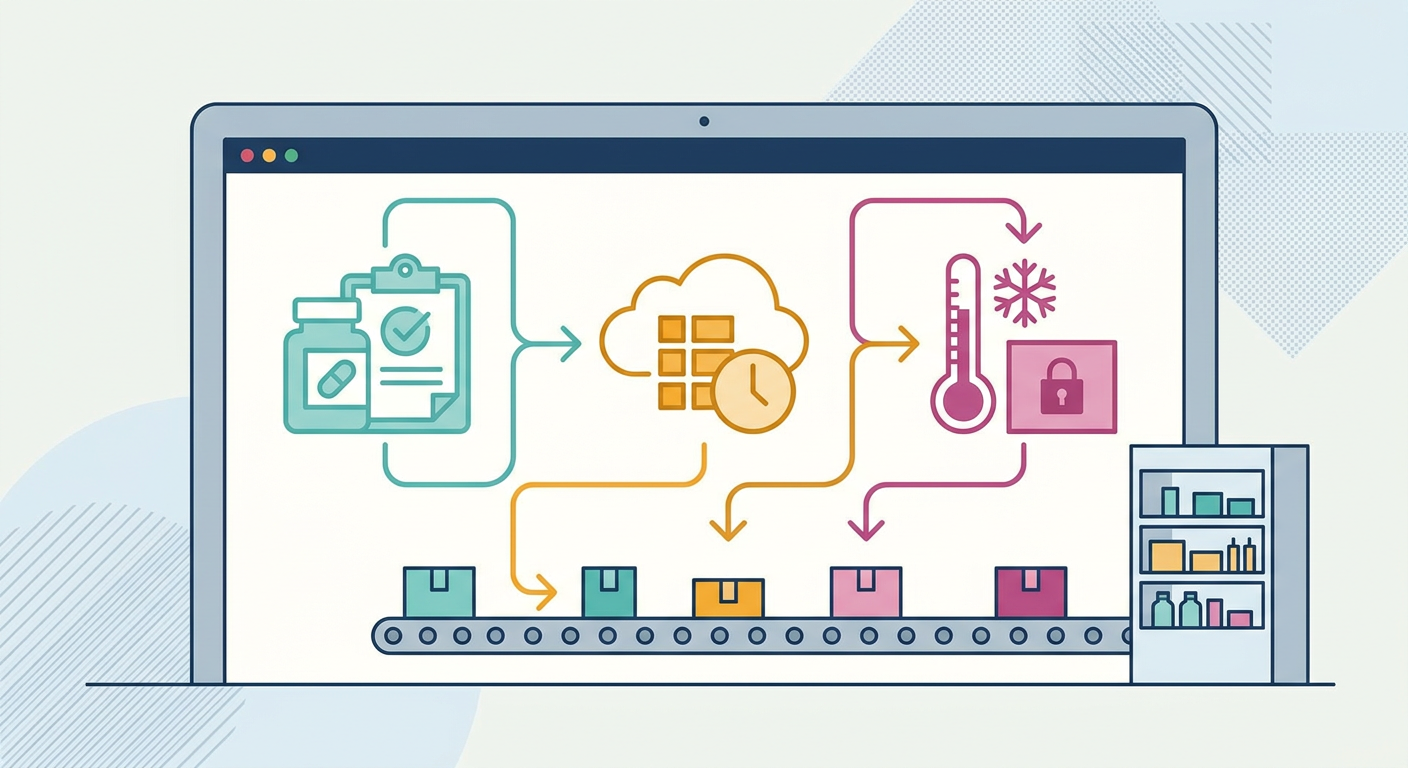
Why pharmaceutical stock is different from ordinary stock
Ordinary inventory software answers "how many do we have?". Pharmaceutical inventory software has to answer "which batch, expiring when, stored how, and sold to whom?".
HSA states that compliance with its Guidance Notes on Good Distribution Practice is mandatory for all local importers and wholesalers of therapeutic products, and that compliance with the GDP standard is required before the relevant licences are granted.
That shifts the job of the software. A spreadsheet that holds a running total per product cannot tell you which customers received a particular batch. A system built for pharmaceuticals records the batch on every movement, so the answer is a search, not a week of digging through delivery orders.
Source: Singapore Health Sciences Authority, Apply for a Licence
What must inventory software for pharmaceuticals handle?
At minimum: batch and expiry tracking on every receipt and sale, FEFO picking, segregated quarantine, returned and recalled stock, recall tracing by batch, storage temperature records, an audit trail, and access controls. Each maps to a section of HSA's GDP guidance, set out below.
Batch and lot tracking on every movement
The GDP guidance (GUIDE-MQA-013) says a record of receipt and distribution "shall be kept, stating the product name, date of transaction, invoice/delivery order number, name and address of purchaser/supplier, batch number, expiry date, quantity received/sold and stock balance." Your software should capture those fields at goods receipt and on every delivery order, not as free text added later.
Expiry control and FEFO picking
The guidance states that products bearing an expiry date must not be received or supplied after expiry, or so close to it that the date is likely to pass before the consumer uses them. It also asks for a stock rotation system, giving first expiry, first out (FEFO) as the example. In software terms, that means:
- Picking lists that suggest the earliest-expiring released batch first.
- A block or warning when a batch is past, or near, a minimum remaining shelf life you set per customer or product.
- Returned stock that goes back to saleable stock only after approval, and then into FEFO order, which the guidance also calls for.
Quarantine, returns and stock status
HSA expects segregated storage for quarantined, released, rejected, returned and recalled products, with access restricted to authorised staff. The guidance allows a computerised or bar coding system to replace physical separation, provided it gives equivalent assurance. Software that treats status as a property of each batch, with only some roles allowed to release it, is what makes that possible.
Recalls
Under the GDP guidance, all customers who received a recalled product must be informed with the appropriate urgency, the local regulatory authority should be informed of all recalls, and the recall's progress should be recorded in a final report that reconciles delivered and recovered quantities. Good software produces the customer list for a batch in seconds and tracks recovered quantities against it.
Cold chain records
The guidance defines cold chain products as those requiring storage of not more than 8°C. It asks for storage conditions to be monitored and recorded, with the readings reviewed regularly and corrective actions recorded. Many firms keep temperature data in a logger system; the inventory software should at least link each cold chain batch to its storage location and log excursions against the affected stock.
Audit trail and record keeping
Where records are kept electronically, HSA's guidance says only authorised persons should enter or modify data, there should be a record of changes and deletions (an audit trail), access should be restricted, and the data should be backed up and readily available throughout the retention period. Documents should be retained as the law requires and be readily retrievable.
Controlled and restricted items
Some products carry rules beyond GDP, and those rules differ by product class. Software can help with role-based access, separate stock locations and approval steps for restricted items, but the exact records you must keep depend on your licences. Confirm those obligations with HSA directly; this article is not legal advice.
Source: Singapore Health Sciences Authority, Guidance Notes on Good Distribution Practice

Which licences shape the records you keep?
HSA says an importer's licence (TPIL) and a wholesaler's licence (TPWL) are required to import and wholesale therapeutic products, and that your company must comply with GDP before they are granted. Each licence names a Responsible Person who maintains the quality management system.
Retail pharmacies sit under a separate retail pharmacy licensing track on HSA's site. If you hold more than one licence type, check that your software can apply different rules to different parts of the business. The HSA licence overview is the place to start.
Source: Singapore Health Sciences Authority, Overview of Importer, Wholesaler and Manufacturer's Licences
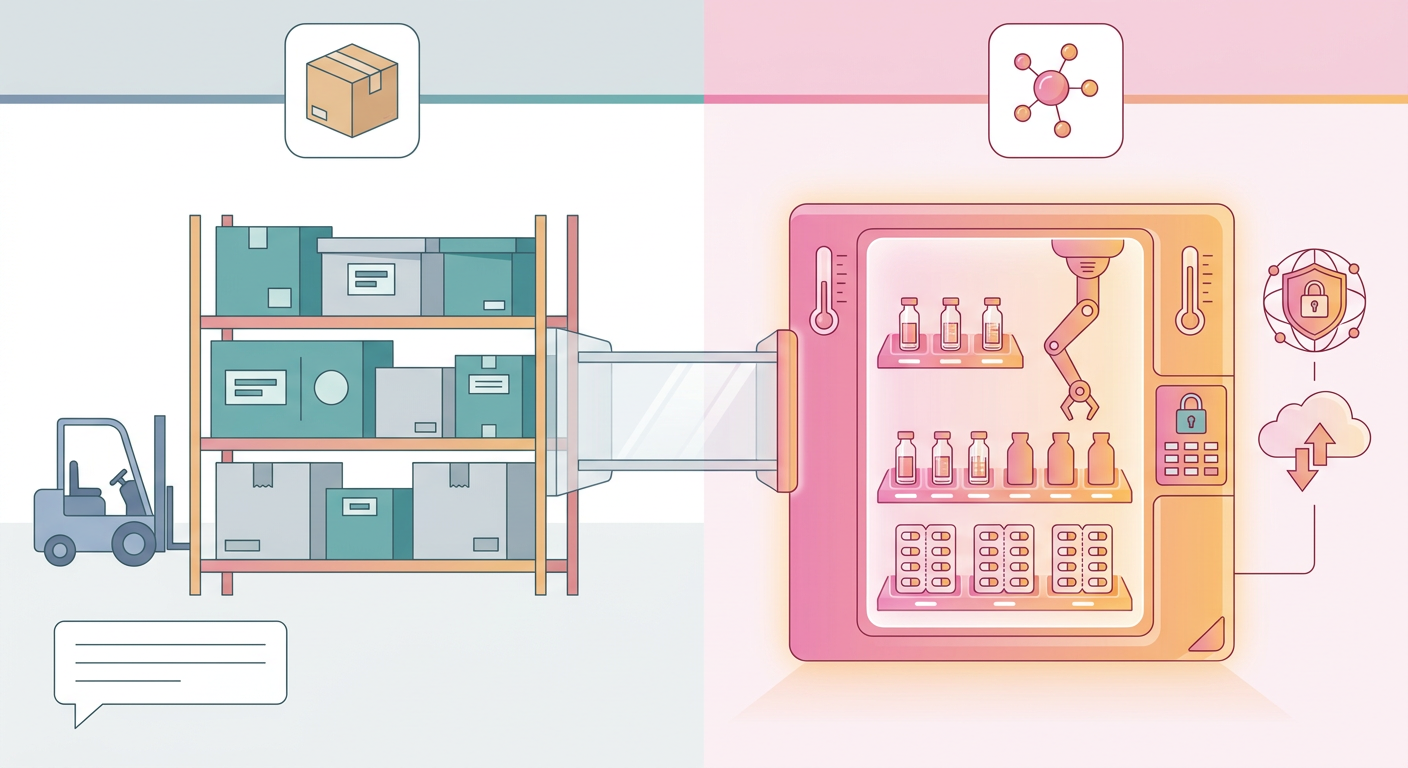
Should you buy off-the-shelf or build custom?
Buy off-the-shelf if your flow is standard and the product already handles batch, expiry, FEFO and an audit trail out of the box. Build custom when your quarantine, returns, approvals or customer-specific shelf-life rules keep forcing staff back into spreadsheets alongside the system.
| Question | Off-the-shelf inventory or ERP | Custom-built system |
|---|---|---|
| Setup | Lower upfront effort for standard workflows | Built around your own process and terms |
| Batch, expiry and FEFO | Often available, sometimes only in higher tiers or add-ons | Designed in from the first module |
| Quarantine and release rules | Fixed statuses; your process adapts to the tool | Statuses and approvers match your quality procedures |
| Recall reports | Standard reports; custom ones can be costly | The report you need for your recall procedure |
| Change over time | Depends on the vendor's roadmap | Changes as your licences and processes change |
For a wider view of when a dedicated stock system is worth it, see what an inventory management system actually does. If your problem is mainly bins, picking and stock moves in the warehouse, read whether you actually need a warehouse management system.
What should you ask a vendor?
Ask them to prove each requirement on your own sample data, not in slides. A mock recall, an expired-batch block and an audit trail read-back will tell you more in an hour than a feature list will.
- Run a mock recall. Pick a batch. How quickly can the system list every customer, delivery order and quantity, and record what came back?
- Show FEFO in practice. Does the picking list choose the earliest-expiring released batch? Can staff override it, and is the override recorded with a reason?
- Try to sell expired stock. Does the system block it, or only warn? Can you set a minimum remaining shelf life per customer?
- Open the audit trail. Edit a quantity, then show who changed it, when, and what the old value was. Can anyone delete history?
- Walk a return. Does returned stock sit apart from saleable stock until someone authorised releases it?
- Check roles. Who can release quarantined stock? Can that be limited to your Responsible Person or quality team?
- Ask about data. Where is it hosted, how is it backed up, and can you export all of it, including the audit trail, if you leave?
- Ask about migration. How will they import your items, open batches and stock balances without a long shutdown?
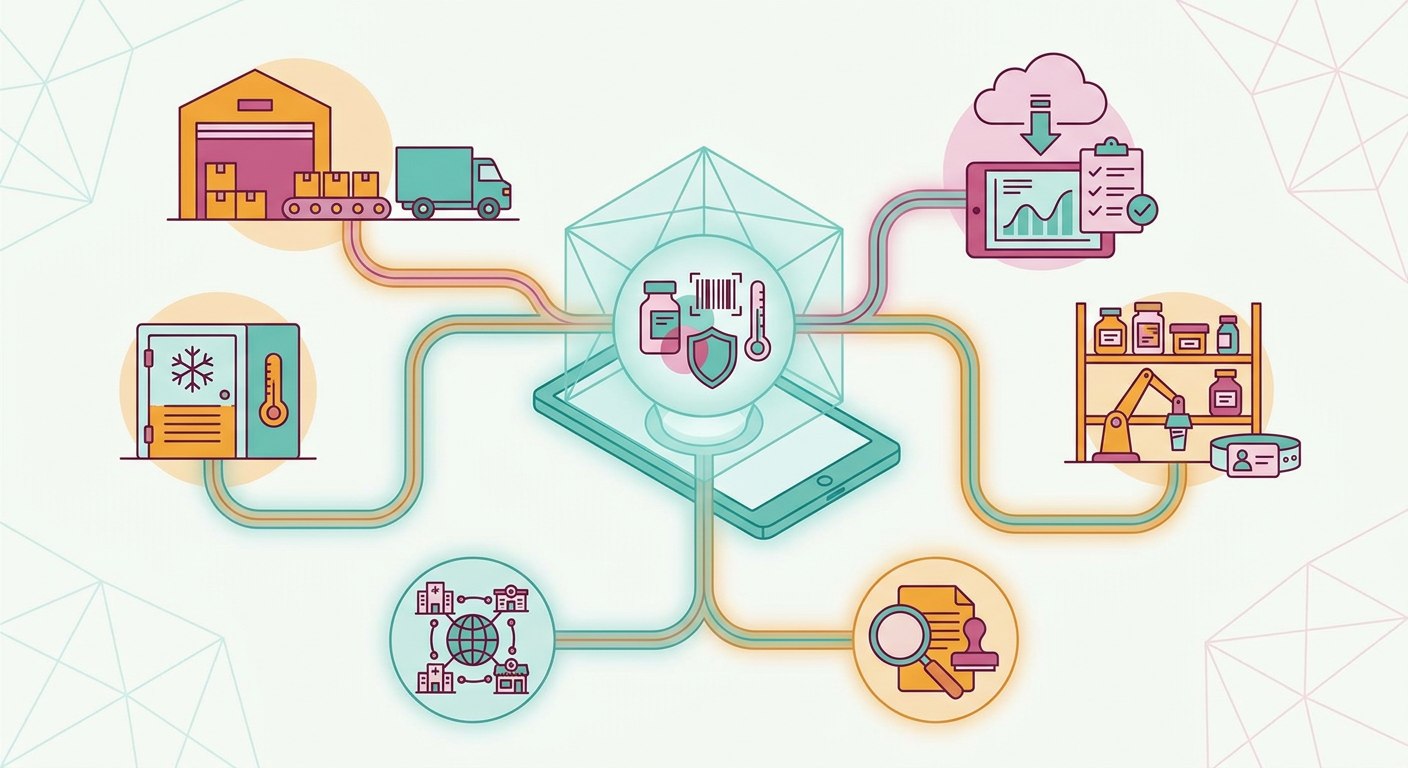
How Digital 9 Labs builds pharmaceutical inventory systems
Digital 9 Labs builds custom inventory and ERP systems for Singapore SMEs. Our inventory management module includes batch and serial tracking, described on the page as "expiry-dated batches and serialised units tracked from receipt to sale to warranty", along with multi-location stock, available-to-promise quantities, reorder suggestions and rolling cycle counts.
For distributors, our trading and distribution ERP tracks on-hand, committed, in-transit and available quantities by location and batch, with landed cost, credit control and Xero sync. Our custom ERP builds add role-based approvals and audit logs.
We start by mapping how your team works today, then ship the workflow that hurts most first. On a trading build, that first module typically ships within 6 to 8 weeks. Custom ERP starts from $3.5k onwards, priced after a walkthrough, and you own the code and data we build.
Frequently asked questions
Is FEFO required for pharmaceutical distributors in Singapore?
HSA's GDP guidance says a system should be in place to ensure proper stock rotation, giving first expiry, first out (FEFO) as the example, and that it should be checked regularly. Deviations may be permitted in exceptional cases. Confirm how this applies to your licence with HSA.
Can a computer system replace physical quarantine areas?
HSA's GDP guidance allows a computerised or bar coding system to replace physical separation of quarantined, rejected, returned or recalled stock, provided it gives equivalent assurance in segregation and restricts access to authorised staff.
What does a pharmaceutical distribution record need to show?
Per HSA's GDP guidance: product name, transaction date, invoice or delivery order number, purchaser or supplier name and address, batch number, expiry date, quantity received or sold, and stock balance.
How much does custom pharmaceutical inventory software cost?
At Digital 9 Labs, custom ERP starts from $3.5k onwards. The first inventory module is priced after a walkthrough of your locations and channels, so the figure depends on your scope.