SAP Business One Alternatives in Singapore: 7 Options Compared
Singapore ERP Buyer's Guide · 2026
SAP Business One Alternatives
Seven honest paths for Singapore SMEs — written by a custom software team that admits when SAP is the right answer.
Why Singapore Companies Look Beyond SAP B1
Where SAP Business One Genuinely Wins
PSG Grant Eligible
V10 is pre-approved under IMDA SMEs Go Digital. Up to 50% support, capped at S$30,000/year. Custom builds cannot access PSG.
Deep Finance Logic
Decades of accumulated accounting depth: multi-currency, intercompany, statutory audit trails, period locking — all mature.
Local Partner Pool
Multiple Gold Partners competing for your business. Hire trained staff, switch partners without switching software.
The Seven Alternatives
PSG vs EDG — The Grant Maths
For SAP B1 & Pre-approved
Productivity Solutions Grant
- Up to 50% of qualifying costs
- S$30,000 cap per company per year
- Covers the listed solution package
- Processing: ~4–6 weeks
- Custom builds do not qualify
For Custom Projects
Enterprise Development Grant
- Up to 50% of eligible costs for SMEs
- Assessed per project by EnterpriseSG
- Covers consultancy, software, manpower
- Processing: ~8–12 weeks
- No pre-approved vendor list
Quick Match by Buyer Type
Before You Switch: What "SAP Business One Alternatives" Really Means in Singapore
Searching for SAP Business One alternatives usually means one of two things. Either you are already running SAP Business One and something about it has stopped fitting, or you are evaluating it against other options before signing. Those are different questions, and most comparison articles answer neither of them honestly because they are written by a vendor who wants you to pick their product.
This guide is written by a Singapore custom software team, so we will be upfront about the bias: we build custom AI ERP systems, and that is one of the seven options below. It is also the wrong choice for a good number of the companies who ask us about it. Where SAP Business One is the better answer, we say so, and there is a whole section on exactly that.
Who SAP Business One Serves Today in Singapore
SAP Business One is SAP's ERP product for small and midsize companies, distinct from the enterprise S/4HANA line. In Singapore it is sold and implemented almost entirely through SAP channel partners rather than by SAP directly. Established local partners include AFON, Integrated Information Systems, MicroChannel and Naviworld, several of which have held SAP Gold Partner status for years.
It tends to land well in distribution, trading, light manufacturing and wholesale, where the core need is inventory, purchasing, financials and multi-currency handled by one system with a proper audit trail. If your business is essentially "buy things, hold stock, sell things, close the books cleanly," SAP Business One is a mature and well understood answer.
The Real Reasons Singapore Companies Look for Alternatives
From the public review corpus and from conversations with SG SMEs, the reasons cluster into five:
- Interface and training load. The most consistent complaint in verified reviews is that the interface is dense and not intuitive, and that new staff need real training before they are productive. In a company with high turnover in ops or admin roles, that cost repeats.
- Reporting friction. Finance teams report that standard statements often need ad hoc adjustment, and that reporting in transaction currencies is awkward enough to slow down period end close.
- Desktop-first heritage. There is a web client, but the desktop application is still the primary tool for many users. For teams that expect browser and mobile access as a default, this feels dated.
- Customisation cost. Changing how the system works, as opposed to configuring what is already there, means partner development time billed at partner rates.
- Multi-entity complexity. The system assumes one financial reporting standard per managed company, which gets complicated if you report locally under one standard and consolidate to a parent under another.
Sources: Capterra verified reviews, Mondial Software on SAP B1 financial reporting
Where SAP Business One Genuinely Wins
If any of the following three points describe your situation, be careful about switching. These are real advantages and no amount of custom development changes them.
PSG Pre-Approval: The Grant Advantage Custom Builds Do Not Have
This is the big one in Singapore and it is frequently glossed over. SAP Business One Version 10 is a pre-approved solution under the IMDA SMEs Go Digital programme, which means it qualifies for the Productivity Solutions Grant. PSG support for pre-approved IT solutions such as SAP Business One can cover up to 50% of qualifying costs, with a typical grant cap of S$30,000 per company per financial year under the programme parameters.
A custom built ERP cannot access PSG, because PSG only funds solutions on the pre-approved list. Custom projects go through the Enterprise Development Grant instead, which is a different process with different economics (covered below). If your budget maths depends on PSG, that materially favours SAP Business One and other pre-approved packages.
The usual eligibility rules apply: Singapore registered with at least 30% local shareholding, group annual sales turnover not more than S$100 million or group employment not more than 200, and the solution must be used in Singapore. Critically, you must not pay any deposit before your application is submitted and accepted, or you disqualify the claim.
Source: EnterpriseSG Productivity Solutions Grant (PSG)
Depth of Finance and Audit Capability
SAP Business One carries decades of accumulated accounting logic. Multi-currency, intercompany, statutory audit trails, period locking and the general discipline that auditors expect are all mature. If you are preparing for due diligence, an acquisition, or a group audit, arriving with a recognised ERP is genuinely easier than explaining a bespoke system to a sceptical auditor.
The Singapore Partner Ecosystem
There are multiple established SAP Business One partners in Singapore competing for your business. That means local support in your timezone, staff you can hire who already know the system, and, importantly, the ability to change partner without changing software if the relationship sours. Custom development concentrates that risk into one supplier relationship, which is a genuine trade-off you should price in.
What SAP Business One Actually Costs in Singapore
Here is the honest position: Singapore SAP Business One partners do not publish prices. AFON's own pricing page lists the factors that drive cost (number and type of user licences, database choice, implementation complexity, customisation, support and training) and then asks you to book a consultation. No figures.
That is not unusual in this market, but it does mean any specific number you find online is a third party estimate rather than an SG quote. Treat the following as orders of magnitude for framing your questions, not as prices you should expect:
| Cost component | Third party estimated range | What to actually ask your partner |
|---|---|---|
| Cloud subscription, per named user | Roughly USD 95 to 250 per user per month, varying by user type | The split between Professional, Limited and Starter licences for your actual headcount |
| Perpetual licence, per named user | Roughly USD 3,500 to 5,500 one time | Whether annual maintenance is 18 to 20% of licence value, and when it escalates |
| Implementation | From about USD 15,000 for a basic rollout to USD 150,000+ for larger, multi-site projects with customisation | A fixed scope quote, and the hourly rate for anything outside it |
Sources: ERP Research SAP Business One pricing, AFON SAP Business One pricing factors
The number that matters is not the licence line. It is the three year total including implementation, annual maintenance, the customisation you will inevitably request in year one, and the internal time your team spends on the rollout. Ask for that figure in writing before you compare anything.
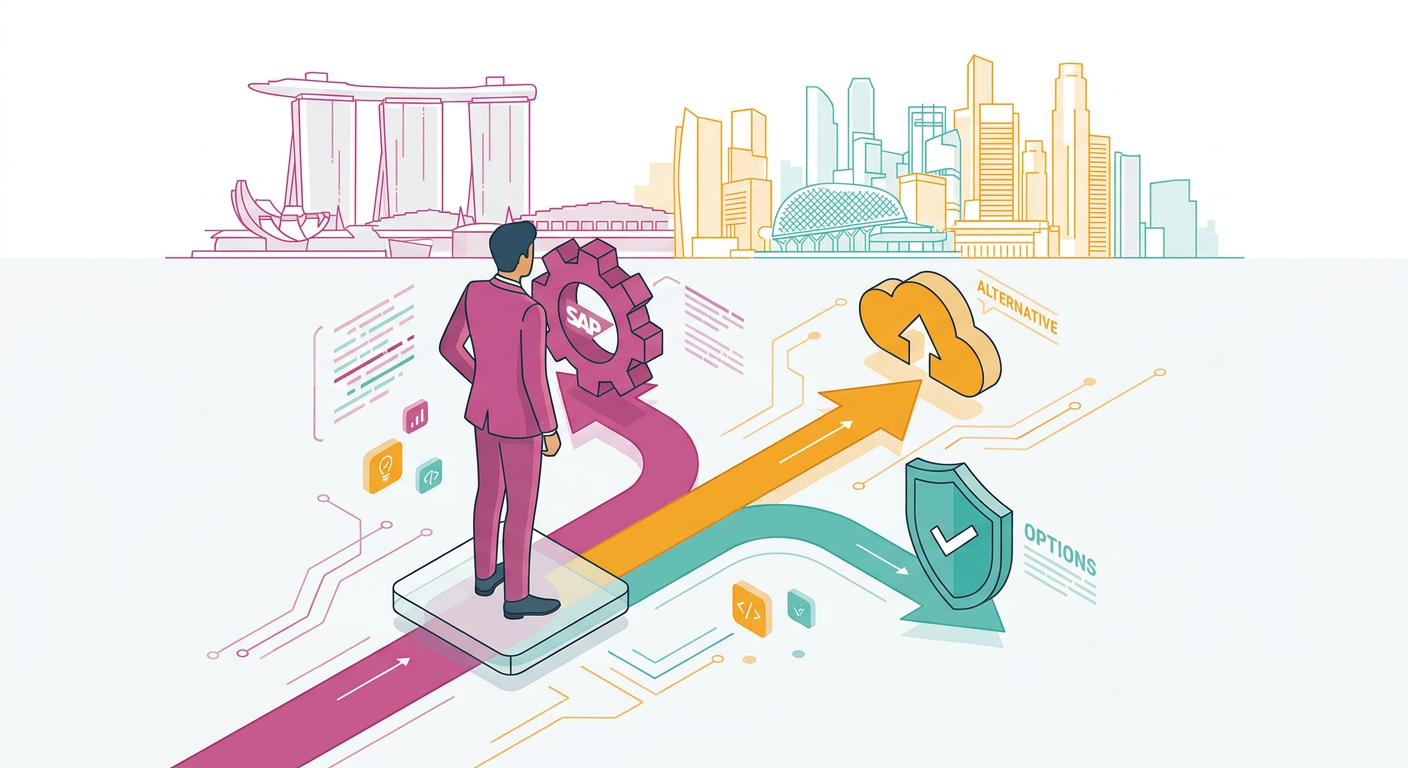
The Off-the-Shelf Alternatives
1. NetSuite: For Regional and Multi-Entity Growth
Oracle NetSuite is the most common like-for-like alternative when the driver is multi-entity or regional expansion. It is cloud native in a way SAP Business One still is not, and its multi-subsidiary consolidation is a genuine strength. It is also generally the more expensive option, and it has its own reputation for customisation costs adding up. Best for companies growing across several ASEAN markets who want one consolidated ledger.
2. Microsoft Dynamics 365 Business Central: For Microsoft-Centric Teams
If your company already runs on Microsoft 365, Business Central is the path of least resistance. Native integration with Outlook, Excel, Teams and Power BI removes a lot of the friction that makes ERP adoption fail. Comparable in scope to SAP Business One, with a more modern interface. Best for teams whose finance staff live in Excel and whose IT is already Microsoft.
3. Odoo: Modular and Open Source
Odoo lets you start with two or three modules and add more, at a substantially lower entry price. The community edition is open source and self-hostable. The trade-offs are real: quality varies across modules, many useful features sit in paid apps or third party add-ons, and Singapore localisation is thinner than the incumbents. Best for cost-sensitive SMEs with in-house technical capability. We have written a separate guide on Odoo alternatives if you are evaluating from that direction.
4. HashMicro: The Local Integrated Suite
HashMicro is the strongest regional player positioned specifically at Singapore and Southeast Asian SMEs, with local compliance handled and a broad module range. Like the SAP partners, its pricing is quote-only. Best for SG-focused businesses that want one locally supported vendor for everything. Our HashMicro alternatives guide covers it in depth.
5. Zoho One and Lighter Cloud Suites
For smaller teams, the honest answer is often that you do not need an ERP yet. Zoho One, or a combination of Xero with a focused operational tool, covers a lot of ground at a fraction of the cost. If your pain is "we are retyping quotes into three places" rather than "our financial consolidation is breaking," start here before you spend six figures.
6. ERPNext: Fully Open Source
ERPNext is genuinely open source with no licence fee, self-hostable, and you can modify it. The cost moves from licences to the technical capability required to run and extend it. Best for companies with a developer on staff who want ownership without commissioning a build from scratch.

7. The Third Path: A Custom AI ERP Where You Own the Code
The seventh option is not a product. It is building the system around your workflow instead of adapting your workflow to someone else's modules.
When Custom Genuinely Beats SAP Business One
Custom is the right call in a narrower set of cases than most agencies admit:
- Your process is your competitive advantage. If the way you quote, schedule or fulfil is the reason customers choose you, forcing it into standard modules erodes the thing that makes you money.
- Off-the-shelf forces workarounds. When the honest answer from every vendor demo is "you would handle that outside the system in a spreadsheet," you are about to pay ERP prices for a partial solution.
- You are paying for modules you do not use. Per-user licensing across a large ops team, most of whom touch two screens, gets expensive.
- Ownership matters. Code and data you control means no per-user licence creep, no forced upgrade cycle, and the freedom to extend with any developer later.
What This Looks Like in Practice
At Digital 9 Labs we build these as focused modules rather than big-bang replacements. A first working module starts from S$3,500 and typically takes four to eight weeks from workflow review to something the team is actually using. Larger systems are phased so adoption keeps pace with delivery, and the quote is fixed upfront after the workflow review.
The systems we have delivered in Singapore include operations platforms for REPASSA in industrial supply, Bluedot in AV engineering, Twin City Endodontics and Smile Bright in dental, and Pamper Me in wellness. Those are real deployments rather than a logo wall, and we are happy to walk you through the actual screens.
What Custom Does Not Solve
In fairness, and this is the part most agency comparison pages leave out:
- No PSG. Custom does not qualify. If PSG is central to your budget, that is a real point against us.
- Supplier concentration. You are dependent on the team that built it, at least initially. Mitigate it by insisting on code handover and documentation as a contract term, with any vendor including us.
- No instant hiring pool. Nobody arrives already knowing your system, unlike SAP where trained staff exist in the market.
- Accounting depth takes time. If you need deep statutory consolidation on day one, a mature finance module is a faster route than building one.
Migration Effort: What Leaving SAP Business One Actually Involves
The switching cost is usually underestimated by a factor of two. Budget properly for:
- Data extraction and cleaning. Master data (customers, suppliers, items, price lists) plus open transactions. The cleaning takes longer than the moving.
- Historical records. Decide early whether history migrates or stays accessible in a read-only archive. Full history migration is expensive and often unnecessary.
- Financial year timing. Cut over at a clean period boundary. Mid-year switches create reconciliation work that lasts for months.
- Parallel running. Plan for a period on both systems. It is painful and it is cheaper than the alternative.
- Integrations. Every connected system (bank feeds, e-commerce, logistics, InvoiceNow e-invoicing) needs rebuilding and retesting.
A realistic switch for a mid-sized SG SME runs three to six months end to end. Any vendor promising a fortnight is quoting the software install, not the migration.
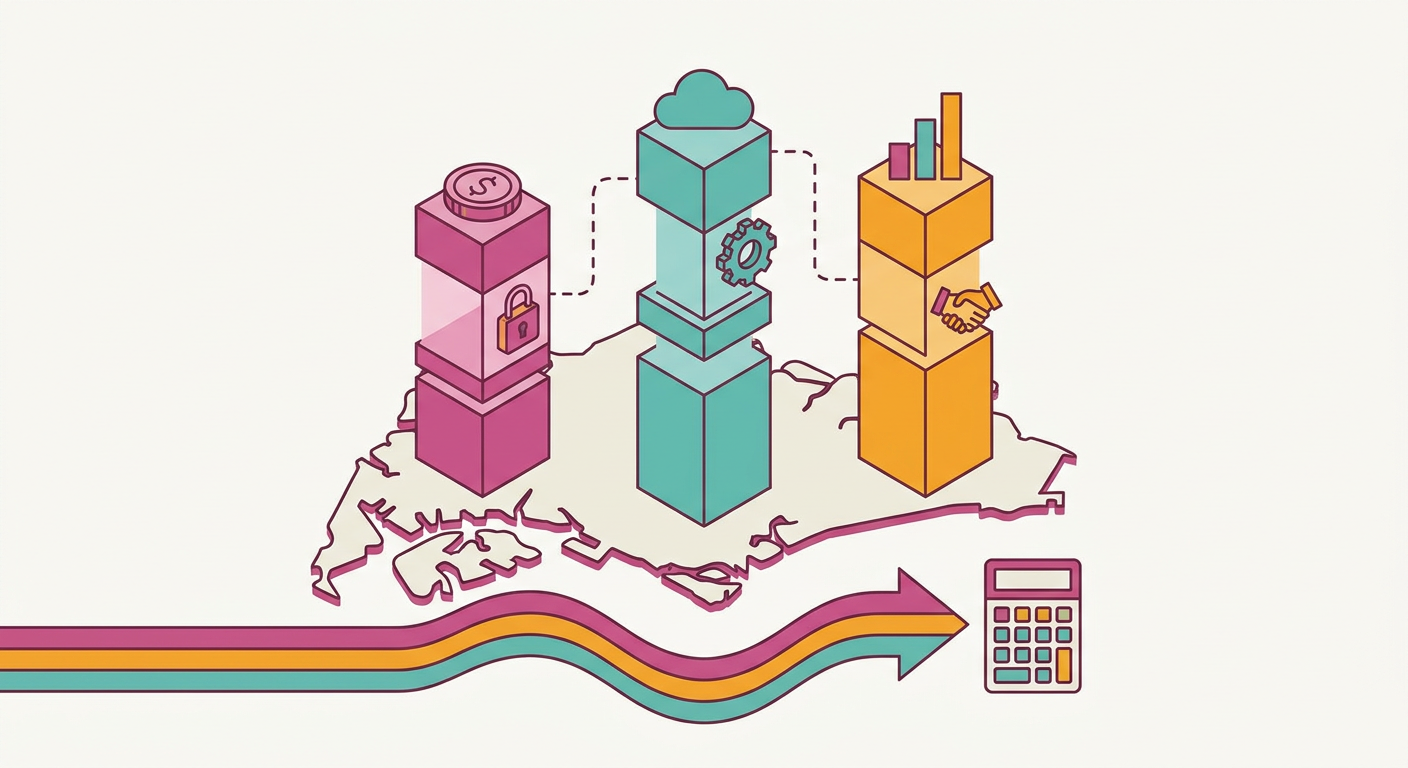
PSG vs EDG: How Grants Change the Maths
This is the single most important commercial difference between the paths, so it is worth being precise.
| PSG | EDG | |
|---|---|---|
| Funds | Pre-approved packaged solutions only (includes SAP Business One V10) | Custom projects, no pre-approved vendor list |
| Support level | Up to 50% of qualifying costs | Up to 50% of eligible costs for local SMEs |
| Cap | S$30,000 per company per financial year | Assessed per project by EnterpriseSG |
| Covers | The listed solution package | Third party consultancy, software and equipment, internal manpower |
| Processing | Around 4 to 6 weeks | Roughly 8 to 12 weeks |
| Key rule | The project must be new. No payment, deposit or signed contract before applying, or you are disqualified. Both are reimbursement based. | |
Source: EnterpriseSG PSG and EDG grant parameters
Note also that the new EDGE grant is scheduled to launch in the second half of 2026, with details still pending. Companies planning a custom project can apply under the current EDG before the switchover.
We have a fuller PSG grant guide and an ERP software Singapore overview if you want the grant detail separately.
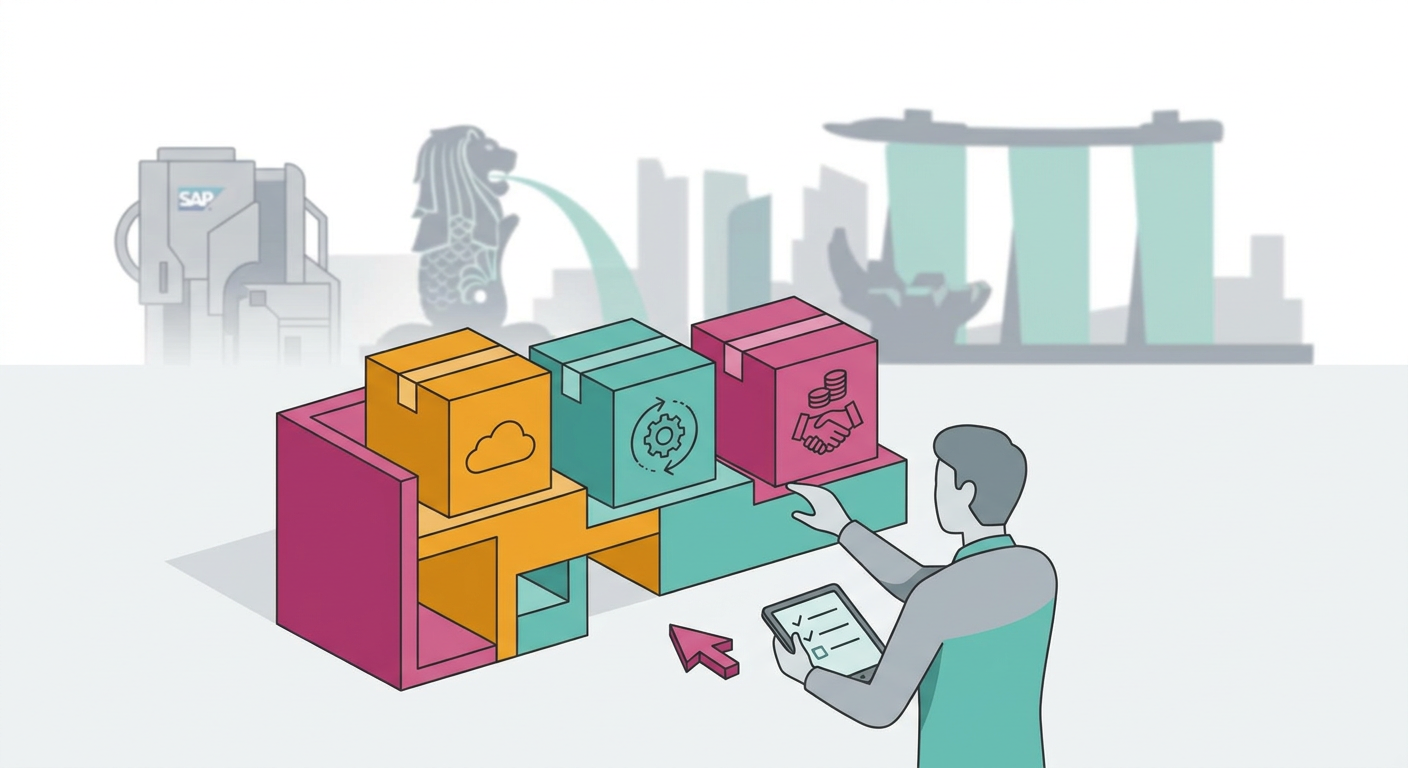
How to Choose: A Straight Answer by Buyer Type
| If this is you | Start with |
|---|---|
| Distribution or trading, standard processes, PSG matters to the budget | SAP Business One or another PSG pre-approved package |
| Expanding across ASEAN, multiple entities to consolidate | NetSuite |
| Already all-in on Microsoft 365 | Dynamics 365 Business Central |
| Cost sensitive with technical capability in-house | Odoo or ERPNext |
| Want one local vendor for everything, SG-focused | HashMicro |
| Under about 15 staff, pain is admin not consolidation | Zoho One or Xero plus a focused tool. Do not buy an ERP yet |
| Your workflow is the competitive edge, or every demo ends in "handle that in Excel" | Custom build, EDG funded |
Whichever direction you lean, do these four things before signing anything: write down the three workflows that must work or the project has failed; shortlist across at least two of the paths above, not three vendors from one; get the three year total cost in writing including implementation and maintenance; and pilot one module before committing to a full rollout.
Frequently Asked Questions
Is SAP Business One eligible for the PSG grant in Singapore?
Yes. SAP Business One Version 10 is a pre-approved solution under the IMDA SMEs Go Digital programme, so it qualifies for PSG support of up to 50% of qualifying costs, with a typical grant cap of S$30,000 per company per financial year. You must apply before making any payment to the vendor.
Source: EnterpriseSG Productivity Solutions Grant (PSG)
How much does SAP Business One cost in Singapore?
Singapore partners do not publish prices and quote per project. Third party estimates put cloud subscriptions at roughly USD 95 to 250 per named user per month and perpetual licences at roughly USD 3,500 to 5,500 per user plus 18 to 20% annual maintenance, with implementation from around USD 15,000 depending on scope and complexity. Ask your partner for a three year total cost in writing rather than relying on published estimates.
Source: ERP Research SAP Business One pricing
What is the best SAP Business One alternative for a Singapore SME?
It depends on why you are switching. For regional multi-entity growth, NetSuite. For Microsoft-centric teams, Dynamics 365 Business Central. For cost sensitivity with in-house technical skill, Odoo or ERPNext. For a locally supported all-in-one, HashMicro. If your workflow is genuinely non-standard, a custom build funded through EDG.
Can I get a grant for a custom ERP instead of SAP Business One?
Not through PSG, which only funds pre-approved packages. Custom projects go through the Enterprise Development Grant, which supports up to 50% of eligible costs for local SMEs, has no pre-approved vendor list, and can cover consultancy, software, equipment and internal manpower. Processing typically takes roughly 8 to 12 weeks and the project must not have started before approval.
Source: EnterpriseSG EDG parameters
How long does it take to migrate off SAP Business One?
Plan for three to six months end to end for a mid-sized Singapore SME, covering data extraction and cleaning, a decision on historical records, a cutover timed to a clean financial period, a parallel running period, and rebuilding every integration.
Should I replace SAP Business One or add to it?
Often you should add. If the core finance and inventory work fine and the pain is in quoting, approvals, project tracking or field operations, a custom operational layer in front of SAP Business One is cheaper and less disruptive than replacing a working general ledger.
Talk It Through
If you are weighing SAP Business One against the alternatives and want a straight opinion rather than a pitch, we are happy to look at your actual workflows and tell you which path fits, including when that path is not us. Get in touch or see how we approach custom ERP in Singapore.