HashMicro Alternatives in Singapore: NetSuite, Odoo, SAP & Custom AI ERP Compared
Choosing Your ERP Path in Singapore
Beyond HashMicro, Singapore SMEs have three core paths for their operations platform. Each offers different trade-offs in terms of fit, scale, cost, and control.
Local Integrated Suite
e.g., HashMicro
- Best For: SG-focused businesses wanting an all-in-one, locally supported solution.
- Key Trait: Strong localisation for SG compliance and a wide range of integrated modules.
Global Cloud Platform
e.g., NetSuite, Odoo, SAP
- Best For: Companies with regional/global ambitions or needing best-in-class features.
- Key Trait: Superior scalability, multi-country support, and large partner ecosystems.
Custom-Built AI ERP
e.g., Digital 9 Labs
- Best For: Businesses with unique workflows seeking long-term control and a competitive edge.
- Key Trait: Perfect workflow fit, code ownership (no vendor lock-in), and AI-powered automation.
If you're a Singapore-based SME evaluating your next big software investment, you've likely come across HashMicro. As a prominent local ERP provider, they offer a compelling suite of tools. But what if you're not entirely convinced it's the perfect fit? You're not alone. Many businesses are actively seeking hashmicro alternatives to ensure they find a solution that aligns perfectly with their unique workflows, budget, and long-term growth strategy. This guide dives deep into the best alternatives available in Singapore, from global giants like NetSuite and Odoo to the powerful, flexible path of a custom-built AI ERP.
Before You Switch: What "HashMicro Alternatives" Really Means for Singapore Businesses
Searching for "HashMicro alternatives" isn't just about finding a different brand. It's a strategic checkpoint in your company's digital transformation journey. It means you're moving beyond a one-size-fits-all approach and asking critical questions: Does this ERP truly support our specific processes? Will it scale with us as we expand regionally? Does the pricing model offer the transparency and predictability we need? For many Singapore SMEs, this search is about finding the optimal balance between features, cost, flexibility, and local support, including navigating government grants like the PSG and EDG.
Who HashMicro Serves Today in Singapore
HashMicro has established a strong presence in Singapore and Southeast Asia by positioning itself as a comprehensive, all-in-one ERP solution tailored for local business needs. According to their own materials, they serve a wide range of industries, including distribution, manufacturing, professional services, retail, and F&B. Their core value proposition revolves around automation, with integrated modules covering everything from accounting and inventory to CRM and HashMicro HR software. They emphasize their local roots, offering solutions that cater to Singapore's specific compliance and business environment.
Source: HashMicro product site
Typical Reasons People Look for HashMicro Alternatives
While HashMicro is a robust platform, a few common reasons lead discerning businesses to explore other options. These pain points often trigger the search for a better-fitting solution:
- Pricing Uncertainty: HashMicro's predominantly quote-based pricing model can make it difficult for SMEs to budget accurately and compare costs directly against competitors with more transparent pricing tiers. HashMicro does not publish a price list; quotes are per module and per project.
- Global Ambitions: Businesses planning regional or global expansion may seek an ERP with native multi-country, multi-currency, and multi-subsidiary capabilities, a traditional strength of global ERP players.
- Need for Deeper Customization: While HashMicro offers configuration, some businesses have highly unique workflows that off-the-shelf software can't accommodate without expensive, complex customizations. They might need a higher degree of ERP customization in Singapore.
- Desire for Code Ownership: Forward-thinking companies often prefer to own their software's source code to avoid vendor lock-in, ensure long-term flexibility, and maintain full control over their data and technology stack.
- Grant Eligibility Questions: Navigating the specifics of how different ERP solutions qualify for PSG or EDG grants can be complex, prompting businesses to evaluate all options, including custom builds which can also be eligible.

When HashMicro Is the Right Fit (And When It Isn’t)
Making an informed decision requires a balanced look at HashMicro's pros and cons. It's an excellent choice for some, but for others, the signals might point towards an alternative.
Strengths of HashMicro for Singapore SMEs
HashMicro's platform has several notable strengths, particularly for businesses focused on the Singapore market:
- Strong Localisation: Designed with Singapore in mind, it handles local requirements such as tax compliance and HR-related processes, alongside broader Asia-Pacific localisation.
- Integrated Suite: It offers a wide array of interconnected modules (e.g., Accounting, Inventory, CRM, HR, Manufacturing). This all-in-one approach can simplify vendor management for some companies.
- Focus on Automation: HashMicro heavily promotes its automation capabilities, aiming to reduce manual tasks across departments, which is a key goal for many Singaporean SMEs looking to improve productivity.
- Local Presence: Having a team on the ground in Singapore for sales, support, and implementation can be a significant advantage for businesses that value face-to-face interaction and local expertise.
Source: HashMicro ERP overview
HashMicro’s Quote-Only Pricing and What It Means for Budgeting
HashMicro, like many traditional ERP vendors, operates primarily on a quote-based pricing model. This means full price lists for different modules and deployment scenarios are not publicly detailed; you must engage with their sales team, go through a discovery process, and receive a custom proposal. While this ensures the solution is tailored, it presents challenges for budgeting and comparison. SMEs must invest time in the sales process simply to get a comprehensive price. When evaluating the HashMicro cost, it's crucial to get a detailed breakdown of all components: license or subscription fees, implementation costs, customization charges, and ongoing support and maintenance fees.
Source: HashMicro (no public price list as of July 2026)
Signals That You May Need an Alternative to HashMicro
Pay attention to these signs. If they resonate with your business needs, it's a strong indicator that you should seriously evaluate alternatives:
- You run a multi-entity business with operations in several countries and need seamless financial consolidation and reporting across all of them.
- You require advanced AI and Machine Learning capabilities for predictive analytics, demand forecasting, or workflow optimization that go beyond standard automation.
- You want the freedom of open-source software to modify, extend, and control your ERP without being tied to a single vendor's roadmap.
- Your industry is highly niche (e.g., specialized F&B like central kitchens) and a vertical-specific solution like Klikit might serve you better than a general-purpose ERP.
- Long-term control is a priority. You want to own the ERP codebase to ensure you can adapt it indefinitely as your business evolves, without being subject to a vendor's price hikes or platform changes.
Top Off‑the‑Shelf HashMicro Alternatives in Singapore
For businesses seeking a ready-made platform, several global leaders offer powerful alternatives to HashMicro. These platforms are well-established in Singapore and appear consistently in independent comparison lists of HashMicro competitors.
Source: G2 – HashMicro ERP competitors, GetApp Singapore – HashMicro alternatives, Capterra Singapore – HashMicro alternatives
NetSuite: Cloud ERP for Regional and Global Growth
Oracle NetSuite is widely positioned in the market as one of the leading cloud ERP systems globally for growing businesses, and it is a top HashMicro alternative for ambitious Singapore SMEs with plans for regional or international expansion. Its key strength is providing a single, unified platform for managing multi-entity and multi-country operations. Financial consolidation, multi-currency management, and localized tax compliance are built into its core, making it a go-to choice for companies outgrowing simpler accounting software or local ERPs. Major software review platforms consistently rate NetSuite highly for breadth of functionality and suitability for multi-subsidiary environments.
Source: G2 – HashMicro ERP competitors (NetSuite), Capterra Singapore – HashMicro alternatives (NetSuite)
Odoo: Modular, Open‑Source ERP with Strong Community
Odoo is a unique and highly popular alternative. It started as an open-source project and has grown into a comprehensive suite of business apps. Its modularity is its biggest draw; you can start with a few essential apps (like CRM and Accounting) and add more as you grow. Odoo offers a free, open-source Community version and a more feature-rich, supported Enterprise version. Independent review platforms with Singapore filters show Odoo with strong ratings, and many users highlight its flexibility, modern interface, and the vibrant community and partner network that supports it.
Source: Capterra Singapore – HashMicro alternatives (Odoo), GetApp Singapore – HashMicro alternatives (Odoo)
SAP S/4HANA Cloud and SAP Business One: Enterprise‑Grade Alternatives
SAP is a name synonymous with enterprise resource planning. For SMEs, SAP offers two primary alternatives. SAP Business One is a long-standing, robust solution designed specifically for small and mid-sized companies, available both on-premise and in the cloud. SAP S/4HANA Cloud is the company's flagship intelligent ERP, offering advanced technology for larger or rapidly scaling businesses. While often perceived as more complex and expensive, SAP's deep industry-specific capabilities make it a powerful contender for businesses in manufacturing, logistics, and retail who are preparing for significant scale.
Source: TrustRadius – HashMicro competitors (SAP Business One, SAP S/4HANA)
Microsoft Dynamics 365: ERP + CRM in the Microsoft Ecosystem
For companies heavily invested in the Microsoft stack (Microsoft 365, Azure, Power BI), Microsoft Dynamics 365 Business Central is a natural HashMicro alternative. It offers a seamless integration experience, combining ERP and CRM functionalities within a familiar Microsoft interface. Business Central is a comprehensive business management solution for SMEs that covers finance, operations, sales, and customer service. The tight link with tools like Excel, Teams, and Power BI enables powerful reporting and collaboration workflows, making it a strong choice for businesses that want a unified technology ecosystem.
Source: TrustRadius – HashMicro competitors (Microsoft Dynamics 365)
Zoho One, Acumatica & Other Cloud Suites for Smaller Teams
For smaller businesses or those just starting their ERP journey, all-in-one suites like Zoho One can be a cost-effective alternative. Zoho One bundles a large number of integrated applications covering sales, marketing, support, accounting, and HR under a unified subscription. Acumatica is another respected cloud ERP provider, known for its user-friendly interface, flexible licensing model that emphasises resource usage, and strong capabilities in distribution and construction. These platforms offer a lighter-weight entry point into the ERP world compared to NetSuite or SAP.
Source: TrustRadius – HashMicro competitors (Zoho One, Acumatica)

Open‑Source and Vertical Alternatives: ERPNext, Klikit and Niche Tools
Sometimes, the best alternative isn't a massive global suite but a specialized tool that does one thing exceptionally well or offers complete freedom.
ERPNext: Fully Open‑Source ERP with Code Ownership Potential
For companies that prioritize flexibility and want to avoid vendor lock-in entirely, ERPNext is a leading open-source alternative. Similar to Odoo's community edition, ERPNext is free to download and self-host, giving you control over your data and the source code. It's a comprehensive system covering accounting, inventory, manufacturing, HR, and more. While it requires more technical expertise to set up and maintain (or a partner to manage it for you), it offers substantial flexibility for customization and the potential for lower software licensing costs compared to proprietary systems, making it a compelling self-hosted ERP option in Singapore.
Klikit: F&B‑Focused Alternative Built for Restaurants in Asia
This is a perfect example of a vertical-specific solution outperforming a general ERP in a narrow use case. While HashMicro has an F&B module, a platform like Klikit is built from the ground up exclusively for restaurants in Asia. It focuses on the most critical pain point for modern F&B businesses: consolidating orders from multiple online delivery platforms (such as GrabFood, Foodpanda, Deliveroo and others) into a single system. For a restaurant chain, this specialized functionality can be more valuable than a generic ERP's manufacturing module, making it a strong HashMicro alternative for F&B businesses.
Source: Klikit – HashMicro alternative for restaurants
The Third Path: Custom‑Built ERP Where You Own the Code
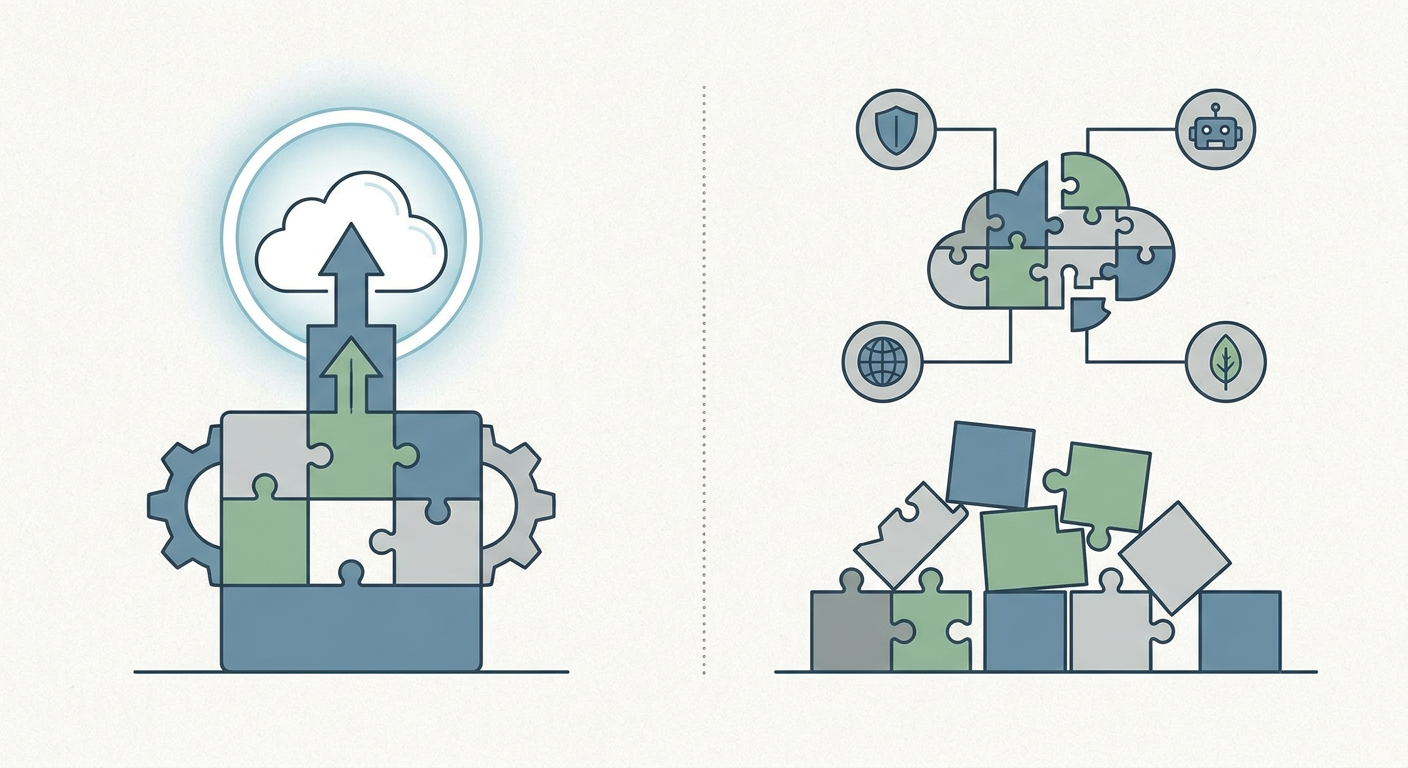
Beyond choosing another vendor's box, there's a third, powerful path: commissioning a custom-built ERP. This isn't about starting from scratch; it's about building a system using modern, modular frameworks that is tailored precisely to your workflows. The most significant advantage? You own the final product and its source code.
Why Some SG SMEs Prefer to Own Their ERP Code
The decision to pursue a custom solution is a strategic one, driven by a desire for ultimate control and a perfect fit.
- Long-Term Flexibility: With code ownership, you are never at the mercy of a vendor's product roadmap, price increases, or decision to sunset a feature you rely on.
- Avoiding Vendor Lock-In: You can choose your hosting provider, your support team, and your development partner. You are free to evolve the system as your business changes, over the long term.
- Perfect Workflow Fit: A custom ERP is built around your "secret sauce", the unique processes that give you a competitive edge. It adapts to your business, not the other way around.
- Data Control and Residency: You have direct control over where your data is stored, which is crucial for compliance and security in many industries.
Digital 9 Labs’ Custom AI ERP: Workflow‑Fit with Rapid First Module Delivery
The custom route is more accessible than ever. At Digital 9 Labs, we specialize in building custom AI-enhanced ERPs for Singapore SMEs. Our approach focuses on de-risking the process and delivering value quickly by building your most critical module (a system that solves a real business problem) in a matter of weeks rather than months. Focused first modules start from S$3.5k, with a fixed quote after a workflow review. Instead of aiming for a "big bang" rollout, we prioritise incremental delivery so your first module can go live on a realistic timeline and start generating ROI before the rest of the system is expanded. By incorporating AI, we build intelligent workflows that automate complex decisions, not just repetitive tasks. Discover how a custom ERP designed for Singapore businesses can transform your operations, or explore the power of an AI-driven ERP.
Comparing Custom AI ERP vs Off‑the‑Shelf Platforms
Understanding the fundamental differences between buying a product and building an asset is key. Here’s a breakdown:
| Factor | Off‑the‑Shelf ERP (e.g., HashMicro, NetSuite, Odoo) | Custom-Built AI ERP (e.g., Digital 9 Labs) |
|---|---|---|
| Workflow Fit | Standardised; typically designed to fit common workflows in your industry. Deeper customisation to unique processes can be costly and complex. | Tailored to your unique processes and competitive advantages from the outset. |
| Implementation Speed | Several months or more for full implementation, depending on scope and complexity. | First critical module can be planned and delivered on an accelerated timeline, with incremental roll-out. |
| Cost Structure | Ongoing subscription or license fees, plus upfront implementation costs. | Project-based development cost treated as a digital asset, plus hosting and support. |
| Flexibility & Control | Bound by the vendor's roadmap and platform constraints, with potential vendor lock-in. | High flexibility. You own the code and can adapt it to future needs with your chosen partners. |
| Grant Eligibility (PSG/EDG) | Often eligible for scheme-based grants when using pre-approved packages and vendors. | Typically aligned with project-based grants focused on capability development and transformation. |
PSG, EDG and Grants: How They Affect Your Choice of HashMicro Alternative
In Singapore, government support significantly influences technology decisions. Both the Productivity Solutions Grant (PSG) and the Enterprise Development Grant (EDG) can be used to offset part of the cost of ERP software and related projects, but they apply differently.
Understanding PSG and EDG for ERP and Software Projects
The Productivity Solutions Grant (PSG) is designed for adopting specific, pre-approved, off-the-shelf technology solutions. It is a streamlined grant tied to a catalogue of solutions and vendors: PSG supports up to 50% of qualifying costs for SMEs, capped at S$30,000 per company per year, and only for solutions pre-approved and listed on the GoBusiness directory. Custom builds do not qualify for PSG.
The Enterprise Development Grant (EDG) is a more substantial, project-based grant that supports businesses looking to upgrade, innovate, and venture overseas. An ERP implementation, especially a customised one that fundamentally transforms business processes, often falls under the "Core Capabilities" pillar of EDG. It requires a more detailed project proposal and supports up to 50% of eligible costs for local SMEs. There is no pre-approved vendor list, funding is on a reimbursement basis, the project must not have started (no payment, no signed contract) before application, and approval is subject to EnterpriseSG's assessment; it is never guaranteed.
Source: Enterprise Singapore – Productivity Solutions Grant, Enterprise Singapore – Enterprise Development Grant
One more timing note: EnterpriseSG has announced that PSG, EDG and MRA will be consolidated into a single scheme, EDGE, launching in 2H2026. Existing grants remain accessible until launch, and EDGE's detailed parameters are still pending, so plan any grant-supported ERP project under the current frameworks rather than waiting.
Grant Considerations for HashMicro, NetSuite, Odoo and Custom Builds
- Local Vendors (HashMicro): Do not rely on any vendor's own claims about grant support. Check the live GoBusiness PSG directory to see whether a specific HashMicro package is currently pre-approved; pre-approval is per solution package and changes over time.
- Global SaaS (NetSuite, Odoo): These are only PSG-eligible if a specific package currently appears on the GoBusiness directory; otherwise they can form part of broader EDG projects focused on capability development. Businesses should verify each solution's current grant status with Enterprise Singapore or authorised consultants.
- Custom Builds (Digital 9 Labs): Custom ERP development is generally not part of the PSG pre-approved catalogue, but can be scoped into EDG projects as part of process redesign, digital transformation, and building unique capabilities within the "Core Capabilities" or related pillars.
Step‑by‑Step Framework to Choose Your HashMicro Alternative
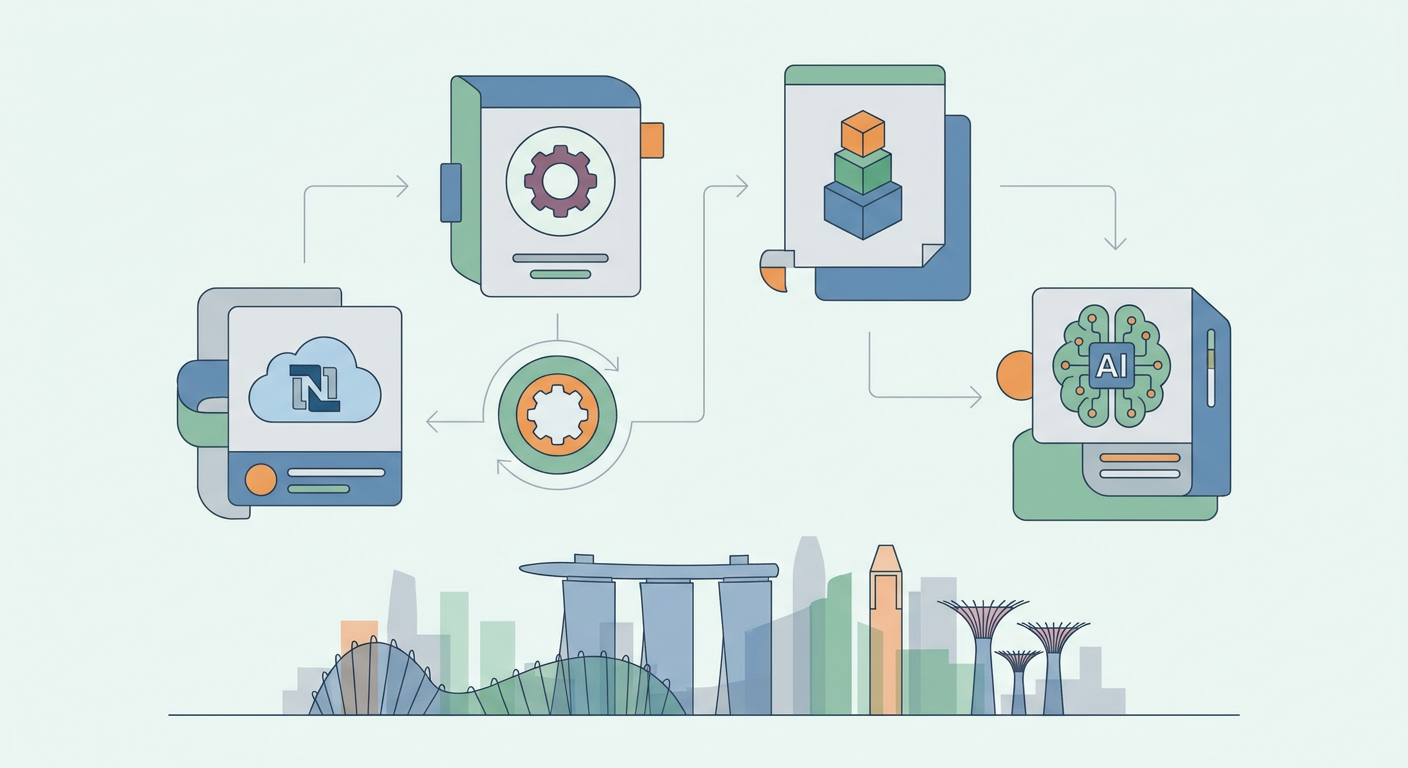
Feeling overwhelmed? Follow this structured approach to find the perfect fit for your Singapore business.
Step 1: Clarify Your Must‑Have Workflows and Data Structure
Before you look at a single demo, map out your core business processes. What absolutely must the system do? Document your workflows for sales-to-invoice, procure-to-pay, inventory management, project costing, and HR payroll. Don't chase features; define your problems first.
Step 2: Shortlist 3–5 Platforms Across the Three Paths
Don't just look at similar products. Build a diverse shortlist to truly understand your options:
- One local, integrated ERP (like HashMicro itself, for a baseline).
- One global cloud suite (e.g., NetSuite for scale, Odoo for modularity).
- One custom/AI ERP option (to evaluate the benefits of a perfect fit and code ownership).
Step 3: Evaluate Fit, Grants, and Total Cost of Ownership
Compare your shortlisted options against three key criteria. First, how well does each one fit your "must-have" workflows from Step 1? Second, what is the likely grant support (PSG vs. EDG)? Third, calculate the Total Cost of Ownership (TCO) over 3–5 years. For off-the-shelf software, this is (Implementation Cost) + (License or Subscription Fees × 3–5 years). For a custom build, it is primarily the project-based development cost plus ongoing hosting and support, treated as an investment in a bespoke digital asset.
Step 4: Pilot a Module Before a Full Roll‑Out
The biggest ERP implementation risk is a "big bang" failure. Mitigate this by starting small. Whether you choose a packaged solution or a custom path, insist on a pilot project. Automate one department or one critical workflow first. This validates the solution's fit, tests your team's readiness for change, and delivers a quick win. With a custom AI ERP, this incremental approach is often standard: your first module can be scoped and delivered on a shorter timeline, providing early value before broader roll-out.
Frequently Asked Questions About HashMicro Alternatives in Singapore
Is HashMicro a good ERP choice for Singapore SMEs compared to NetSuite and Odoo?
HashMicro is a good choice for Singapore SMEs that want an all-in-one, locally supported system and prioritize a single vendor for multiple functions. However, NetSuite is often selected by businesses with regional/global expansion plans due to its multi-entity capabilities, while Odoo is a strong contender for those who value modularity, open-source flexibility, and a modern user interface. The best choice depends entirely on your specific priorities: local focus (HashMicro), scalability (NetSuite), or flexibility (Odoo).
Source: G2 – HashMicro ERP competitors, Capterra Singapore – HashMicro alternatives
What are the top HashMicro alternatives for small and mid-sized businesses in Singapore?
The top off-the-shelf alternatives frequently appearing in independent comparison lists are NetSuite, Odoo, SAP Business One, Microsoft Dynamics 365 Business Central, Zoho One, and Acumatica. For businesses seeking more control and a perfect fit, open-source options like ERPNext and the path of a custom-built AI ERP are also leading alternatives to consider.
Source: G2 – HashMicro ERP competitors, TrustRadius – HashMicro competitors
How does HashMicro pricing work, and how can I compare it with NetSuite, Odoo or SAP Cloud ERP?
HashMicro primarily uses a quote-based model, so you must contact their sales team or use their pricing tools for a tailored proposal. To compare, you must also get quotes from NetSuite and SAP partners. Odoo is more transparent; its Enterprise pricing is public on its website. When comparing, ensure you get the Total Cost of Ownership (TCO) over 3–5 years, including implementation, licensing, support, and any customisation fees, not just the initial software cost.
Can I get PSG or EDG grants for HashMicro or other ERP systems in Singapore?
PSG only applies to solutions that currently appear in the official GoBusiness catalogue of pre-approved packages, so check the live directory for any specific HashMicro or competitor package before assuming grant support. For more complex, transformational projects, including global suites like NetSuite or custom-built ERPs, the Enterprise Development Grant (EDG) is often more appropriate. Always verify the specific solution's current grant eligibility, support percentage and conditions with Enterprise Singapore or a certified consultant, as programme details change over time.
Source: Enterprise Singapore – PSG, Enterprise Singapore – EDG
When should I consider a custom‑built AI ERP instead of HashMicro or other off‑the‑shelf tools?
You should strongly consider a custom-built AI ERP when: 1) Your business processes are unique and give you a competitive edge. 2) You want to avoid long-term vendor lock-in and recurring per-user subscription fees. 3) You prioritise owning your technology as a company asset. 4) You prefer an incremental delivery model where a focused module can be designed and delivered quickly to solve a specific problem before a full roll-out.
Is there an open-source alternative to HashMicro where my company can own the code?
Absolutely. The two leading open-source alternatives are Odoo (Community Edition) and ERPNext. Both are comprehensive ERP systems that you can download, self-host, and modify. This gives you extensive control over the code and your data, reducing vendor dependency. However, they require technical expertise or a partner to implement and maintain effectively.
How long does it typically take to implement a HashMicro alternative ERP in Singapore?
Implementation time varies greatly. For standard off-the-shelf systems like NetSuite, Odoo, or HashMicro itself, an SME implementation commonly takes several months from planning to go-live, depending on complexity. A key advantage of the custom AI ERP approach is the focus on delivering a first, most critical module on a shorter timeline, providing early ROI before rolling out further functionalities.