How dental clinics in Singapore handle inventory and stock control without hiring
Stock Control Without Hiring
How dental clinics in Singapore are replacing manual counts and spreadsheets with lean process and automated systems.
Core Strategies
- Par LevelsReview the last three months of usage data and set a minimum threshold per item.
- Standardise SKUsAlign consumables across practitioners to cut duplicates and recover bulk purchasing power.
- Barcode ScanningTrack high value implants and bone grafts from a smartphone linked to clinic software.
- Lean StorageColour coded bins, First In First Out, and digitised expiry warnings within 60 days.
Manual Tracking versus Dental ERP
| Task | Spreadsheet | Dental ERP |
|---|---|---|
| Reconciliation | Hours of manual counting | Real time deduction on invoice |
| Reordering | Manual emails to suppliers | Auto purchase orders at par |
| Expiry Control | Visual inspection | First Expired First Out alerts |
Adoption Timeline
- Week 1Import product list and supplier details into the new system.
- Week 2Soft launch of barcode scanning at checkout for high value items.
- Week 3Reorder points activate and automatic purchase orders begin.
- By Month EndDaily dashboard review replaces extensive manual counting.
Running a dental practice in Singapore means dealing with thin margins and high operational costs. One of the biggest silent killers of profitability is poor inventory management. Many clinic owners find themselves asking how dental clinics in Singapore handle inventory and stock control without hiring new staff. The answer lies in adopting automated systems, setting up lean processes, and utilising specialised dental software. By moving away from manual spreadsheets, your existing team can manage stock levels accurately and efficiently.
When you look at a comprehensive ERP software in Singapore, you will find modules specifically designed to track consumables, trigger reorders, and prevent overstocking. This approach allows dentists and clinic managers to focus entirely on patient care rather than counting boxes of gloves or composite resins.
Table of Contents
- The Real Cost of Manual Inventory in Dental Clinics
- Core Strategies for Stock Control Without Extra Headcount
- Dental ERP Versus Manual Tracking: A Direct Comparison
- Leveraging Software for Automatic Replenishment
- Optimising Clinic Space and Expiry Tracking
- Outsourcing Supply Chain Management
- Industry Specific Implementations
- Frequently Asked Questions
The Real Cost of Manual Inventory in Dental Clinics
Manual stock counting is a massive drain on existing resources. When a clinic manager or dental assistant spends several hours a week checking physical stock against a spreadsheet, that is time taken away from patient care or revenue generating activities. Industry guidance suggests that poorly controlled inventory can consume a significant portion of staff time and contribute directly to higher supply costs relative to collections.
Source: American Dental Association – Dental supplies inventory control
Consider the financial impact. If a dental assistant earns S$2,800 a month, spending a few hours weekly on manual counts can translate into more than S$300 in labour costs devoted purely to stock checking every month. Beyond labour costs, manual tracking inevitably leads to human errors. These errors result in rush orders, expired materials, or procedure cancellations because a specific implant or bonding agent was out of stock. Professional bodies highlight that disorganised inventory and lack of controls increase waste from expired supplies and stockouts that disrupt care.
Source: California Dental Association – Inventory management is a cost-saving tool for dentists
For high turnover environments like a dental clinic in Singapore, relying on manual counts is unsustainable without continuously adding administrative staff.
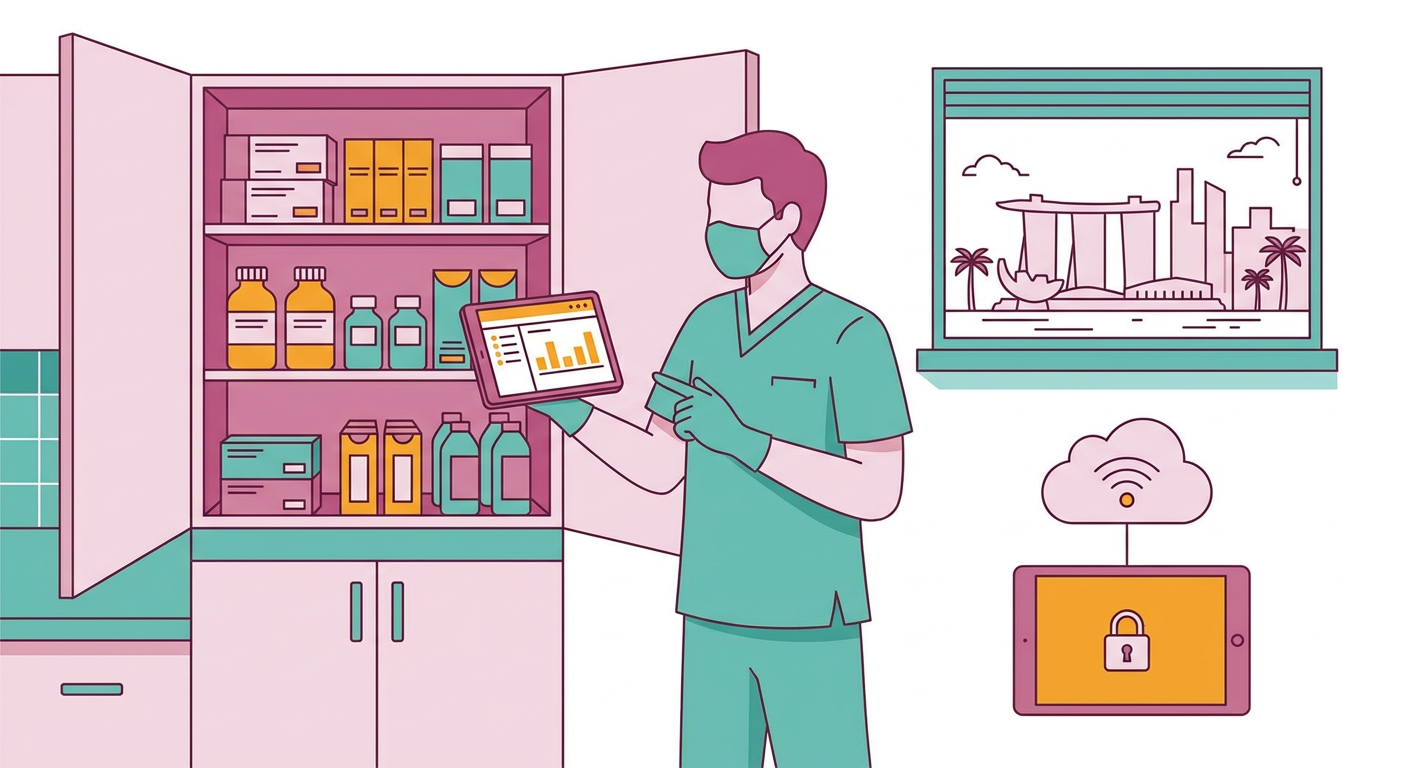
Core Strategies for Stock Control Without Extra Headcount
To manage dental supplies without increasing payroll, clinics must implement strict operational frameworks. Technology alone cannot fix a broken process. You need a combination of the following strategies to keep operations lean.
Setting Par Levels and Safety Stock
Establishing par levels is the foundation of hands off inventory. A par level is the minimum quantity of a specific item, such as local anaesthetic cartridges, needed on hand to meet normal patient demand before the next delivery arrives.
- Calculate usage: Review the last three months of usage data for every consumable.
- Define the par level: Set a minimum threshold based on average weekly usage plus a small buffer for emergencies.
- Automate alerts: Configure your inventory system to alert the clinic manager when stock drops below this predetermined number.
This strategy entirely removes the need for daily visual stock checks, empowering your current staff to work smarter. Setting minimum and maximum stock levels and reordering when inventory reaches the minimum point is a widely recommended approach in dental inventory management.
Source: The Dental CFO – Managing dental practice inventory
Standardising Consumables Across Practitioners
A common issue in multi dentist practices is product duplication. Dentist A prefers a specific brand of alginate, while Dentist B insists on another. This preference doubles your storage requirements, complicates stock tracking, and reduces your bulk purchasing power.
By standardising the materials used across the clinic, you instantly reduce the number of unique SKUs you need to track. This makes inventory management significantly easier for your existing staff and aligns with best practices to reduce redundancy and set preferred items for purchasing.
Source: Pearl – Dental inventory management best practices
Dental ERP Versus Manual Tracking: A Direct Comparison
To understand the true value of handling stock without hiring, you must compare the traditional method with a digitised approach. The differences in time allocation and error rates are significant.
When implementing systems like Odoo solutions or specialised practice management systems, clinics often see a drastic shift in operational efficiency. For more context on broader systems, you can read about how Singapore logistics companies use ERP to cut costs, as the underlying principles of stock movement apply directly to medical consumables.
| Operational Task | Manual Spreadsheet Tracking | Dental ERP / Specialised Software |
|---|---|---|
| Stock Reconciliation | Requires several hours weekly of manual counting | Real time deduction upon invoice generation |
| Reorder Processing | Manual drafting of emails to suppliers, prone to delays | Automatic Purchase Order generation when stock hits par level |
| Expiry Date Management | Visual inspection required, high risk of expired stock | First Expired First Out (FEFO) alerts sent automatically |
| Cost of Implementation | Low initial cost but high hidden labour costs in ongoing manual work | Monthly subscription ranging from under S$100 to several hundred dollars depending on tier |
Source: NetSuite – How to effectively manage dental inventory
Leveraging Software for Automatic Replenishment
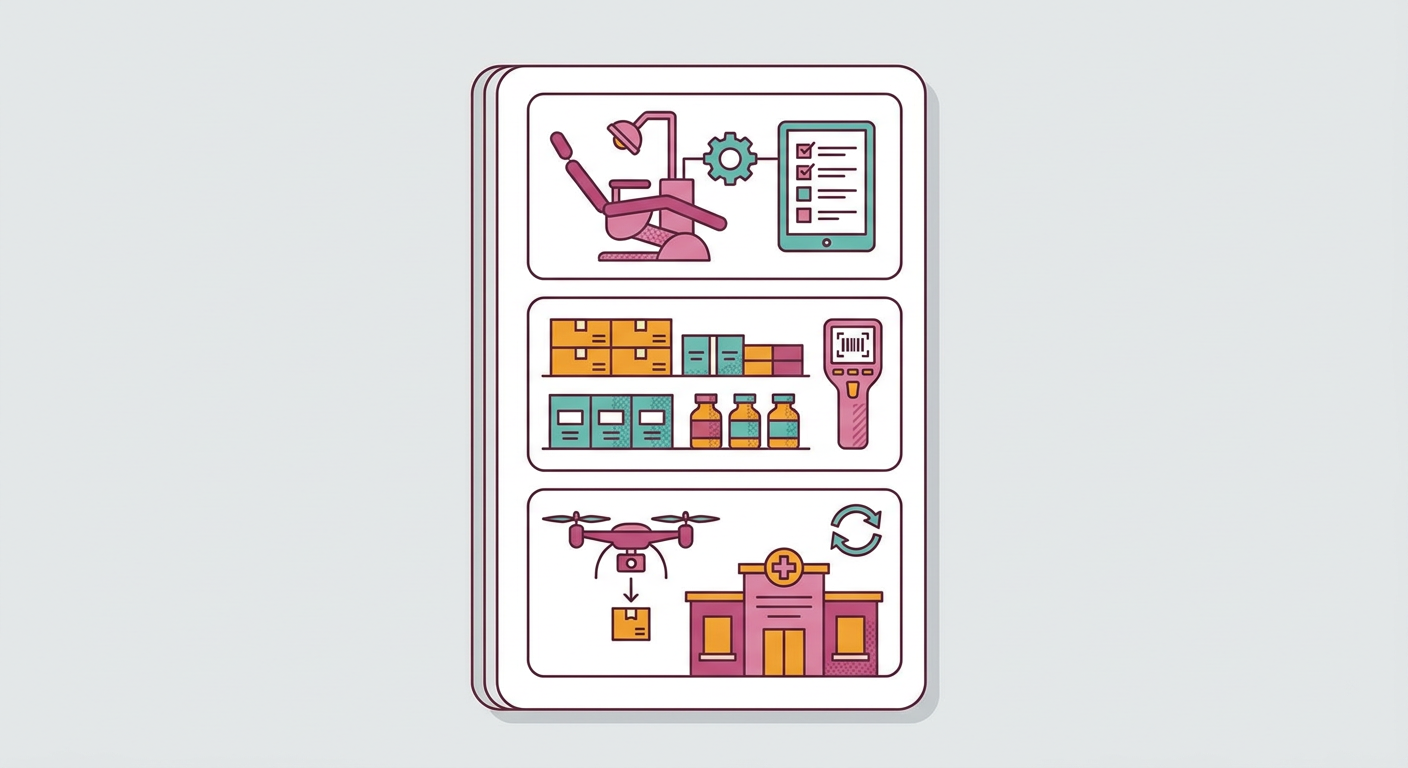
The secret to operating without an extra inventory clerk is automation. Modern dental practice management software connects directly to your patient billing. When a dentist completes a filling and charges the patient for a composite resin, the system automatically deducts one unit of composite from the digital inventory.
Barcode Integration for Accountability
For higher value items such as implants, bone grafts, and orthodontic wires, clinics use barcode scanners. When a dental assistant opens a box of implants, they scan the barcode using a standard smartphone linked to the clinic software.
- Ensures pinpoint accuracy for high cost items.
- Matches specific implant batches to patient records for clinical compliance.
- Takes only a few seconds per item, requiring no dedicated administrative staff.
Barcode and RFID scanning are widely recommended to reduce errors associated with manual spreadsheet tracking and to improve the accuracy of dental inventory records.
Source: NetSuite – How to effectively manage dental inventory
Vendor Managed Inventory Arrangements
Another way clinics handle stock control without hiring is by pushing the responsibility back to the suppliers. Under a Vendor Managed Inventory (VMI) model, you grant your primary supplier access to your inventory dashboard.
The supplier monitors your stock levels digitally and automatically ships replenishments before you run out. This can significantly reduce the need for your staff to count stock or draft purchase orders for routine consumables like gloves, bibs, and saliva ejectors, and similar supplier collaboration models are increasingly used in healthcare supply chains.
Optimising Clinic Space and Expiry Tracking
Physical storage is directly linked to stock control. If your clinic has disorganized storage rooms, your staff will spend unnecessary hours looking for items. This often prompts owners to think they need to hire a storekeeper.
Instead, apply lean storage principles:
- Categorise strictly: Separate endodontics, prosthodontics, and hygiene materials into different colour coded bins.
- Adopt the First In First Out principle: Always place new deliveries behind existing stock.
- Digitise expiry warnings: Set your ERP software to flag items expiring within 60 days. Give your front desk a list of these items to offer as freebies or use immediately, preventing wastage.
Implementing these physical rules can be done in a short, focused reorganisation project and saves your current staff many hours of rummaging through cabinets. Best-practice guidance for dental clinics emphasises organizing storage, using FIFO/FEFO, and proactively managing expirations to reduce waste and staff time.
Source: Clinical Supply Company – Efficient inventory for your dental practice
Industry Specific Implementations
Inventory challenges vary depending on the type of healthcare practice. A general dental clinic dealing with routine checkups faces different stock demands compared to a specialized aesthetic clinic in Singapore handling injectables and expensive lasers, or even a veterinary clinic managing varied pharmaceuticals for different animal species.
However, the mechanism remains identical. Whether it is a dental implant or a vial of botulinum toxin, using an automated digital system to track quantities and expiry dates is the universal solution to avoiding unnecessary hiring.
Overcoming the Learning Curve of Dental Software
One major hesitation clinic owners have when adopting automated stock systems is the perceived learning curve. They worry that training their existing nurses and receptionists will disrupt clinic operations.
In reality, modern cloud based systems are built for ease of use. The transition usually follows this path:
- Week 1: Initial setup. Importing your existing product list and supplier details into the new system. Most vendors will do this for you.
- Week 2: Soft launch. Staff begins using the barcode scanner at the checkout counter for high value items.
- Week 3: Full adoption. Reorder points are activated, and automatic purchase orders begin sending to suppliers.
By the end of the first month, the system largely runs itself. Your staff can reduce the time spent on inventory to a short daily review of the dashboard instead of extensive manual counting, which mirrors typical implementation timelines reported for dental inventory systems.

Measuring Success: Key Performance Indicators
Once your lean inventory system is operational, you need to measure its success without hiring analysts. Standard ERP systems generate automated reports that track critical metrics.
Focus on these three metrics to ensure your clinic is operating efficiently:
| Key Performance Indicator | What It Measures | Ideal Target Range |
|---|---|---|
| Inventory Turnover Ratio | How often your clinic sells and replaces stock over a given period. | Commonly evaluated several times per year for consumables, with exact targets depending on procedure mix and supplier lead times. |
| Wastage Percentage | The value of expired or damaged stock compared to total inventory value. | Kept as low as possible; many dental advisers recommend monitoring waste closely so that overall supply costs stay within 5–6% of collections. |
| Stock Out Rate | The frequency at which critical items are unavailable for scheduled procedures. | 0 percent for critical dental materials is the practical goal. |
Source: American Dental Association – Dental supplies inventory control
Frequently Asked Questions
Can my current front desk staff handle dental ERP software?
Yes. Modern practice management systems are designed with intuitive interfaces. Most software vendors provide comprehensive onboarding and video tutorials. If your front desk staff can use WhatsApp and standard spreadsheet software, they can easily operate an automated inventory dashboard.
How much does dental inventory software cost in Singapore?
Costs vary depending on the features you require. Basic practice management systems with inventory modules often start around a low monthly subscription and can range into a few hundred dollars per month for more comprehensive packages. Advanced ERP systems tailored for larger multi branch clinics can cost several hundred to a few thousand dollars monthly. This cost is frequently offset by reductions in wasted stock and staff time spent on manual labour, as noted in many dental inventory case studies.
What happens if the internet goes down in my clinic?
Most modern cloud based dental software systems have an offline mode. Your staff can continue to process patients and deduct stock locally. Once the internet connection is restored, the system automatically syncs the local data with the cloud, ensuring no inventory records are lost.
How do I track consumables that are billed together, like a standard filling kit?
You can set up "Bill of Materials" or treatment bundles within your ERP software. When a dentist charges a patient for a standard filling, the system automatically deducts the specific quantities of etchant, bonding agent, composite, and curing light tips from your inventory based on the predefined bundle.
Take Control of Your Clinic Operations Today
Managing a dental clinic in Singapore requires precision, both in the treatment chair and in the back office. You do not need to increase your headcount to gain control over your dental supplies. By standardising your materials, setting strict par levels, and deploying the right practice management software, your existing team can run a highly efficient inventory system with minimal waste.
If you are tired of rush orders and wasted spending on expired stock, it is time to upgrade your operational framework. Reach out to our team to schedule a consultation. Let us show you how to tailor a digital solution that fits your clinic workflow perfectly.
Speak to our specialists today to transform your clinic management.