OpenAI Subagents in Codex: Singapore Guide to Parallel AI Agents & Local Use Cases
The concept of using an OpenAI with subagent architecture is rapidly transforming how developers and businesses approach complex computational tasks. This model, particularly prominent in OpenAI's Codex, allows a primary AI agent to spawn and manage multiple specialized "subagents" that work in parallel. As OpenAI deepens its roots in Singapore with a new office and strategic partnerships, understanding how to leverage this powerful technology is becoming critical for tech leaders, developers, and enterprises across the island nation who want to maintain a competitive edge in the global AI race.
This guide provides a comprehensive overview of OpenAI subagents, their functionality within Codex, and their game-changing potential within the unique context of Singapore's thriving tech ecosystem. We'll explore everything from the core mechanics to local use cases with industry giants like Singapore Airlines and Grab, offering a roadmap for harnessing the power of parallel AI.
What Are OpenAI Subagents?
An AI subagent is a specialized, autonomous AI model spawned by a primary "main" agent to handle a specific, delegated task. Think of it like a highly efficient manager (the main agent) delegating different parts of a complex project to a team of expert specialists (the subagents). Instead of tackling the entire project sequentially, the team works on their individual tasks simultaneously, and the manager then compiles their results for the final output.
This OpenAI with subagent model, especially within the Codex environment, is designed to solve a fundamental bottleneck in AI processing: handling multiple, distinct tasks efficiently. Subagent workflows help by moving "noisy" or time-consuming work off the main thread. This allows the main agent to remain focused on high-level objectives like understanding requirements, making strategic decisions, and synthesizing the final output.
The primary benefits of this architecture include:
Parallel Execution: Subagents run their tasks concurrently, dramatically reducing the total time required to complete a complex operation. This is crucial for real-time applications.
Specialization: Each subagent can be fine-tuned or prompted to become an expert in a narrow domain, such as code generation, data analysis, API calls, or language translation.
Improved Focus: By offloading work, the main agent avoids context-switching and can focus on orchestrating the overall workflow and ensuring the final result is coherent and accurate.
Scalability: Complex problems can be broken down into smaller, manageable pieces, making it easier to scale the AI's capabilities without overwhelming a single agent.
How Subagents Work in Codex CLI and IDE
OpenAI's implementation of subagents is most prominent in Codex, its agentic coding tool available via a Command Line Interface (CLI) and IDE extensions. The mechanics are designed to be intuitive for developers already familiar with a command-line environment.
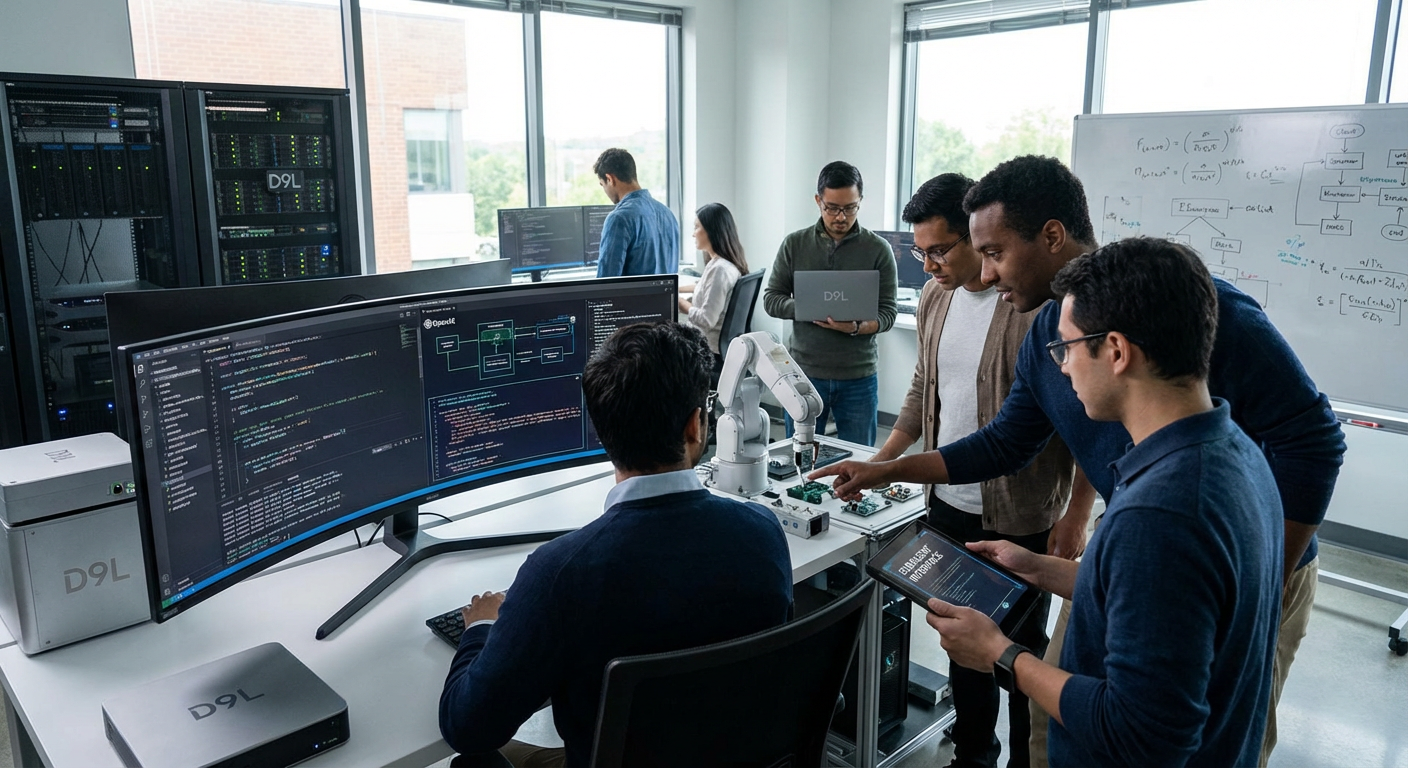
When working in the Codex CLI, a developer can instruct the main agent to spawn subagents to handle parts of a coding task. For instance, if the main task is to build a web application, you could have:
Subagent 1: Write the HTML and CSS for the front end.
Subagent 2: Develop the Python Flask backend logic.
Subagent 3: Write unit tests for the backend.
Subagent 4: Draft the documentation for the API endpoints.
The main Codex agent can spawn up to six subagents to work in parallel. Developers can manage and interact with these active agent threads using simple commands. For example, using /agent in the CLI allows you to switch between different threads, inspect their progress, provide further instructions, or steer a running sub-agent if it's going off-track. Once the subagents complete their tasks, the main agent collects their outputs—code, data, text—and integrates them into a final, cohesive solution.
Single-Agent vs. Subagent Workflow Comparison | ||
Aspect | Single-Agent Workflow | Multi-Agent (Subagent) Workflow |
|---|---|---|
Execution Model | Sequential (one task after another) | Parallel (multiple tasks at once) |
Speed | Slower, limited by the speed of completing each task in order. | Significantly faster for divisible tasks. Overall time is limited by the longest-running sub-task. |
Complexity Handling | Can get bogged down or lose context on very large, multi-faceted problems. | Excellent for breaking down complex problems into smaller, manageable parts. |
Specialization | The single agent must be a generalist, attempting to be good at everything. | Each subagent can be highly specialized for a single function (e.g., database queries, UI design). |
Resilience | An error in one step can halt the entire process. | An error in one subagent's task doesn't necessarily stop other subagents from continuing their work. |
Ideal Use Case | Simple, linear tasks like writing a single function or translating a block of text. | Complex projects like building an entire application, running a multi-pronged data analysis, or planning a detailed itinerary. |
OpenAI's Expansion in Singapore: Subagents Go Local
OpenAI's recent and growing commitment to Singapore signals a new era for AI development in the region. The announcement of a new Singapore office by the end of 2024, with plans to hire a team of 50-70 professionals, is more than just a corporate expansion. It represents the establishment of a strategic hub for Southeast Asia, aimed at fostering local talent, supporting enterprise adoption, and aligning with national AI ambitions.
This move is bolstered by Singapore's incredible enthusiasm for AI. The nation boasts one of the highest per-capita adoption rates of ChatGPT globally, indicating a tech-savvy population and a business community eager to integrate advanced AI tools. Sam Altman, CEO of OpenAI, has noted this C-suite and government-level excitement during his visits, underscoring Singapore's potential as a leader in the agentic AI revolution.
The local presence means Singapore-based developers and businesses will gain more direct access to support, training, and collaboration opportunities. This proximity is invaluable for troubleshooting complex implementations, such as deploying an OpenAI with subagent architecture for enterprise-grade solutions. The OpenAI Singapore team is expected to work closely with organizations to translate the theoretical power of tools like Codex into tangible business value and ROI.

Key Partnerships and Clients: SIA, Grab, and Sea
OpenAI's strategy in Singapore is deeply rooted in collaboration. A cornerstone of this is the partnership with AI Singapore (AISG), a national program aimed at anchoring deep national capabilities in AI. This collaboration will likely focus on developing local AI talent, working on region-specific datasets, and ensuring that AI development aligns with Singapore's ethical and societal standards. It provides a powerful bridge between OpenAI's global technology platform and Singapore's local ecosystem.
Furthermore, OpenAI is already working with some of Singapore's most iconic enterprises, including:
Singapore Airlines (SIA): The national carrier is exploring AI to enhance customer service, optimize flight operations, and personalize travel experiences. Subagent workflows could power complex itinerary planners or manage real-time operational disruptions.
Grab: The Southeast Asian super-app deals with immense complexity across ride-hailing, food delivery, and financial services. Agentic AI is a natural fit for optimizing logistics, personalizing user experiences, and detecting fraud in real-time.
Sea Limited: The parent company of Shopee and Garena can leverage AI for e-commerce personalization, gaming development, and digital financial services, all key areas where parallel processing can provide a competitive advantage.
This alignment with the National AI Strategy 2.0 (NAIS 2.0) is no coincidence. The strategy calls for Singapore to move beyond mere adoption to becoming a creator and innovator in the AI space. Technologies like subagents, which enable more sophisticated and autonomous AI systems, are precisely the kind of tools that will help Singaporean companies build world-class AI products and services.
Singapore Use Cases for OpenAI Subagents
The true potential of an OpenAI with subagent architecture is realized when applied to the specific, complex challenges faced by local industries. For Singapore, a hub of finance, logistics, and regional business, the applications are vast and transformative.
Building with Subagents: A Step-by-Step Guide for Singapore Developers

For developers in Singapore, especially those inspired by events like OpenAI's DevDays, getting hands-on with subagents is the next logical step. Here is a conceptual step-by-step guide to using subagents in the Codex CLI for a hypothetical project: building a simple app that recommends hawker food based on user location and preferences.
Objective: Create a Python script that takes a user's district in Singapore (e.g., "Tampines") and a food preference (e.g., "spicy") and returns a recommended dish and hawker centre.
Setup Your Environment: Ensure you have the OpenAI Codex CLI installed and authenticated with your OpenAI account. Open your terminal to begin.
Initiate the Main Agent: Start by giving the main agent its primary goal.
> Create a Python application that recommends hawker food in Singapore. It should take a district and a food preference as input. The final output should be a single JSON object with 'dish_name', 'hawker_centre', and 'reason'.Delegate Tasks to Subagents: Now, break the problem down and spawn subagents. You can do this by prompting the main agent.
> To do this, let's use subagents.
> Spawn a subagent (task1) to create a mock database in a Python dictionary. The keys should be districts, and the values should be a list of hawker centres in that district. Include at least 5 districts.
> Spawn another subagent (task2) to write a function that takes the mock database, a district, and a food preference, and returns a recommendation. This function should contain the core logic.
> Spawn a third subagent (task3) to write the main execution block that handles user input and calls the function from task2.
Monitor and Manage Subagents: Use the
/agentcommand to check the progress of each subagent.> /agent list
This will show you the active threads:main,task1,task2, andtask3.> /agent switch task2
Now you are in the context of the subagent writing the recommendation logic. You can inspect its code, provide feedback, or correct its course. For example:> Inside the function, make sure to add a small element of randomness so it doesn't always suggest the same dish.Collect and Integrate Results: Once the subagents have completed their work, return to the main agent's thread.
> /agent switch main
Now, instruct the main agent to assemble the final script.> Collect the dictionary from task1, the function from task2, and the execution block from task3. Combine them into a single, clean Python file named 'hawker_recommender.py'. Add comments explaining each part of the code.Final Review and Execution: The main agent will present the complete file. You can then review it, ask for final modifications, and run it. This parallel workflow, even for a simple script, is significantly faster and more organized than prompting a single agent through each step sequentially.
This process demonstrates how developers in Singapore can use the OpenAI with subagent model to build applications that are contextually relevant to the local environment, accelerating development cycles and enabling more complex and creative solutions.
Does OpenAI Codex Have Sub-Agents in Singapore?
Yes, absolutely. The subagent feature is part of OpenAI Codex, which is a cloud-based service. This means it is not subject to geographical restrictions and is fully available to developers and users in Singapore. Anyone with access to the Codex CLI or supported IDE extensions can utilize the subagent functionality right now.
The establishment of the OpenAI Singapore office further solidifies this availability. The local team will act as a support hub and a centre of excellence, helping Singaporean companies to:
Onboard and Train Teams: Provide localized training on advanced features like agentic workflows.
Optimize Implementations: Offer expert advice on how to structure subagent workflows for specific industry problems.
Foster a Community: Build a local community of developers and AI practitioners who can share best practices and drive innovation together.

In essence, while the technology is globally available, Singapore is rapidly becoming one of the best-supported and most exciting places in the world to be building with it. The concept of "OpenAI agent mode" is very much alive and accessible in Singapore.
Frequently Asked Questions (FAQ)
What is an AI subagent?
An AI subagent is a specialized AI model created by a primary "main" agent to perform a specific, delegated task. In an OpenAI with subagent system, the main agent acts as a project manager, breaking a complex problem into smaller pieces and assigning each piece to a subagent. These subagents work in parallel, and their results are collected by the main agent to form the final solution. This speeds up processing and allows for greater specialization.
Does OpenAI Codex have sub-agents?
Yes, OpenAI Codex features subagent capabilities, particularly within its Command Line Interface (CLI) and integrated development environment (IDE) tools. Developers can command the main Codex agent to spawn up to six subagents to work on different parts of a coding or data problem simultaneously, and then manage and synthesize their outputs.
Does OpenAI have an "agent mode"?
Yes, OpenAI is heavily invested in "agentic AI," which refers to AI systems that can reason, plan, and execute multi-step tasks autonomously. The subagent architecture in Codex is a prime example of this "agent mode." It moves beyond simple question-and-answer interactions to a more dynamic workflow where the AI acts as a team of autonomous agents working towards a common goal.
How can my Singapore-based business start using OpenAI subagents?
The first step is to get access to the tools that support this feature, primarily the OpenAI Codex CLI. Your development team can start by experimenting with breaking down existing coding or data processing tasks into parallel workflows. With OpenAI's new Singapore office, you can also reach out for enterprise support and consultation to help design and implement more complex subagent architectures tailored to your business needs, whether in fintech, logistics, e-commerce, or another sector.
What is the main advantage of subagents over a single powerful AI agent?
The primary advantage is parallel processing. A single agent, no matter how powerful, must perform tasks sequentially. For a project with ten steps, it must do step 1, then step 2, then step 3, and so on. A system with subagents can perform many of those steps simultaneously, drastically reducing the total time to completion. This is similar to a single chef cooking a 10-course meal versus a head chef directing a team of 10 chefs, each preparing one course at the same time.
How does OpenAI's Singapore office impact the use of subagents here?
The OpenAI Singapore office acts as a local catalyst. While the technology is cloud-based and globally available, the local presence provides enterprise-grade support, localized training, and a community hub. This makes it easier for Singaporean companies to adopt advanced features like subagents, troubleshoot issues, and develop use cases that are highly relevant to the Singaporean and Southeast Asian markets, aligning with the country's National AI Strategy 2.0.