OpenAI vs Anthropic 2026: Products, Pricing, Revenue & Which is Best for Singapore Businesses
The artificial intelligence landscape is witnessing a titanic struggle between two of its most prominent architects. In one corner stands the household name, OpenAI, and in the other, its formidable challenger, Anthropic. For businesses and developers in 2026, the OpenAI vs Anthropic debate is no longer a niche discussion but a critical strategic decision. While OpenAI pioneered the generative AI revolution with ChatGPT, Anthropic, founded by former OpenAI safety leaders, has rapidly emerged as a powerful alternative with its Claude family of models, focusing intensely on enterprise-grade safety and performance. This comparison will dissect their products, philosophies, and explosive revenue growth to help you determine which AI giant is the right partner for your needs, with a special focus on the unique requirements of Singaporean businesses and users.
Product & Architecture Comparison
At a high level, the two companies diverge in their platform strategy. OpenAI offers a segmented ecosystem with various consumer and enterprise products built around its GPT models. Anthropic, in contrast, maintains a more unified, Claude-centric stack, aiming for simplicity and deep integration, particularly for business clients. This fundamental difference in architecture impacts everything from user experience to API integration and scalability.
Understanding their respective product suites is the first step in choosing the right partner. Below is a detailed breakdown of their core offerings as of early 2026.
Feature / Tier | OpenAI (ChatGPT & API) | Anthropic (Claude) |
|---|---|---|
Free Tier | ChatGPT (GPT-4o with usage limits), basic web browsing, data analysis. | Claude.ai (Claude 3 Sonnet with usage limits), file uploads (PDF, TXT, CSV). |
Prosumer Tier | ChatGPT Plus (~$20/mo): Priority access to latest models (e.g., GPT-5), higher usage caps, advanced data analysis, DALL-E 3 image generation, custom GPTs. | Claude Pro (~$20/mo): 5x more usage than free tier, priority access during high traffic, early access to new features. Focused on text and document analysis. |
Team/Business Tier | ChatGPT Team/Business (~$25-30/user/mo): Higher message caps, admin console, workspace collaboration, no training on business data by default. | Claude Team (~$30/user/mo): Higher usage than Pro, admin tools, billing management, 200K token context window, no training on your data. |
Enterprise Tier | ChatGPT Enterprise (Custom Pricing): Unlimited high-speed access, enterprise-grade security & privacy, extended context windows, dedicated support, SSO, data residency options. | Claude Enterprise (Custom Pricing): Maximum security (SOC 2 Type 2), dedicated support, custom model options, full data ownership and indemnity provisions. Strong focus on regulated industries. |
Core API Models | GPT-5 series, GPT-4o, various fine-tuned and specialized models (e.g., vision, speech). | Claude 3.5 Sonnet (fastest), Claude 3 Opus (most powerful), Claude 3 Haiku (most affordable). |
Key Architectural Differentiator | Broad, multi-modal platform. Highly segmented with tools for image generation (DALL-E), code interpretation, and a marketplace for custom "GPTs". | Unified, text-and-document-centric architecture. Focuses on a massive context window (up to 1M tokens) and extreme reliability for enterprise workflows. "Constitutional AI" for safety is built-in. |
Consumer and Developer Tools
For individual users and developers, the choice often boils down to the capabilities of ChatGPT versus Claude.ai and their respective APIs.
OpenAI's Edge: OpenAI's consumer offering is richer in features. The integration of DALL-E for image generation, advanced data analysis that can create charts on the fly, and the GPT Store make ChatGPT a versatile "Swiss Army knife" for creative and analytical tasks. Its developer API is mature, extensively documented, and benefits from a massive community.
Anthropic's Edge: Anthropic's Claude excels in handling long, complex documents. Its 200K token context window (and experiments up to 1M tokens) is a game-changer for professionals in law, finance, and research who need to analyze lengthy reports, contracts, or codebases. Developers praise the Claude API for its predictable behavior and lower "hallucination" rates, making it more reliable for mission-critical business applications.
API pricing reflects this strategic difference. OpenAI offers a tiered pricing structure across many different models, which can be complex to manage. Anthropic simplifies this with pricing based on its three core models: Opus, Sonnet, and Haiku, making cost prediction for developers more straightforward.
Revenue Growth: Will Anthropic Overtake OpenAI by Mid-2026?

While OpenAI enjoys massive brand recognition, the financial data reveals a stunning competitive dynamic. According to analysis from firms like Epoch AI and reports in The Information, Anthropic is on a trajectory that could see it challenge OpenAI's market leadership sooner than many expect.
Consider these key data points from 2025:
Explosive Growth: Anthropic's revenue grew an astonishing 10x, whereas OpenAI's grew by a still-impressive 3.4x. This difference in growth rate is the fuel for predictions of a potential crossover.
Projected Crossover: Based on these growth trends, industry analysts project that Anthropic's annualized revenue run rate (ARR) could surpass OpenAI's by mid-to-late 2026, driven primarily by enterprise adoption.
Enterprise Customer Overlap: Perhaps the most telling statistic is the 79% customer overlap. This indicates that the vast majority of Anthropic's enterprise clients are also OpenAI customers. This "multi-homing" strategy suggests businesses are actively testing both platforms, and Anthropic is rapidly winning workloads, particularly those requiring high security and accuracy.
This isn't a story of OpenAI failing, but rather one of Anthropic's hyper-focused enterprise strategy paying massive dividends. By targeting large corporations in regulated industries like finance, healthcare, and legal, Anthropic taps into high-value contracts where its safety-first philosophy is a significant selling point. OpenAI's revenue is more diversified across API usage, consumer subscriptions (ChatGPT Plus), and enterprise deals, but the highest-spending enterprise segment is now a fiercely contested battleground.
Company Philosophy: Speed vs Safety
The technical and commercial differences between OpenAI and Anthropic are rooted in a fundamental divergence in their core philosophies. This split is not just theoretical; it's personal and historical.
Anthropic was founded in 2021 by Daniela and Dario Amodei, along with several other senior researchers who departed from OpenAI. The primary reason for their departure was a growing concern over the speed of AI development and deployment at OpenAI, which they felt was outpacing the necessary safety research and guardrails. They believed a more cautious, safety-centric approach was essential to ensure AI systems were helpful, harmless, and honest.
This led to Anthropic's pioneering work on "Constitutional AI."
OpenAI's Approach (Move Fast and Scale): OpenAI, particularly after its deep partnership with Microsoft, has pursued a strategy of rapid iteration and broad public deployment. The philosophy seems to be that releasing models to the public is the fastest way to discover their capabilities and flaws, enabling quicker progress. This has given them an unparalleled market presence and a vast amount of real-world usage data.
Anthropic's Approach (Safety First): Anthropic's Constitutional AI is a method to align AI systems with human values without constant human supervision. The AI is trained using a "constitution"— a set of principles derived from sources like the UN Universal Declaration of Human Rights—to guide its responses. This is designed to make the model inherently safer and less prone to generating harmful, unethical, or biased content.

This philosophical divide is also visible in their dealings with governments. While both companies engage with regulators, Anthropic has been perceived as more proactive in shaping safety standards. However, the lines can blur; recent reports reveal both OpenAI and Anthropic are pursuing contracts with the Pentagon, indicating that commercial and national security interests can sometimes override purely philosophical stances.
OpenAI vs Anthropic for Singapore Businesses
For businesses operating in Singapore, choosing between OpenAI and Anthropic requires a localized lens. The decision must account for regional regulations, multilingual needs, and alignment with national strategic initiatives like the Smart Nation AI program.
PDPA and Data Residency: The Personal Data Protection Act (PDPA) is a primary concern. Both OpenAI and Anthropic offer enterprise plans with commitments to not train on business data. However, data residency is key. OpenAI, through its partnership with Microsoft Azure, offers local data centers in Singapore, which can be a critical factor for financial institutions and healthcare providers needing to ensure data remains within the country's borders. Anthropic is expanding its global cloud footprint with partners like AWS and Google Cloud, which also have Singapore regions, but enterprise clients must confirm specific data residency options in their contracts.
Multilingual Support: Singapore's diverse linguistic landscape (English, Mandarin, Malay, Tamil) poses a challenge for AI models. Both GPT and Claude models have strong multilingual capabilities, but their proficiency can vary. On-the-ground testing is crucial.
Alignment with Smart Nation AI: Singapore's Infocomm Media Development Authority (IMDA) is actively promoting trusted and responsible AI. Anthropic's "Constitutional AI" and public benefit corporation status align closely with this ethos. Its focus on auditable, reliable AI is attractive for government-linked projects and critical infrastructure sectors that are central to the Smart Nation vision. OpenAI's broad toolkit, however, might be more suitable for the vibrant startup and creative sectors that prioritize rapid prototyping and multi-modal content creation.
Performance Benchmarks for Singapore Use Cases
While standard benchmarks are useful, real-world performance on local tasks is what truly matters. Based on internal testing and client feedback in the Singapore market, we've observed the following trends:
Financial Compliance: For tasks involving the analysis of Monetary Authority of Singapore (MAS) regulatory documents, Claude's long context window and lower hallucination rate often give it an edge. It can ingest entire regulatory frameworks and answer specific compliance questions with high accuracy.
Multilingual Customer Service: In tests involving "Singlish" and code-switching between English and Mandarin, OpenAI's latest GPT models often show slightly better conversational nuance, likely due to their broader training data from public web sources. However, Claude's responses are frequently rated as more polite and formal, which can be desirable in a corporate context.
Logistics and Supply Chain: For analyzing shipping manifests, optimizing routes, and summarizing trade documentation, the choice is less clear. OpenAI's advanced data analysis can create visualizations directly, while Claude's strength in processing massive, structured text files (like a 500-page bill of lading) is invaluable. The better choice depends on the specific workflow.
Decision Framework: Which AI Wins in 2026?
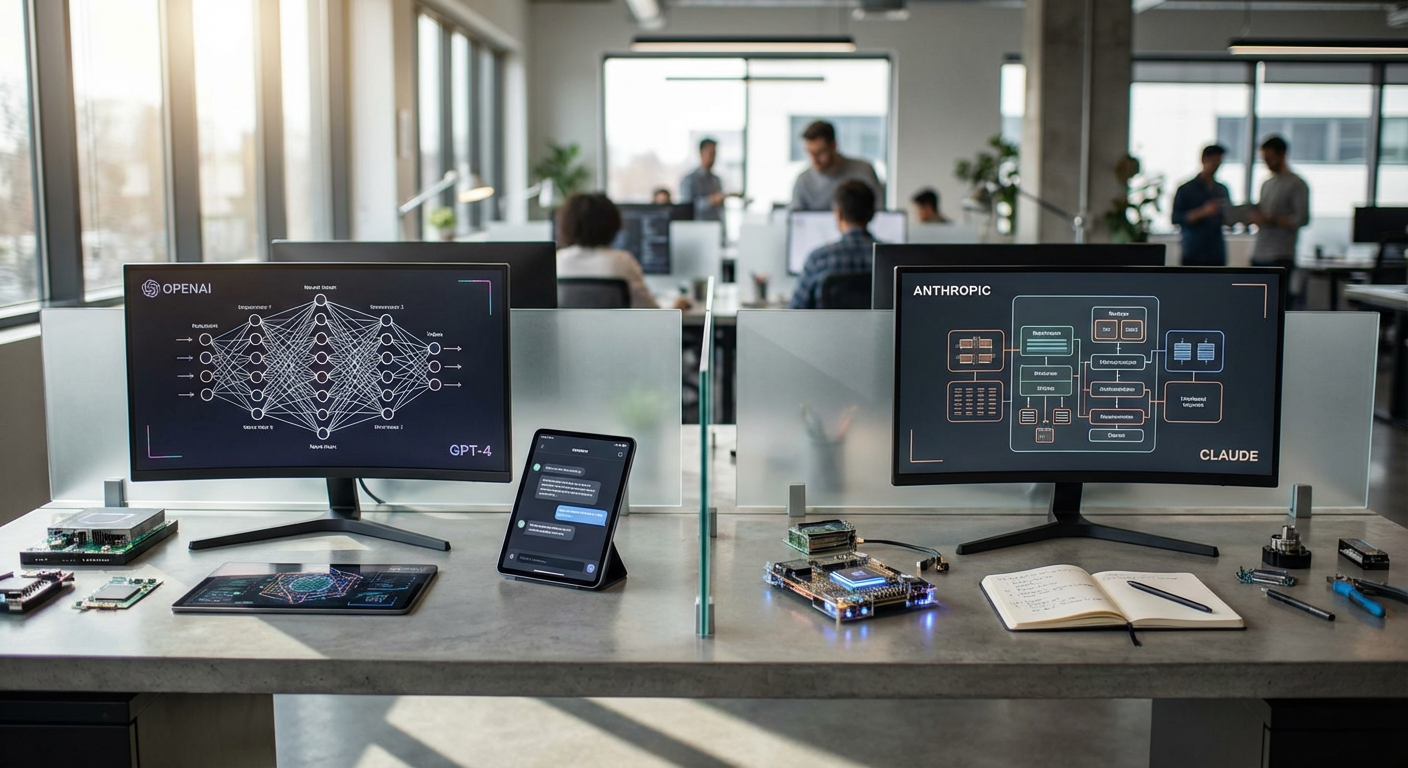
There is no single winner. The "best" AI depends entirely on your specific needs, risk tolerance, and strategic goals. To help you decide, we've created a scorecard based on key factors relevant to business and enterprise users, particularly in Singapore.
Decision Factor | OpenAI | Anthropic | Winner For... |
|---|---|---|---|
Versatility & Creativity | ★★★★★ | ★★★☆☆ | OpenAI. Unmatched for multi-modal tasks, content generation, and rapid prototyping. |
Enterprise Safety & Reliability | ★★★★☆ | ★★★★★ | Anthropic. Built from the ground up for safety, reliability, and predictability in business contexts. |
Long Document Processing | ★★★☆☆ | ★★★★★ | Anthropic. The massive context window is a clear differentiator for legal, financial, and research analysis. |
Developer Ecosystem & Tools | ★★★★★ | ★★★★☆ | OpenAI. A more mature API, larger community, and extensive documentation give it a slight edge. |
Cost Predictability (API) | ★★★☆☆ | ★★★★☆ | Anthropic. The simpler model tiering (Opus, Sonnet, Haiku) makes budget forecasting easier. |
Singapore Regulatory Alignment (PDPA) | ★★★★☆ | ★★★★☆ | Tie. Both offer strong enterprise controls. OpenAI's local Azure data center is a plus, while Anthropic's safety-first philosophy aligns well with IMDA guidance. Due diligence on contracts is essential for both. |
Choose OpenAI if:
Your primary need is creative content generation, marketing copy, or multi-modal tasks (text + images).
You are a startup or developer who needs to prototype quickly using a feature-rich, well-documented API.
Your users are consumers or prosumers who value a wide array of features in a single interface.
Choose Anthropic if:
You are an enterprise in a regulated industry like finance, law, or healthcare.
Your core task involves analyzing long, complex documents with the highest degree of accuracy.
Your priority is risk mitigation, and you need an AI that is demonstrably safer and more predictable.
The rise of agentic AI, where models can perform multi-step tasks autonomously, will be the next frontier. Anthropic’s early work on this front suggests they are building for a future where AI agents are trusted partners in complex workflows, a vision that resonates strongly with Singapore's push towards a highly automated, efficient digital economy.
Frequently Asked Questions
Is OpenAI better than Anthropic?

Neither is definitively "better"; they are optimized for different purposes. OpenAI's models, like those powering ChatGPT, are generally better for creative, multi-modal tasks and rapid consumer-facing applications due to their broad feature set (e.g., image generation, code execution). Anthropic's Claude models excel in enterprise environments, particularly with long document analysis, high-stakes reasoning, and where safety and reliability are paramount. The "better" choice depends on your specific use case.
Who is OpenAI's biggest competitor?
As of 2026, Anthropic is widely considered OpenAI's biggest and most direct competitor, especially in the crucial enterprise market. While Google (with Gemini) and Meta (with Llama) are also major players, Anthropic's founders came directly from OpenAI, and their strategy is laser-focused on capturing high-value business customers from OpenAI. The high customer overlap and Anthropic's explosive revenue growth underscore this intense rivalry.
Will Anthropic overtake OpenAI?
It's a definite possibility, at least in terms of enterprise revenue. Based on 2025 growth rates (10x for Anthropic vs. 3.4x for OpenAI), analysts project that Anthropic's annualized revenue could surpass OpenAI's by mid-to-late 2026. However, OpenAI still holds a commanding lead in brand recognition, consumer users, and overall API traffic. Overtaking OpenAI in all metrics will be a much greater challenge, but in the lucrative enterprise space, Anthropic is on a clear path to becoming the market leader.
Why did Anthropic founders leave OpenAI?
The founders of Anthropic, led by siblings Dario and Daniela Amodei, left OpenAI in 2021 due to fundamental disagreements about the company's direction on AI safety. They were concerned that OpenAI was prioritizing rapid commercialization and model scaling over ensuring that the AI systems being developed were safe, controllable, and aligned with human values. They founded Anthropic as a public benefit corporation with the explicit mission of building reliable, interpretable, and steerable AI systems, leading to their focus on concepts like Constitutional AI.
Which AI is better for Singapore's financial sector (MAS compliance)?
For financial institutions in Singapore dealing with MAS regulations, Anthropic's Claude often has an