REPASSA ERP
REPASSA is a Singapore industrial trading and engineering group, established in 1992, supplying hygienic equipment - sanitary hoses cut to order, fittings, pumps and consumables - to food and pharmaceutical manufacturers across South-East Asia. It trades through separate country entities in Singapore, Malaysia, Indonesia, Thailand, Vietnam, the Philippines, China and Myanmar.
Every enquiry used to start as a quotation priced by hand. A buying price in one currency, an exchange rate keyed from memory, then freight, import tax and margin stacked on top to reach a selling price. Because those factors were re-entered on every quote, pricing drifted between salespeople and a rep could sell below cost without anyone noticing until the job was costed.
Accepted quotes were then re-typed into work orders, purchase orders to overseas suppliers, delivery orders and finally invoices. Each hand-off was a chance for a number to change. Purchase orders could not be corrected after they were raised, the same customer existed three slightly different ways, and staff expense claims lived in spreadsheets and paper receipts that never reached the job they belonged to.
With eight country offices buying from each other and from third-party suppliers, the whole quote-to-cash cycle ran on manual coordination: slow, easy to get wrong, and impossible to report on cleanly.
How we helped
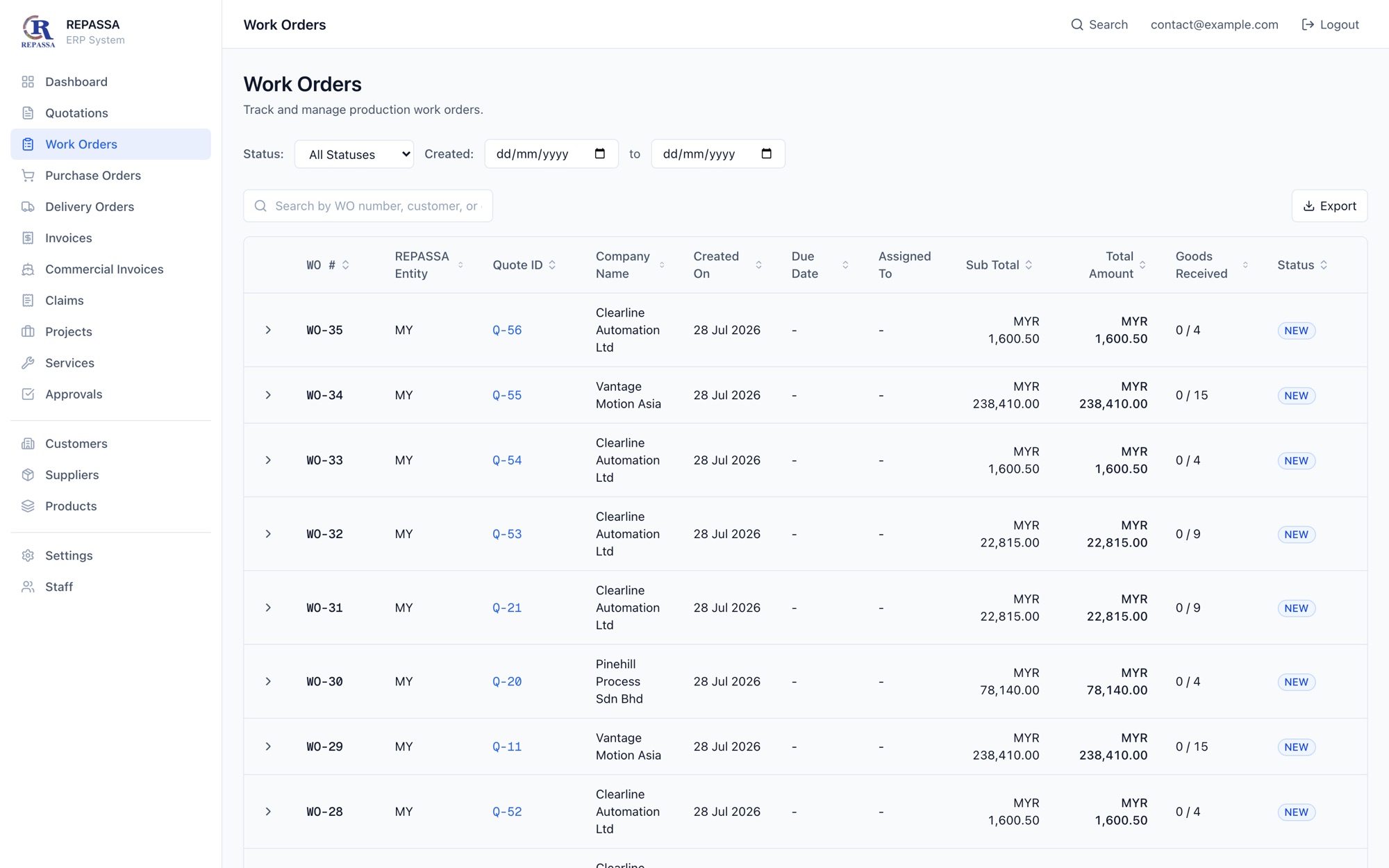
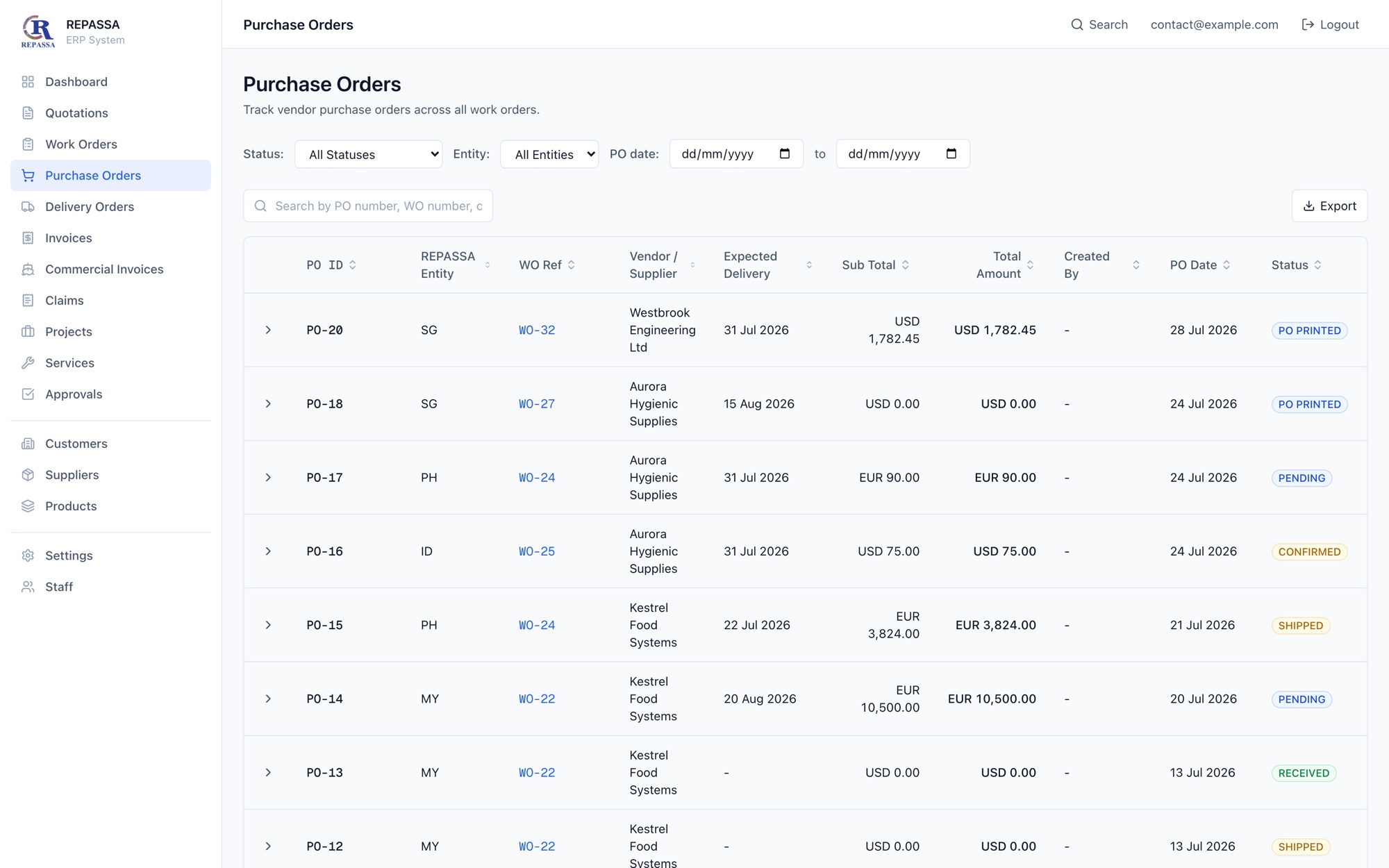
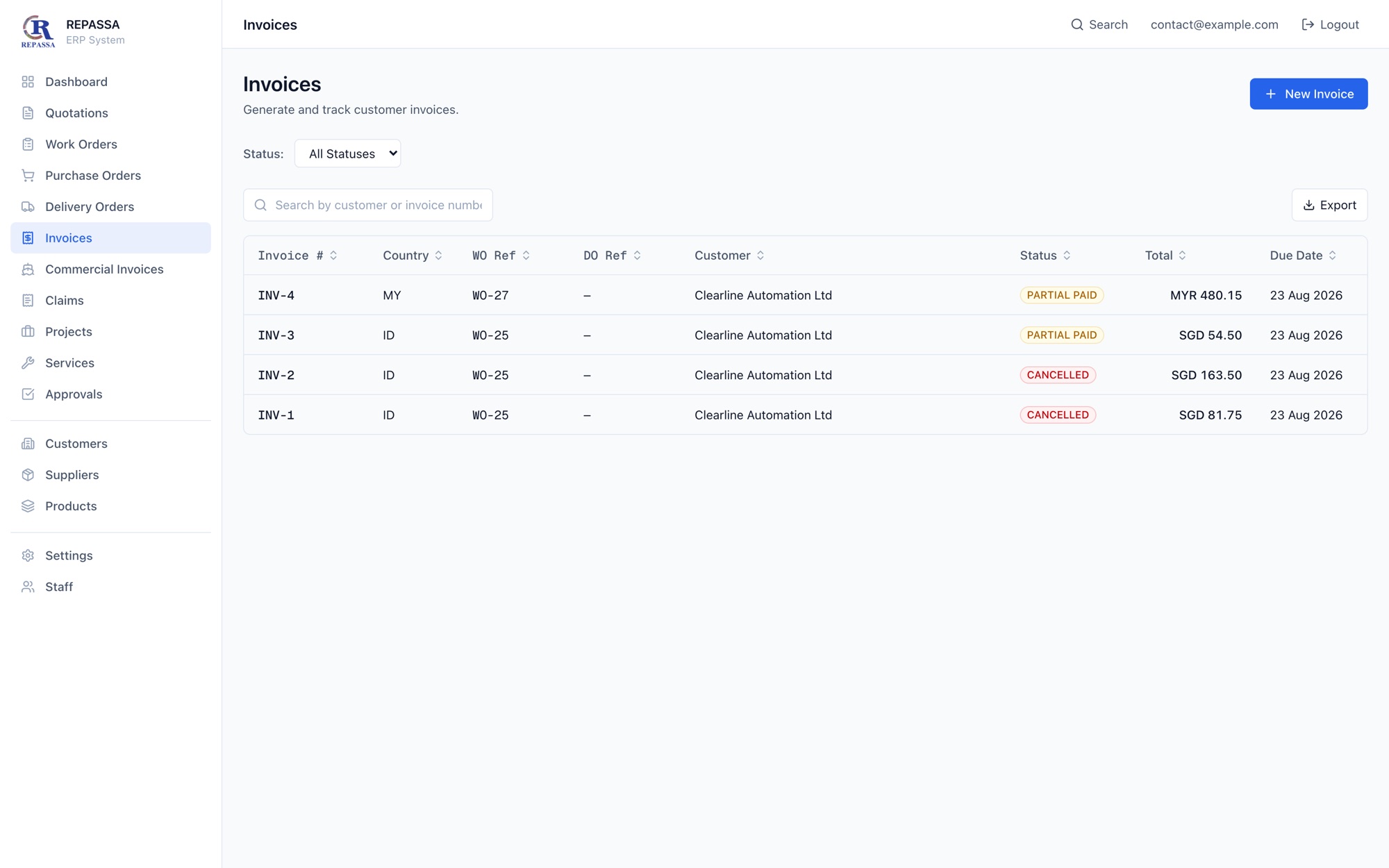
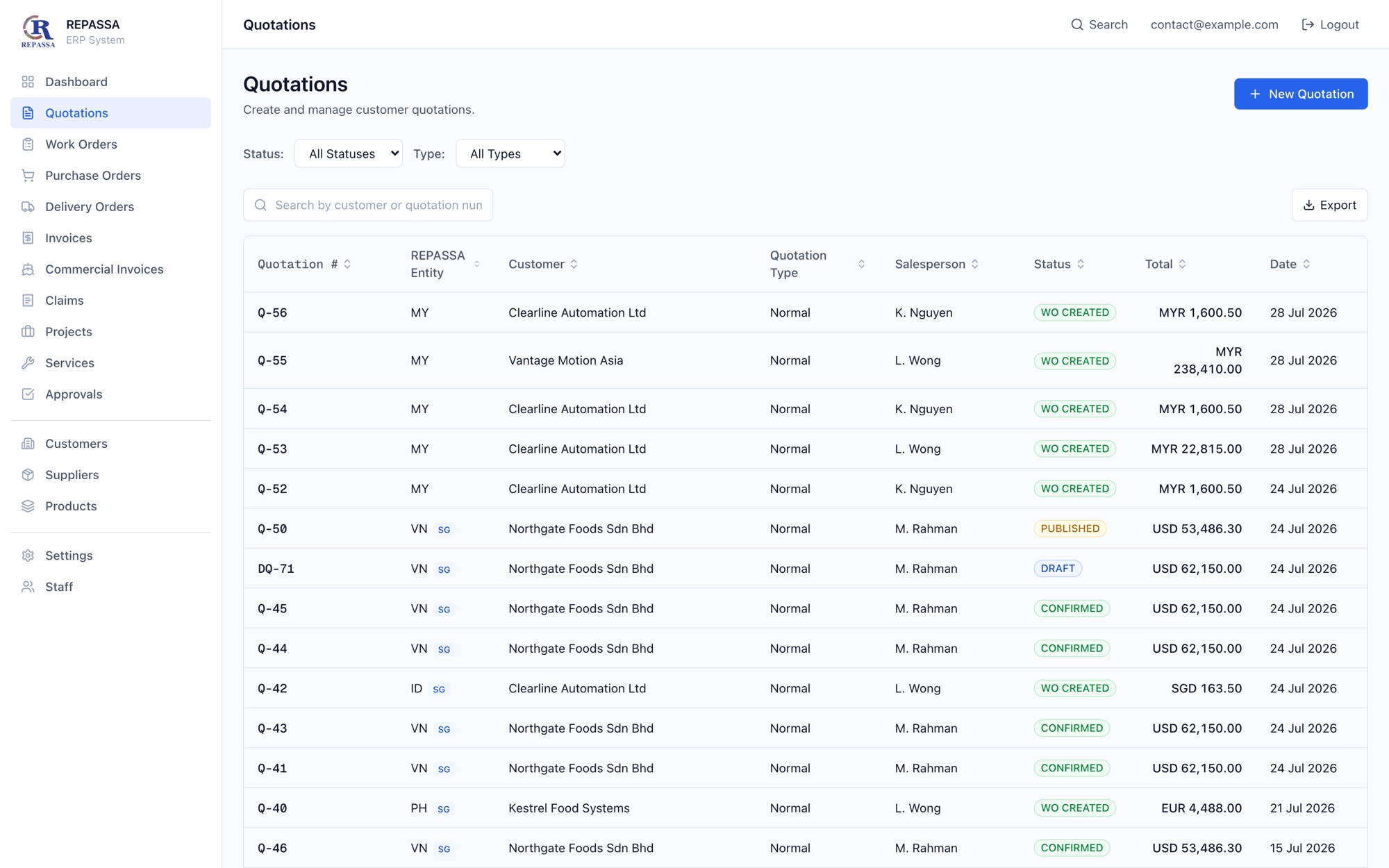
We built REPASSA a purpose-built web ERP that turns the whole cycle into one linked document chain - Quotation, Work Order, Purchase Order, Delivery Order, Invoice - where every step inherits its data from the one before it, so a number is entered once and never re-typed.
Pricing that cannot drift. The quotation carries the costing engine: buying price, exchange rate, freight factor, import tax and margin are held as per-entity defaults rather than re-keyed, so a selling price is derived, auditable and consistent across the sales team. Revisions are versioned, so a quote can be reworked without losing what was originally sent.
One chain, eight entities. Work orders are created from confirmed quotations only; purchase orders can only exist against a work order; delivery orders and invoices follow delivery rather than being built by hand. Each entity has its own letterhead, currency, tax treatment and document numbering, and each user sees only the countries they are entitled to.
Documents that match how they actually trade. Order acknowledgements, delivery orders with signed-copy capture, commercial invoices that consolidate received lines for customs, receiving photos with a printable evidence pack, and advance invoicing with automatic balance billing on final delivery.
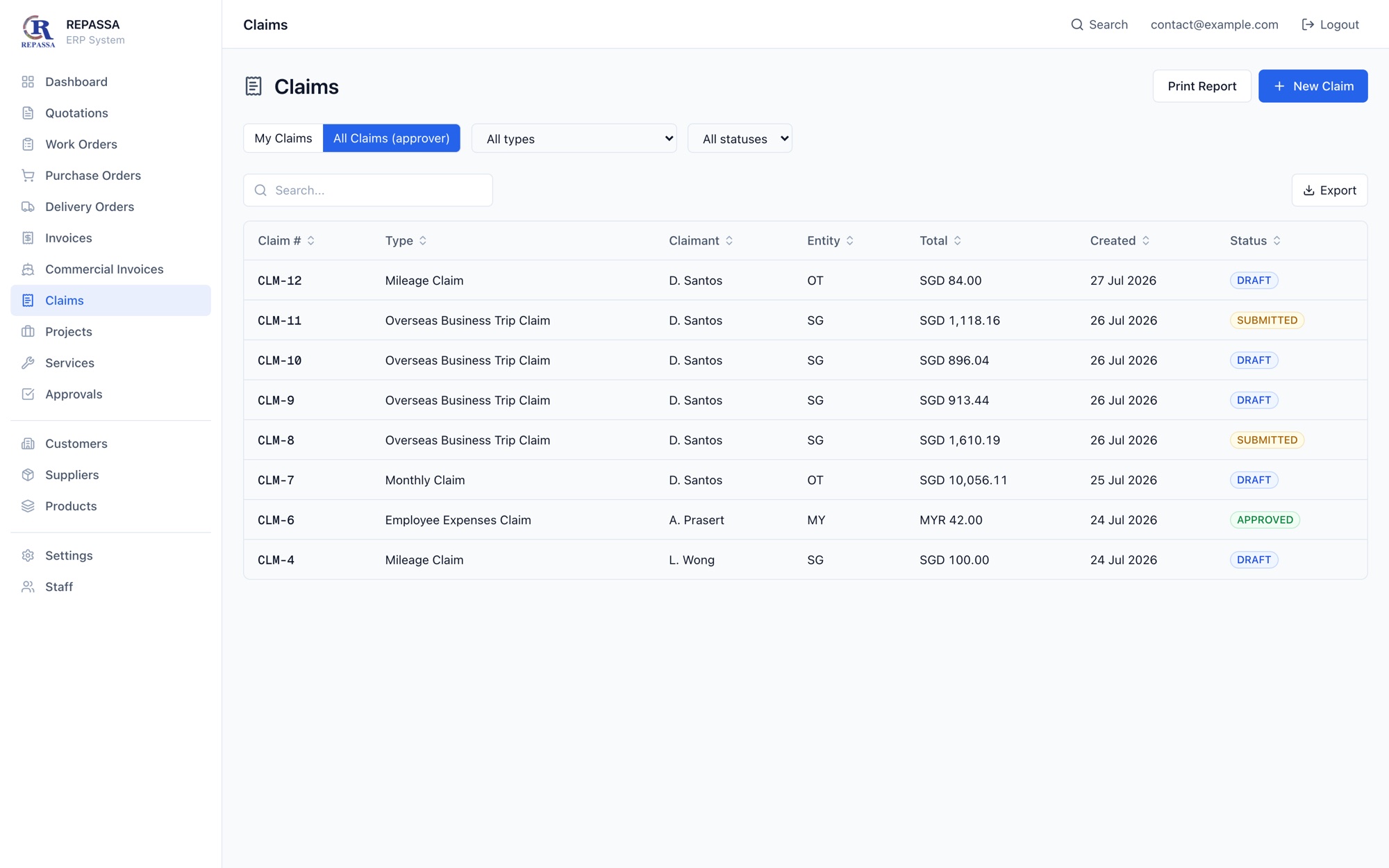
Staff claims, wired to the job. Four claim types built to REPASSA's own forms - employee expenses, monthly, overseas trip and mileage - with per-entity letterhead and mileage rates, receipts attached line by line, an approval chain, and approved claims landing automatically as cost rows against the work order, project or service they belong to. The claim a salesperson submits from their phone becomes a costed line on the job without anyone re-typing it.
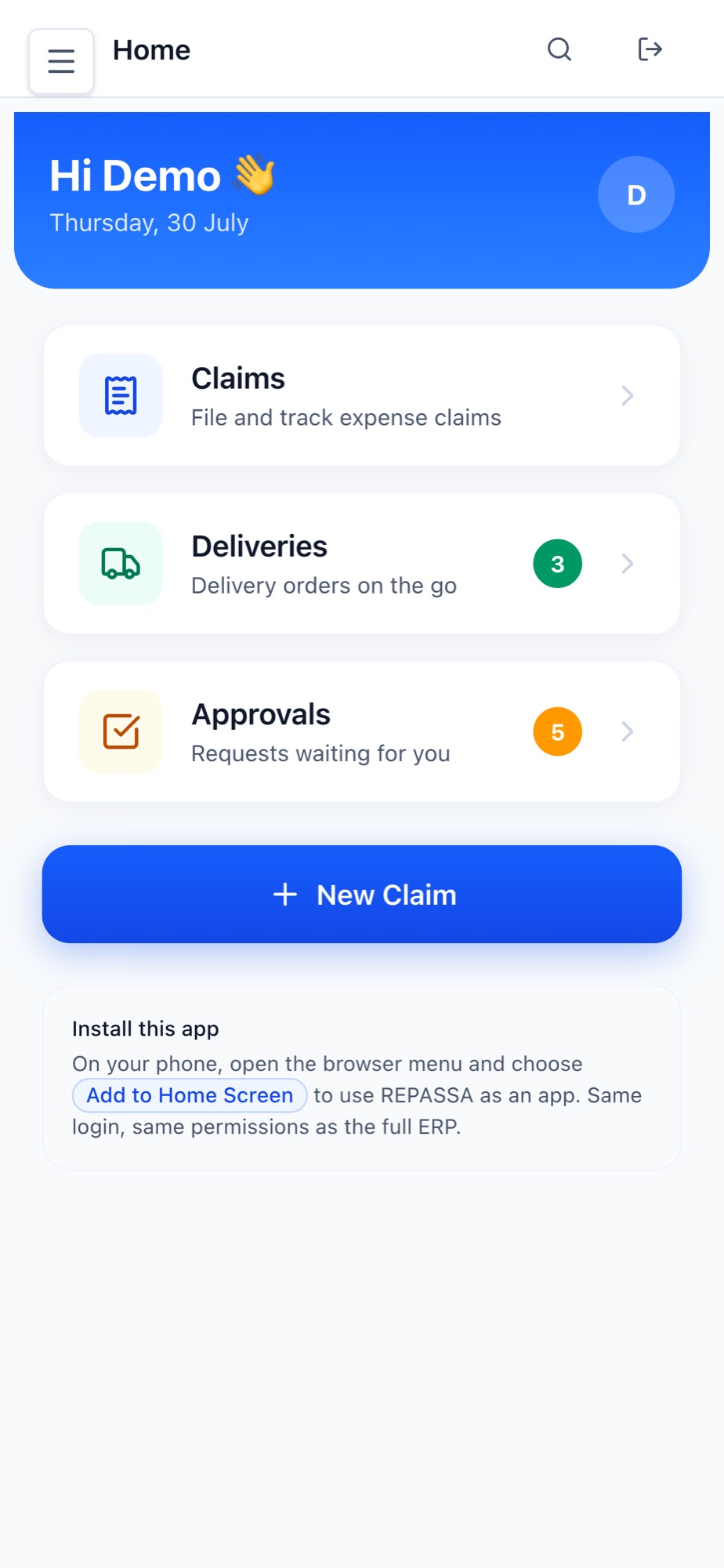
The ERP in their pocket. The system installs on a phone as an app - same login, same permissions - with a phone-first home for claims and deliveries, so field staff submit a claim or check a delivery without opening a laptop.
Built in the open. Every request REPASSA has made is tracked on a live roadmap page inside their own system - what was asked, in their words, and exactly where it stands. Two hundred items are on it. The client can see progress without asking for a status update, and nothing gets quietly dropped.
Outcome
The system runs REPASSA's live trading across eight country entities. Quotations, work orders, purchase orders, delivery orders and invoices are all raised in one place, and pricing follows the entity's own factors rather than whatever a salesperson remembers.
Two hundred client requests have been recorded, built and published on the live roadmap. The claims module reached daily use the day it shipped - a staff member raised a real claim, untouched, within hours of it going live.
The build continues as a working relationship rather than a delivered project: requests arrive by message, are usually live the same day, and are visible to the client on the roadmap the moment they are done.