Renology AI - Singapore Interior Design Platform
Renovating a home in Singapore means juggling a fragmented market: dozens of interior design firms and specialist renovation contractors, scattered across the island, each with their own portfolios, pricing, and waiting lists. Homeowners typically rely on word of mouth, forum threads, and cold enquiries to find someone they can trust, then wait days or weeks just to get an idea of what their space could look like and what it might cost.
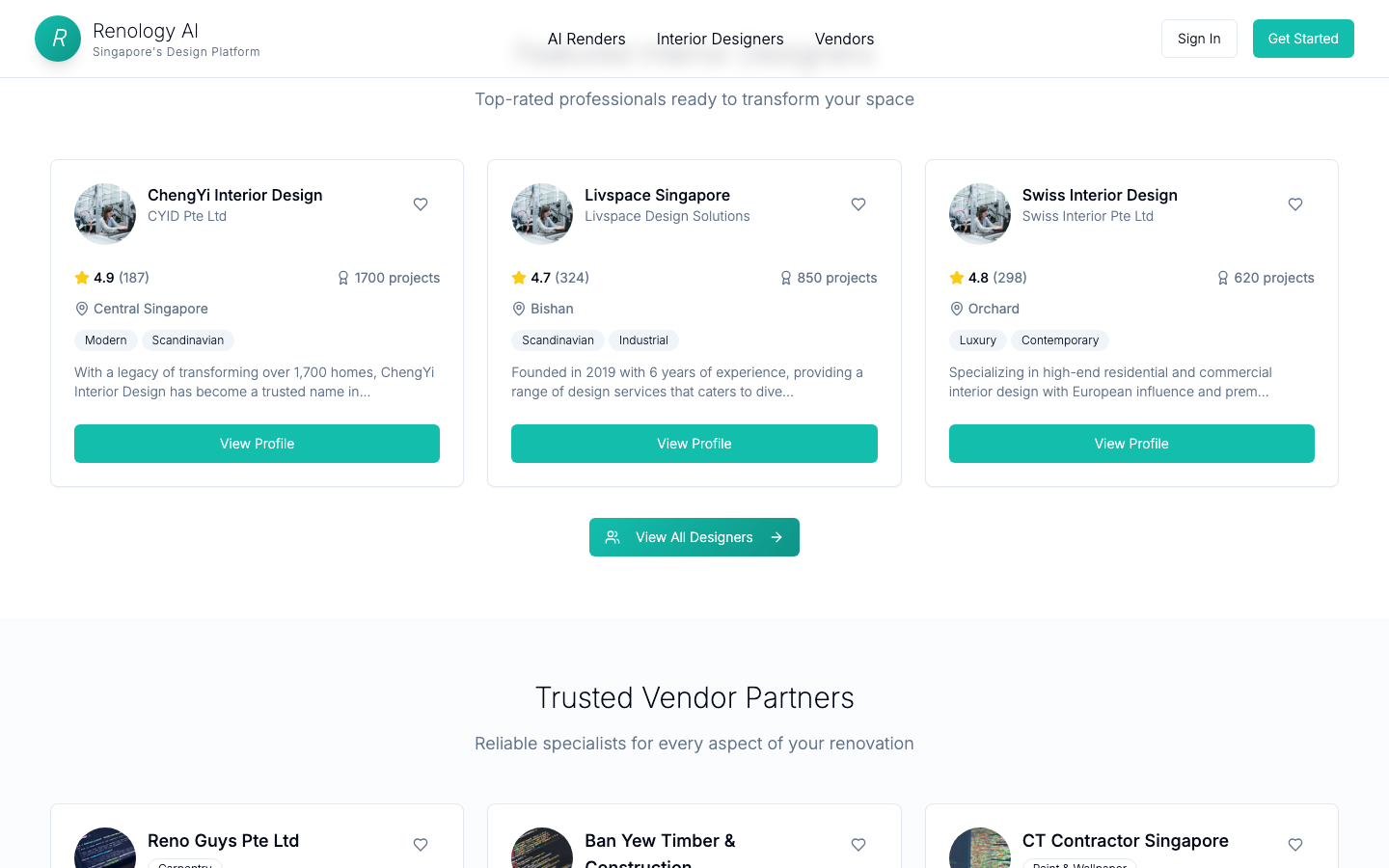
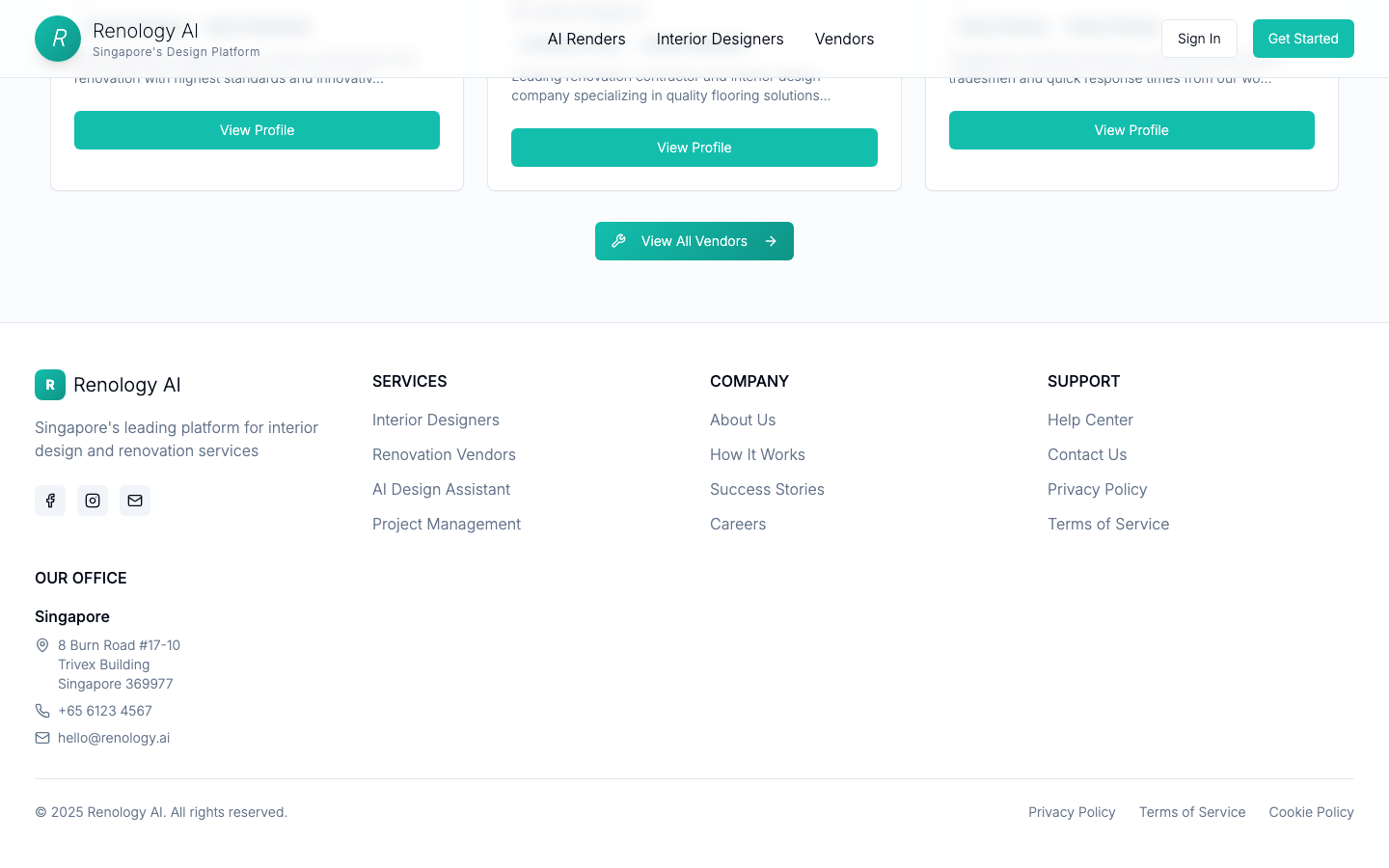
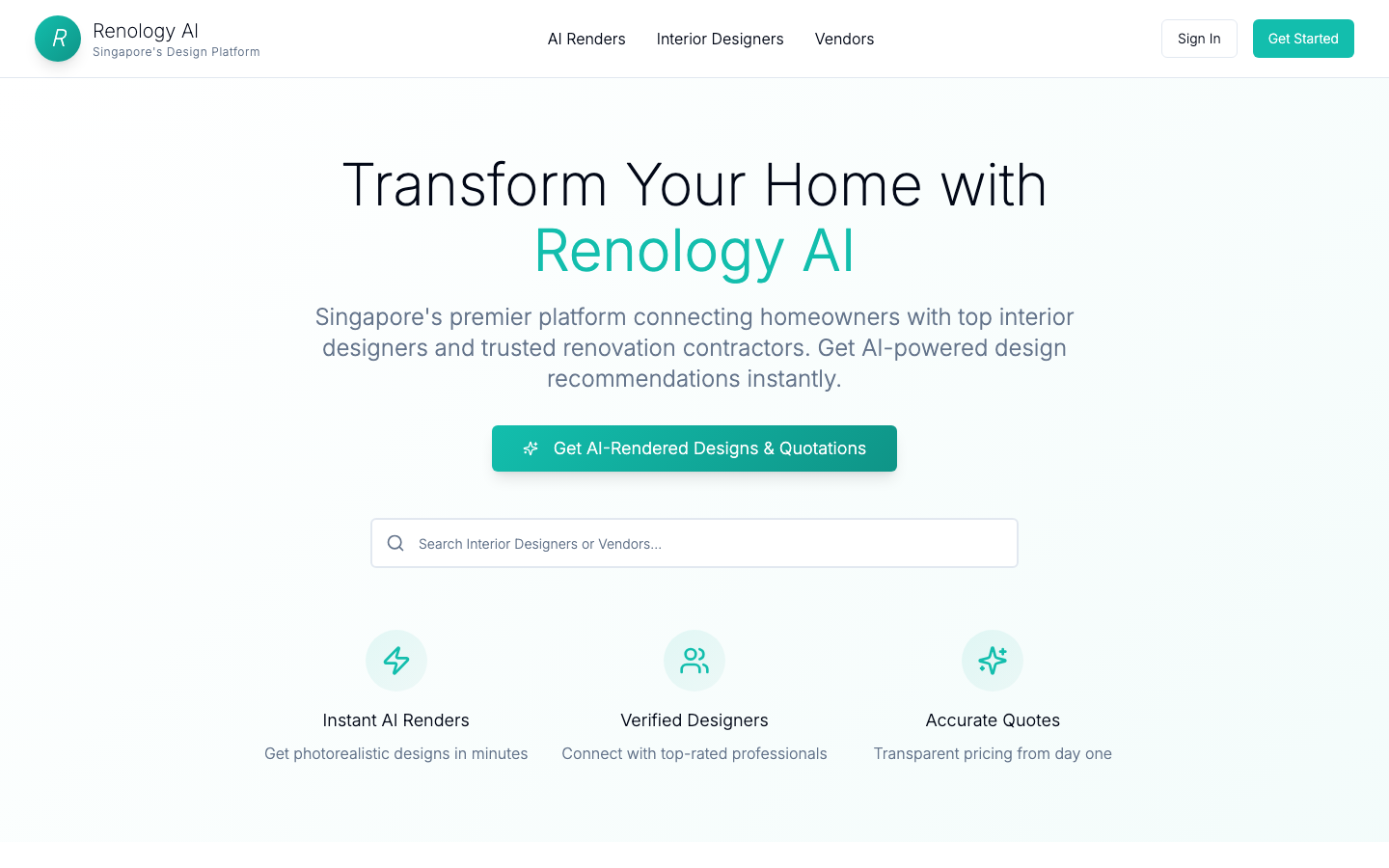
Renology AI is a Singapore interior-design and renovation platform that brings the whole search into one place. Homeowners can browse verified interior designers and trusted vendor partners, each shown with ratings, review counts, completed project numbers, location, and design specialties such as Scandinavian, Industrial, Luxury, or Contemporary. Vendors are organised by trade - carpentry, flooring, paint and wallpaper - so a homeowner can find the right specialist for each part of the job. The platform layers AI on top of this directory: a homeowner can describe what they want and get AI-rendered design concepts and an indicative quotation, turning a vague idea into something visual before they ever commit to a designer. The result is a single front door for discovering professionals, picturing the finished space, and getting transparent pricing from the start.
How we helped
Digital 9 Labs designed and built the Renology AI platform as a public web application for Singapore's home renovation market. The build includes a homeowner-facing landing experience, an AI design and quotation entry point, and two browsable directories - one for interior designers and one for renovation vendors - with structured profile cards showing ratings, review counts, project history, location, and tagged specialties. The information architecture separates "AI Renders", "Interior Designers", and "Vendors" so each audience and task has a clear path, and the site is built to be search-friendly with full SEO and social metadata, structured business data, and a clean, fast single-page front end.
What other businesses can take from this:
- When a market is fragmented, the product is the aggregation itself - putting every provider in one searchable, comparable place is often more valuable than any single feature.
- Structured, consistent profile cards (ratings, reviews, project counts, specialties, location) let people compare options at a glance and build trust without reading long pages.
- AI works best as an on-ramp, not a gimmick: letting someone see a rendered concept and indicative price up front lowers the commitment needed to take the next step.
- Separating audiences by clear navigation (browse designers vs. browse vendors vs. start with AI) keeps a two-sided marketplace simple for everyone who lands on it.
- Treating SEO and structured metadata as part of the build - not an afterthought - means a discovery platform can actually be discovered.