NemoClaw Singapore: NVIDIA's Secure OpenClaw AI Agents Guide 2026
The dawn of truly autonomous AI agents is here, and with it comes a critical need for security, privacy, and control. Stepping up to this challenge is NVIDIA's groundbreaking new platform, NemoClaw. Announced at GTC 2026, this open-source stack is set to redefine how enterprises, particularly in data-sensitive markets like Singapore, build and deploy AI agents. By integrating robust security and privacy guardrails directly into the popular OpenClaw framework, NemoClaw provides the essential tools to unlock the full potential of AI automation safely and responsibly.
For Singaporean businesses navigating the dual imperatives of innovation and regulatory compliance, such as the Personal Data Protection Act (PDPA), NemoClaw represents a pivotal development. It’s not just another AI tool; it's a comprehensive ecosystem designed for enterprise-grade deployment, promising to transform industries from finance to logistics with intelligent, secure, and trustworthy autonomous agents.
Introduction to NemoClaw
At its core, NVIDIA NemoClaw is an open-source software stack that enhances the OpenClaw AI agent framework with a critical layer of security and privacy controls. It achieves this by leveraging NVIDIA's powerful Agent Toolkit, providing a structured environment where developers can build, test, and deploy AI agents with confidence. Think of it as OpenClaw with enterprise-grade "armour" and a "rulebook" built-in.
The announcement at GTC 2026 underscores NVIDIA's strategic push to dominate the enterprise AI landscape. By offering NemoClaw as an open-source solution, NVIDIA is not just selling hardware; it's fostering a secure ecosystem for AI development. This move aims to court enterprise software developers and major corporations that have been hesitant to adopt autonomous agents due to risks associated with data leaks, unpredictable behaviour, and lack of oversight.
For the vibrant Singapore AI ecosystem, this is particularly significant. NemoClaw empowers local developers, startups, and large enterprises like DBS, Singtel, and Grab to experiment with and deploy advanced AI agents while adhering to the nation's stringent data governance standards. It paves the way for sophisticated applications that can operate on sensitive data locally, without exposing it to external cloud servers, aligning perfectly with data sovereignty priorities.
NemoClaw vs. OpenClaw: Key Differences Explained
While NemoClaw is built upon the foundation of OpenClaw, it introduces critical enhancements that set it apart. Understanding these differences is key to appreciating its value proposition for enterprise use. OpenClaw provides the core agentic capabilities, while NemoClaw fortifies it for real-world, high-stakes deployment.
Feature | OpenClaw (Base Framework) | NVIDIA NemoClaw (Enhanced Stack) |
|---|---|---|
Primary Focus | General-purpose AI agent research and development. Flexible and highly experimental. | Enterprise-grade security, privacy, and deployment of AI agents. Production-ready focus. |
Security & Privacy | Relies on developer-implemented, ad-hoc security measures. Lacks built-in, standardized guardrails. | Integrates NVIDIA Agent Toolkit with built-in privacy controls, policy enforcement (OpenShell), and security guardrails. |
Data Handling | Can potentially send data to any external API or service without strict oversight, posing a privacy risk. | Facilitates local, on-premise computation. Guardrails can prevent sensitive data from leaving a secure environment, aiding PDPA compliance in Singapore. |
Model Integration | Compatible with a wide range of open-source models, but may not be optimized for specific hardware. | Deeply integrated and optimized for NVIDIA Nemotron models, ensuring peak performance and efficiency on NVIDIA hardware. |
Target User | AI researchers, hobbyists, and developers in experimental phases. | Enterprise developers, IT departments, and businesses requiring secure, scalable, and compliant AI solutions. |
Deployment Hardware | Broad compatibility but without specific hardware optimization pathways. | Optimized for NVIDIA hardware, from single GeForce RTX PCs to data center GPUs, ensuring efficient and scalable performance. |
Core Features of NVIDIA NemoClaw
NVIDIA NemoClaw is more than just a security patch for OpenClaw; it's a deeply integrated platform with several core components designed to work in synergy. These features provide the safety, reliability, and performance necessary for enterprise adoption.
Integrated Guardrails: NemoClaw ships with pre-built safety and security mechanisms. These guardrails prevent the AI agent from performing malicious activities, accessing unauthorized data, or getting stuck in harmful loops. This is crucial for deploying agents that interact with critical business systems.
NVIDIA Agent Toolkit Integration: This is the security backbone of NemoClaw. The Agent Toolkit provides a suite of software for securing AI agents, including tools for content moderation, topic guidance, and programmable policy enforcement. It allows administrators to define what an agent can and cannot do.
Optimized for Nemotron Models: The platform is fine-tuned to run with NVIDIA's Nemotron family of large language models (LLMs). These models are designed for high performance and efficiency, making them ideal for powering responsive and intelligent agents that can handle complex reasoning and tool-use tasks.
Flexible Deployment on RTX: A key advantage is its versatility. NemoClaw agents can be deployed on a wide spectrum of hardware, from a developer's local GeForce RTX laptop to a powerful NVIDIA DGX SuperPOD in a data center. This scalability allows for seamless development, testing, and production deployment.
Privacy and Security Guardrails: The Heart of NemoClaw
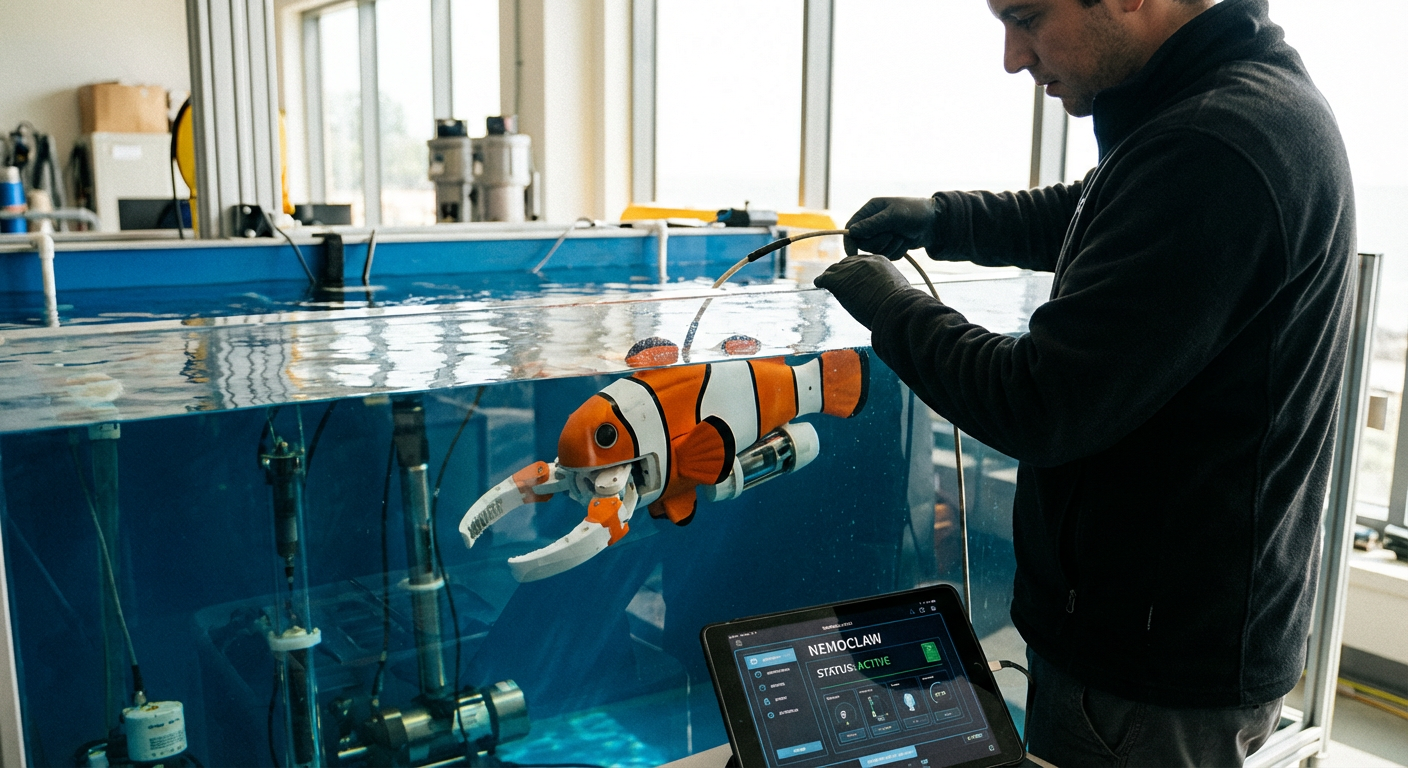
The most compelling feature of NemoClaw for businesses is its robust framework for privacy and security. These are not optional add-ons but are foundational to the platform's architecture, addressing the biggest fears holding back enterprise AI agent adoption.
At the center of this is a policy enforcement engine known as OpenShell. This component acts as a security checkpoint for every action the AI agent attempts to take. Administrators can write clear, human-readable policies to define the agent's operational boundaries. For example, a policy could explicitly forbid the agent from:
Accessing files outside of a designated project directory.
Sending any data containing personal identifiers (like NRIC or phone numbers) to an external API.
Executing system-level commands that could destabilize the host machine.
Furthermore, NemoClaw champions the benefit of local compute. By enabling powerful AI agents to run directly on an enterprise's on-premise hardware or secure private cloud (powered by NVIDIA RTX GPUs), it keeps sensitive data within the organization's control. For Singaporean companies, this is a massive advantage for ensuring compliance with the PDPA. Customer data, financial records, and proprietary intellectual property never have to leave the secure corporate network, drastically reducing the risk of data breaches and simplifying regulatory audits.
How to Deploy NemoClaw in Singapore: A Step-by-Step Guide
While the official release is slated for later in 2026, developers can already prepare to deploy NemoClaw. The platform is designed for accessibility, running on standard NVIDIA RTX hardware available in Singapore. Here is a high-level, anticipated guide for getting started once it becomes publicly available.
Step 1: Verify Hardware Prerequisites
Ensure you have a system with a compatible NVIDIA GPU. For optimal performance, a GeForce RTX 40 series GPU (like the RTX 4070 or higher) or an NVIDIA RTX Ada Generation professional GPU is recommended due to their powerful Tensor Cores, which accelerate AI workloads.
Step 2: Set Up the NVIDIA Environment
This involves installing the latest NVIDIA drivers for your GPU. You will also need to install the NVIDIA CUDA Toolkit, which provides the libraries and compiler needed to run applications on NVIDIA GPUs. These are available for free from the NVIDIA developer website.
Step 3: Clone the NemoClaw Repository
Once released, NemoClaw will be available as an open-source project, likely on platforms like GitHub. You'll use a simple git command to clone the repository to your local machine: git clone https://github.com/NVIDIA/NemoClaw.git (Note: This URL is hypothetical).
Step 4: Install Dependencies and Configure the Environment
Navigate into the cloned directory. The project will include a requirements file listing all necessary Python libraries. You'll install these using a package manager like pip, preferably within a virtual environment to avoid conflicts. cd NemoClawpip install -r requirements.txt
Step 5: Configure Your First Agent
NemoClaw will likely include configuration files (e.g., YAML files) where you define your agent's properties, including the base model (like a Nemotron variant), the tools it can use (e.g., a calculator, a web search API), and the security policies from OpenShell you want to enforce.
Step 6: Run and Test Locally
Execute a command to start the agent. You can then interact with it via a command-line interface or a simple web UI to test its capabilities and ensure the security guardrails are working as expected. For instance, you could instruct it to perform a task that violates a policy and verify that OpenShell blocks the action.
Hardware Requirements and Local Options in Singapore
Getting the right hardware is the first step. Fortunately, all the necessary components are readily available in Singapore.
GPUs: NVIDIA GeForce RTX 40 Series (e.g., RTX 4060, 4070, 4080, 4090) and NVIDIA RTX Ada Generation (e.g., RTX 4000, 5000, 6000) are ideal.
Systems: Pre-built desktops and powerful laptops equipped with these GPUs are perfect for development and small-scale deployment.
Local Retailers & System Builders:
Aftershock PC & Dreamcore: Singapore's leading custom PC builders, offering desktops and laptops with the latest NVIDIA RTX GPUs, perfect for a tailored NemoClaw development rig.
Challenger & Courts: Major electronics retailers where you can find off-the-shelf RTX-powered laptops and desktops from brands like ASUS, MSI, and Razer.
Sim Lim Square: For those who prefer to build their own systems, the components are widely available from various shops in this IT hub.
NemoClaw for Singapore Businesses: Transformative Use Cases
The true power of NemoClaw is realized when applied to real-world business challenges. For Singapore, a hub of finance, logistics, and technology, the potential applications are vast and transformative.
Financial Services & FinTech
Imagine a PDPA-compliant financial analyst agent running at DBS or UOB. This agent could be tasked with analyzing millions of internal transaction records to detect sophisticated fraud patterns. Because NemoClaw runs locally, no sensitive customer financial data ever leaves the bank's secure servers. The OpenShell policies would ensure the agent only accesses anonymized data and can't exfiltrate any information, providing a powerful analytics tool with zero data privacy risk.
Logistics and Supply Chain Management
A company like Grab or a port operator like PSA could deploy NemoClaw agents to optimize their complex logistics networks. An agent could monitor real-time shipping data, traffic patterns, and weather reports to autonomously re-route vessels and delivery vehicles for maximum efficiency. The guardrails would ensure the agent operates within defined business rules, for example, prioritizing critical medical supply shipments or adhering to specific customer delivery agreements, without a human needing to intervene for every decision.
Healthcare and Biomedical Research
In Singapore's world-class healthcare institutions like SGH or NUH, a NemoClaw agent could accelerate research while upholding the strictest patient confidentiality. An agent could be deployed on a secure, local hospital server to sift through anonymized Electronic Health Records (EHRs) and genomic data to identify potential candidates for clinical trials. The security controls are paramount here, ensuring indefeasible compliance with health data privacy laws.

Powering Singapore's Smart Nation Initiatives
Government agencies can leverage NemoClaw to build more efficient and secure citizen services. For example, an agent could help citizens navigate complex administrative processes, answering questions and pre-filling forms using data stored securely within government systems. The platform's security ensures citizen data is protected, building public trust in digital government initiatives.
NemoClaw Roadmap and GTC 2026 Updates
The GTC 2026 announcement was just the beginning. The roadmap for NemoClaw is ambitious, pointing towards deeper integration into the enterprise software ecosystem and continuous enhancement of its capabilities.
Enterprise Partnerships and Integrations
Rumors are swirling about major partnerships. Integration with platforms like Salesforce could allow NemoClaw agents to operate securely within a CRM, automating sales prospecting or customer service follow-ups without exposing customer data. A collaboration with Google Cloud could see NemoClaw offered as a secure, managed service on GCP, optimized for NVIDIA GPUs, making it easier for companies to deploy without managing their own infrastructure.
Future Feature Enhancements
The future for NemoClaw will likely include:
Advanced Retrieval-Augmented Generation (RAG): Tighter integration with NVIDIA's NeMo Retriever microservices will allow agents to reason over vast proprietary enterprise documents (manuals, reports, knowledge bases) in a secure and context-aware manner.
Multi-Agent Collaboration: Future versions may include frameworks for multiple NemoClaw agents to collaborate on complex tasks, each with its own specialized role and security clearance, mimicking a human team.
GUI for Policy Management: To improve usability, NVIDIA will likely release a graphical user interface for building and managing OpenShell security policies, making it accessible to IT administrators without deep coding knowledge.
The official public release of NemoClaw is eagerly anticipated later in 2026, and more details are expected to be shared through NVIDIA's developer channels and upcoming events.
Frequently Asked Questions (FAQ)
What is NVIDIA NemoClaw in simple terms?
NVIDIA NemoClaw is a free, open-source toolkit that adds essential security and privacy features to the OpenClaw AI agent platform. It allows businesses to build and run powerful AI assistants (agents) on their own computers or servers, ensuring that sensitive data stays safe and the agent behaves predictably according to preset rules.
Is NemoClaw free to use?
Yes, NemoClaw is an open-source platform, which means the software itself is free to download, use, and modify. However, enterprises might opt for paid support or enterprise-level services from NVIDIA or its partners for production deployments, similar to other open-source business models.
How does NemoClaw help with PDPA compliance in Singapore?
NemoClaw is ideal for PDPA compliance primarily because it enables local data processing. AI agents can run on a company's own on-premise hardware (like an NVIDIA RTX-powered PC or server). This means sensitive personal data does not need to be sent to a third-party cloud service for processing, drastically reducing the risk of a data breach and keeping it within Singapore's data jurisdiction. Its built-in guardrails can also be configured to prevent the agent from mishandling personal data.
Do I absolutely need an NVIDIA GPU to run NemoClaw?
Yes. NemoClaw is deeply integrated with the NVIDIA software stack, including the CUDA Toolkit and TensorRT for acceleration. It is designed and optimized specifically for the parallel processing architecture of NVIDIA GPUs (GeForce RTX and NVIDIA RTX). Running it on other hardware would not be feasible and would miss out on the performance benefits that make these agents effective.
When is the official release date for NemoClaw?
The platform was announced at GTC 2026, with a full public release expected later in the same year. NVIDIA will likely release more information, developer previews, and documentation on its official developer website and GitHub repositories in the coming months.
What is the main difference between NemoClaw and OpenClaw?
The primary difference is security and enterprise-readiness. OpenClaw is a flexible, general-purpose framework for building AI agents. NemoClaw takes that framework and adds a robust security layer using the NVIDIA Agent Toolkit, data privacy controls, and optimizations for running on secure, high-performance NVIDIA hardware. NemoClaw is essentially OpenClaw made safe and reliable for business use.